























































Early Signs of Breast Cancer: Symptoms You Should Know


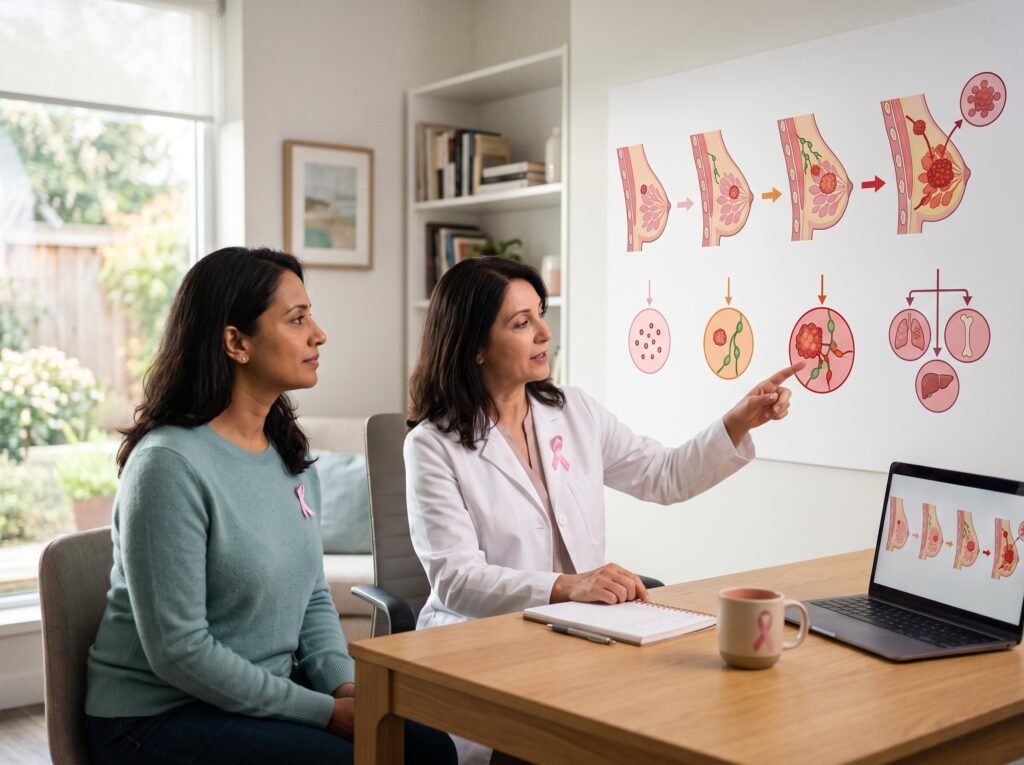
Breast cancer does not always cause noticeable symptoms in its early stages. Some breast cancers are found during screening before a person can feel a lump or see any visible change. When symptoms do occur, they may include a new breast lump, thickening, changes in breast size or shape, skin dimpling, nipple changes, unusual discharge, or swelling.
Knowing the early signs of breast cancer can help you recognize changes that deserve medical attention. At the same time, it is important to remember that most breast changes are not cancer. Cysts, hormonal changes, infections, and other benign breast conditions can produce similar symptoms. A new or unusual change should therefore be evaluated rather than self-diagnosed.
This guide explains common breast cancer symptoms, what to know about a breast lump, which breast changes should be checked, and why screening remains important.
What Are the Early Signs of Breast Cancer?
The early signs of breast cancer can vary considerably. Some people have no symptoms, while others notice a physical change in the breast or underarm.
Potential warning signs include:
- A new lump or thickened area in the breast
- A lump or swelling under the arm
- A change in breast size or shape
- Dimpling, puckering, or an orange-peel-like appearance of the skin
- Redness, darkening, scaling, or thickening of the skin
- A nipple that becomes newly inverted or changes direction
- Nipple discharge that is not breast milk, including bloody discharge
- Swelling of part or all of the breast
- Persistent breast or nipple changes
- Breast pain, particularly when it persists or occurs with other changes
These symptoms do not automatically indicate cancer. However, unexplained or persistent changes should be discussed with a qualified healthcare professional.
1. A New Breast Lump or Thickened Area
A breast lump is one of the symptoms most commonly associated with breast cancer. A new lump, firm area, or thickening that feels different from the surrounding tissue deserves medical evaluation.
However, the way a lump feels cannot reliably determine whether it is cancerous. Some breast cancers can feel firm, while benign conditions can also produce firm or noticeable lumps. The CDC notes that many breast lumps are caused by conditions other than cancer, including cysts and fibrocystic breast changes.
A lump may occur:
- Within the breast
- Near the breast or chest
- Under the arm
- Along with an area of thickened tissue
If you discover a new lump, don’t try to determine its cause by comparing it with descriptions online. A healthcare professional can decide whether an examination or diagnostic imaging is appropriate.
2. Changes in Breast Size or Shape
Breasts naturally vary from person to person and can change throughout life. Menstrual cycles, pregnancy, breastfeeding, aging, and changes in body weight can all affect how breasts look and feel.
A new or unexplained change in the size or shape of one breast, however, can be a reason to seek medical advice. Breast cancer can sometimes cause one breast to look different from the other or alter its normal contour.
Pay particular attention to changes that are persistent or occur together with a lump, skin changes, swelling, or nipple changes.
3. Skin Dimpling, Puckering, or Texture Changes
Changes in the skin over the breast can be another potential warning sign.
These may include:
- Dimpling or puckering
- Skin that appears thicker
- A texture resembling an orange peel
- Scaling or flaking
- Swelling
- Redness or darkening
- A rash or persistent skin change
The appearance of redness can differ according to natural skin tone. On darker skin, changes may appear darker, purple, brown, or red rather than simply bright red.
Not every skin change indicates cancer. Skin irritation, infection, eczema, and other conditions can cause similar symptoms. Persistent or unexplained changes should nevertheless be assessed.
4. Nipple Changes
Changes in the nipple can sometimes be among the breast cancer symptoms that warrant attention.
Examples include:
- A nipple that newly turns inward
- A change in the direction the nipple points
- Flattening of the nipple
- Scaling or crusting
- A persistent rash around the nipple
- Changes in the appearance of the nipple or areola
A nipple that has naturally been inverted for many years is different from a nipple that has recently changed. The important factor is whether the change is new or unusual for you.
5. Unusual Nipple Discharge
Nipple discharge can have many causes, and it does not necessarily mean breast cancer.
For example, discharge can occur during pregnancy or breastfeeding and can also be associated with infections, certain medications, or noncancerous breast conditions.
However, discharge that occurs when you are not breastfeeding—particularly discharge that contains blood—should be evaluated by a healthcare professional.
The important point is not to assume that discharge is either definitely cancerous or definitely harmless. Proper evaluation is needed to identify the cause.
6. Swelling Without a Distinct Lump
Breast cancer does not always produce a clearly defined lump.
Some people may instead notice:
- Swelling involving part or all of a breast
- General breast enlargement
- Heaviness
- Thickening
- A difference in how one breast feels compared with the other
The National Cancer Institute specifically notes that breast swelling can occur without a lump.
This is why paying attention to overall breast changes, rather than focusing only on finding a lump, is important.
7. Breast or Nipple Pain
Breast pain is common and has many possible causes. Hormonal fluctuations, cysts, pregnancy, medications, and other noncancerous conditions can cause breast discomfort.
Breast cancer does not usually cause pain, especially in its early stages. However, pain can occur, and health authorities include breast or nipple pain among possible symptoms.
Pain by itself is therefore not a reliable way to identify breast cancer.
If breast pain persists, is localized to one area, becomes worse, interferes with daily activities, or occurs alongside another breast change, discuss it with a healthcare professional.
8. A New Lump or Swelling Under the Arm
Breast changes are not limited to the breast itself.
A new lump or swelling in the armpit can sometimes occur with breast cancer. However, underarm lumps have many possible causes, including infections and other conditions.
A persistent or unexplained underarm lump—especially when accompanied by a breast change—should be evaluated.
What Does a Breast Cancer Lump Feel Like?
It is tempting to assume that you can identify cancer by the way a lump feels. In reality, you cannot diagnose breast cancer by touch alone.
Some breast cancer lumps may feel firm, hard, or irregular, but benign lumps can also feel firm. Some breast cancers may not form a typical lump at all. For example, invasive lobular carcinoma may present as thickened breast tissue rather than a distinct mass.
For that reason, any new breast lump or unusual thickening should be professionally assessed.
| Change | What it may mean | What to do |
| New breast lump | Can have benign or cancerous causes | Arrange medical evaluation |
| Breast thickening | May have several causes | Report a persistent or unusual change |
| Skin dimpling | Can occur with different breast conditions | Have a new change checked |
| New nipple inversion | May be significant when newly developed | Discuss it with a healthcare professional |
| Bloody nipple discharge | Has several possible causes but needs assessment | Arrange medical evaluation |
| Breast swelling | Can occur with various conditions | Seek advice for unexplained swelling |
| Breast pain | Often has noncancerous causes | Seek care if persistent or concerning |
| Underarm lump | Can have multiple causes | Have a new or persistent lump assessed |
What Is Inflammatory Breast Cancer?
Inflammatory breast cancer is an uncommon form of breast cancer that can produce symptoms different from those of a typical breast lump.
Possible signs include:
- Rapid swelling of one breast
- Breast heaviness
- Skin redness, darkening, or a bruised appearance
- Unusual warmth
- Skin thickening
- Dimpling or an orange-peel-like texture
- Changes in the nipple
These symptoms can resemble infections or other breast conditions. A rapidly developing and unexplained change should receive prompt medical assessment.
Do Breast Changes Always Mean Cancer?
No.
This is one of the most important points when learning about breast cancer symptoms. Most breast changes are not caused by cancer.
Common noncancerous causes of breast changes include:
- Hormonal fluctuations
- Breast cysts
- Fibrocystic breast changes
- Fibroadenomas
- Infections
- Pregnancy and breastfeeding
- Certain medications
Because the same symptom can have different causes, an online symptom list cannot tell you what is happening in your individual case.
If you notice a new change, the safest approach is to have it assessed rather than assuming the cause.
When Should You See a Healthcare Professional?
Contact a qualified healthcare professional if you notice a new or unusual change in your breast, chest, nipple, or underarm.
Examples include:
- A new lump
- Persistent thickening
- A change in breast size or shape
- Skin dimpling or puckering
- New skin discoloration or scaling
- A newly inverted nipple
- Unexplained nipple discharge
- Persistent breast or nipple pain
- A new underarm lump or swelling
Importantly, don’t necessarily wait until your next routine mammogram to report a new symptom. The NCI and Mayo Clinic recommend discussing new breast changes with a healthcare professional even if you recently had a normal mammogram.
A clinician may perform an examination and, depending on the findings, recommend diagnostic mammography, ultrasound, or another appropriate test.
Why Breast Cancer Screening Matters
Learning about the early signs of breast cancer is important, but symptoms are not a replacement for recommended screening.
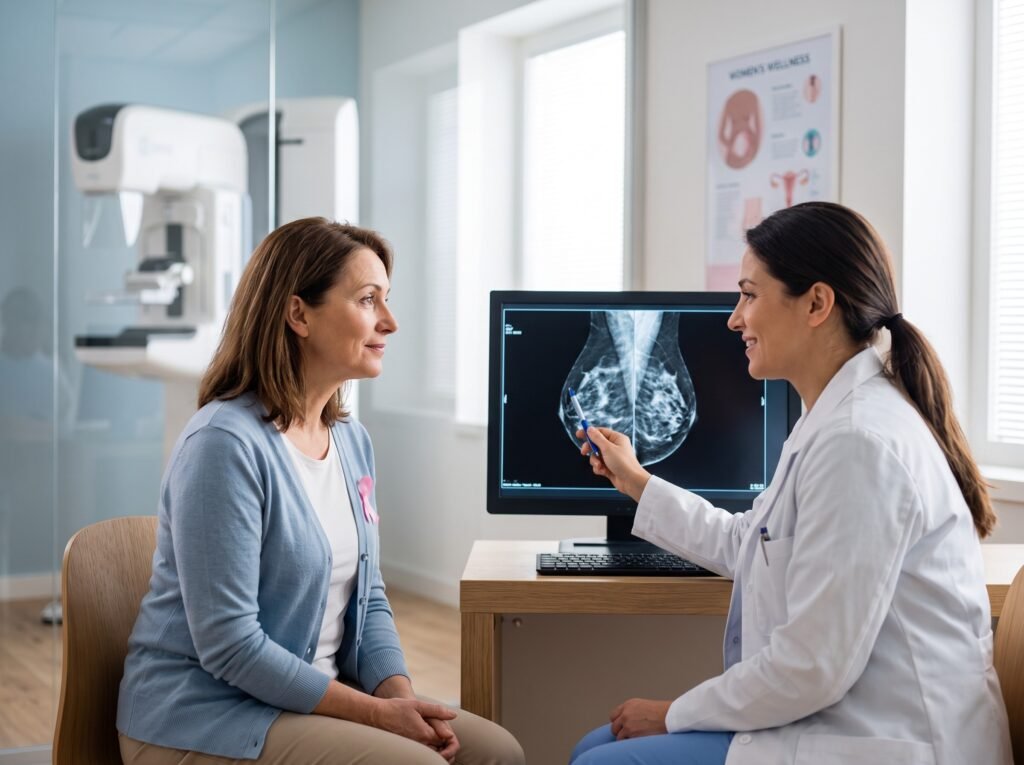
Early breast cancer often has no symptoms. Screening mammography can detect some cancers before they are large enough to feel or cause noticeable changes.
Screening recommendations depend on factors such as age, personal risk, family history, and the guidelines followed in your country or healthcare system.
Talk with a qualified healthcare professional about which screening schedule is appropriate for you.
Breast Self-Awareness
Being familiar with the normal appearance and feel of your breasts can help you notice changes.
Breast self-awareness is different from relying on a specific self-examination technique to diagnose cancer. The CDC notes that knowing what is normal for you can help you recognize changes that should be reported to a healthcare professional.
Breasts can naturally change during the menstrual cycle, pregnancy, breastfeeding, menopause, and with age. Understanding these normal variations can make unusual changes easier to recognize.
How Are Breast Changes Evaluated?
When you see a healthcare professional about a breast change, they may ask about:
- When you first noticed the change
- Whether it has changed over time
- Any pain or other symptoms
- Your previous breast health
- Previous imaging or screening
- Relevant family history
Depending on the findings, additional tests may be recommended. These can include diagnostic mammography, ultrasound, or, when appropriate, a biopsy.
Being referred for additional testing does not mean you have breast cancer. Testing is used to determine what is causing the change.
Frequently Asked Questions
1. What are the early signs of breast cancer?
Possible signs include a new breast or underarm lump, breast thickening, changes in breast size or shape, skin dimpling, nipple changes, unusual discharge, swelling, and other persistent breast changes. Early breast cancer may also have no symptoms.
2. Is every breast lump a sign of cancer?
No. Many breast lumps are caused by noncancerous conditions such as cysts and fibrocystic breast changes. However, every new or unusual breast lump should be evaluated by a healthcare professional.
3. What does a breast cancer lump feel like?
A breast cancer lump may feel firm or hard and may have an irregular shape, but these characteristics cannot reliably diagnose cancer. A healthcare professional needs to evaluate a suspicious lump.
4. Can breast cancer cause breast pain?
Breast cancer does not usually cause pain, particularly in its early stages. Breast pain has many other possible causes. Persistent or unexplained pain should still be discussed with a healthcare professional.
5. Is nipple discharge a sign of breast cancer?
Nipple discharge has many possible causes and does not automatically indicate cancer. However, unexplained discharge, particularly bloody discharge or discharge occurring outside breastfeeding, should be evaluated.
6. Can breast cancer occur without a lump?
Yes. Some breast cancers do not produce a noticeable lump. Early breast cancer can also have no symptoms, which is one reason screening is important.
7. Should I see a doctor after finding a breast change if my recent mammogram was normal?
Yes. A new or unusual breast change should be reported even if a recent mammogram was normal. Your healthcare professional can determine whether additional evaluation is appropriate.
Conclusion
Understanding the early signs of breast cancer can help you recognize changes that deserve medical attention. A new breast lump, unexplained thickening, skin dimpling, nipple changes, unusual discharge, swelling, or a change in breast size or shape should not be ignored.
At the same time, having one of these breast cancer symptoms does not mean you have cancer. Many breast changes have benign causes, and only an appropriate medical evaluation can determine what is causing a particular change.
Because early breast cancer may not cause symptoms, following appropriate screening recommendations is also an important part of breast health. If you notice something that is new or unusual for you, speak with a qualified healthcare professional rather than trying to diagnose the change yourself.