
























































ICD-10 vs CPT vs HCPCS: What’s the Difference?


Understanding ICD-10 vs CPT vs HCPCS is essential for healthcare professionals involved in medical coding, billing, claims processing, and revenue cycle management. Although these code sets are often used together, each serves a different purpose.
In simple terms, ICD-10-CM codes describe diagnoses, CPT codes describe many medical services and procedures, and HCPCS Level II codes describe many medical supplies, equipment, drugs, and other billable services.
Selecting the correct code depends on the clinical documentation, the service or item provided, the claim type, and the applicable coding guidelines. Using an incorrect or outdated code can create billing errors, claim delays, or compliance concerns.
This guide explains how the three systems differ, how they work together, and what medical coders and billers should know to use them accurately.
What Are ICD-10, CPT, and HCPCS?
Healthcare organizations use standardized code sets to communicate information about diagnoses, procedures, services, and products.
What is ICD-10-CM?
ICD-10-CM stands for International Classification of Diseases, Tenth Revision, Clinical Modification. In the United States, it is used to classify diagnoses, diseases, symptoms, injuries, and other health conditions.
These are commonly called diagnosis codes.
For example, a provider may document that a patient has hypertension, diabetes, or a respiratory infection. The appropriate ICD-10-CM code communicates the documented condition on the claim.
What is CPT?
CPT stands for Current Procedural Terminology. The American Medical Association (AMA) maintains the CPT code set.
CPT codes are five-digit numeric codes used to report many medical services and procedures performed by physicians and other qualified healthcare professionals.
Examples include office visits, surgical procedures, diagnostic tests, and certain laboratory services.
What is HCPCS?
HCPCS stands for Healthcare Common Procedure Coding System. It has two main levels:
- Level I: CPT codes maintained by the AMA.
- Level II: Alphanumeric codes maintained nationally by the Centers for Medicare & Medicaid Services (CMS).
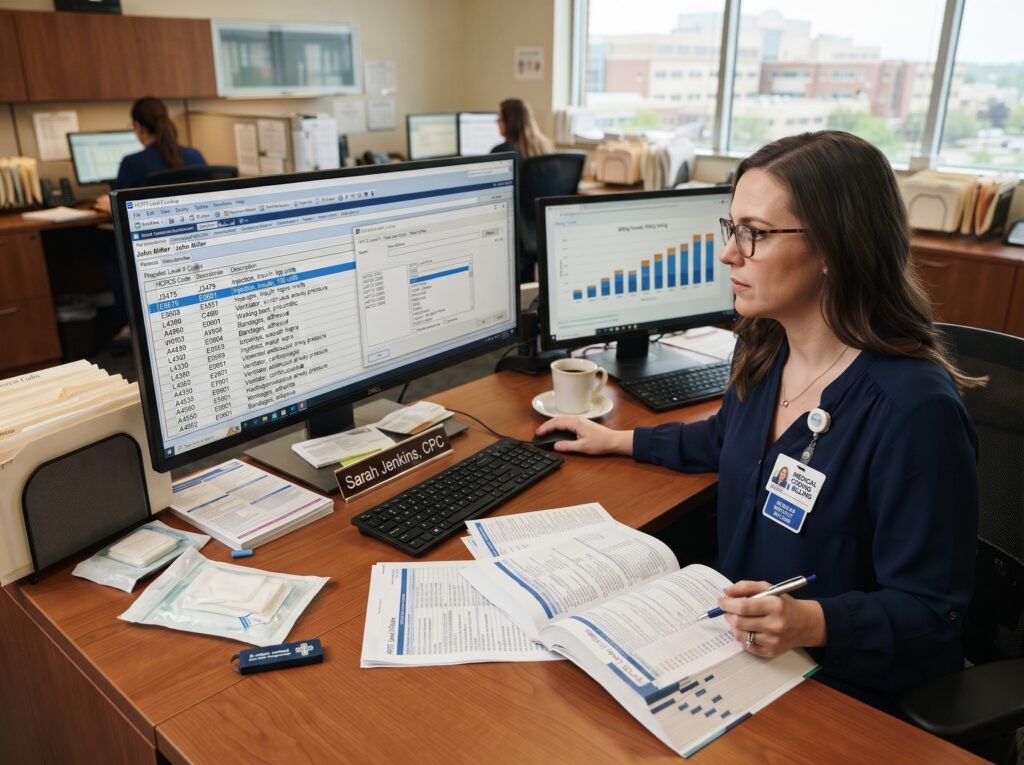
HCPCS Level II is commonly used to report products, medical supplies, durable medical equipment, prosthetics, orthotics, ambulance services, certain drugs, and other items or services not represented by CPT codes.
ICD-10 vs CPT vs HCPCS: Key Differences
The easiest way to understand these systems is to compare what each one communicates.
| Feature | ICD-10-CM | CPT | HCPCS Level II |
| Primary purpose | Report diagnoses and health conditions | Report many medical services and procedures | Report many products, supplies, equipment, drugs, and other services |
| Common name | Diagnosis codes | Procedure and service codes | Supply and service codes |
| Typical format | Alphanumeric, with letters and numbers | Five numeric digits | Usually one letter followed by four numbers |
| Maintained by | CDC’s National Center for Health Statistics for U.S. ICD-10-CM | American Medical Association | CMS for the national Level II code set |
| Example use | Reporting a documented diagnosis | Reporting an office visit or procedure | Reporting qualifying equipment or a medical supply |
| Role on a claim | Explains the patient’s condition or reason for care | Identifies the service performed | Identifies a relevant product, supply, or service |
One important distinction: HCPCS includes CPT as Level I. Therefore, CPT and HCPCS Level II are not entirely separate systems; they are different parts of the broader HCPCS structure.
What Are ICD-10 Diagnosis Codes Used For?
ICD-10-CM codes communicate the condition documented in the patient’s medical record.
They help healthcare organizations classify diagnoses consistently for billing, reporting, healthcare administration, and analysis.
Examples of ICD-10-CM coding
Diagnosis coding may be used for conditions such as:
- Diabetes
- High blood pressure
- Chronic kidney disease
- Asthma
- Back pain
- Injuries
- Infectious diseases
The correct code depends on the provider’s documentation and the applicable coding guidelines. Some conditions require additional specificity, such as the affected body part, severity, complication, or encounter circumstances.
Why diagnosis coding accuracy matters
A diagnosis code should reflect the information supported by the medical record. Coders should not assume a condition exists merely because a service was performed or a test was ordered.
Accurate diagnosis coding supports clear communication between providers and payers and helps ensure that claims accurately represent the documented encounter.
What Are CPT Procedure Codes Used For?
CPT codes describe many services and procedures delivered during healthcare encounters.
These codes are widely used by physician practices, hospitals, laboratories, and other healthcare organizations, depending on the service and claim type.
Common uses of CPT codes
CPT coding can include:
- Evaluation and management services
- Surgical procedures
- Diagnostic imaging services
- Laboratory tests
- Anesthesia services
- Certain therapeutic procedures
- Certain preventive services
CPT has several categories. Category I covers established medical services and procedures, Category II codes support performance measurement, and Category III codes track certain emerging technologies, procedures, and services.
Why procedure coding accuracy matters
The selected CPT code should accurately represent the service performed and satisfy the relevant code descriptor and guidelines.
Choosing a code based only on a brief description can be risky because similar services may have different reporting requirements.
Coders should review the complete documentation, applicable CPT guidance, and payer-specific requirements before submitting a claim.
What Are HCPCS Level II Codes Used For?
HCPCS Level II codes identify many billable products, supplies, equipment, drugs, and services that are not represented by CPT codes.
They are particularly relevant to medical suppliers, durable medical equipment providers, pharmacies and other organizations, depending on their billing responsibilities.
Common examples
HCPCS Level II may be used for:
- Durable medical equipment, such as qualifying wheelchairs or walkers
- Prosthetic and orthotic devices
- Medical supplies
- Certain medications and biological products
- Ambulance services
- Other covered products and services
Many Level II codes follow an alphanumeric format consisting of one letter and four numbers. However, coders should verify the complete code and descriptor rather than relying on the first letter alone.
Why HCPCS accuracy matters
The correct code can depend on the exact item provided, applicable units, modifiers, documentation, and payer requirements.
A valid HCPCS code does not automatically guarantee coverage or payment. The insurer’s coverage policy, eligibility rules, medical necessity requirements, and claim-specific conditions may also apply.
How ICD-10, CPT, and HCPCS Work Together
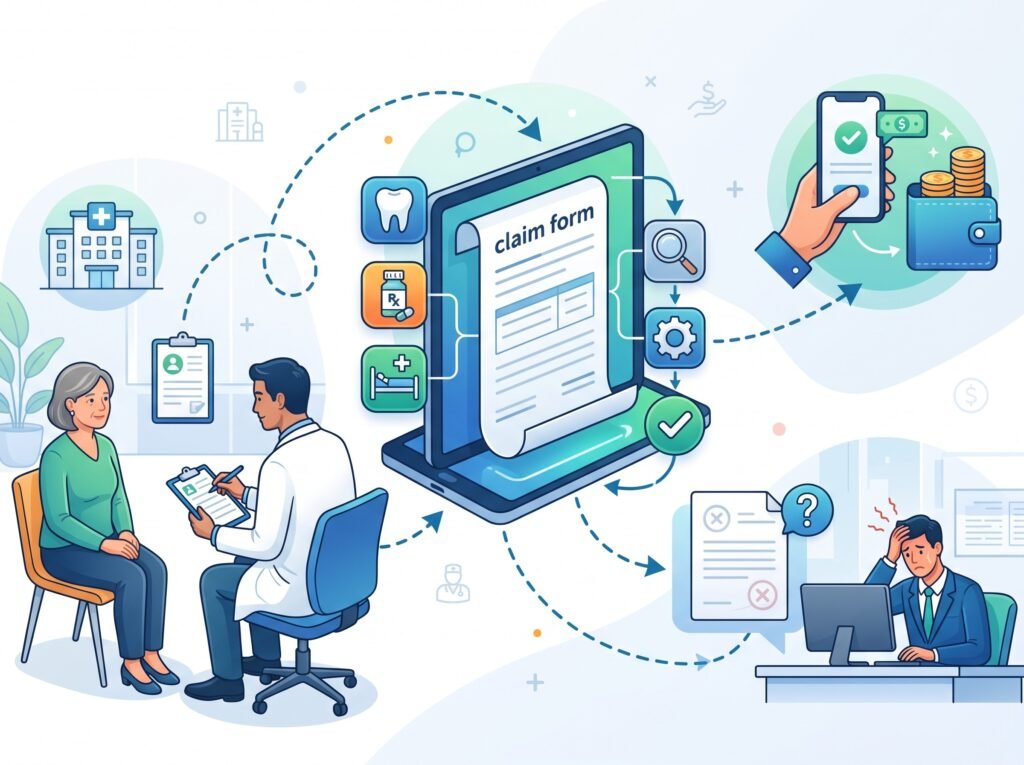
These code sets frequently work together to communicate different parts of a healthcare encounter.
Consider a simplified example.
A patient visits a healthcare professional because of a documented medical condition. During the encounter:
- ICD-10-CM reports the diagnosis or condition documented by the provider.
- CPT reports the professional service or procedure performed, when applicable.
- HCPCS Level II reports a qualifying supply, equipment item, drug, or other applicable service, when required.
Not every claim requires all three code types. The codes needed depend on the service, care setting, claim format, and payer rules.
Example: A patient receiving medical equipment
Suppose a patient with a documented condition receives qualifying durable medical equipment.
The claim may need an ICD-10-CM code to describe the relevant diagnosis and an HCPCS Level II code to identify the equipment. A CPT code may also be appropriate if a separately reportable professional service was performed.
This is an illustrative example, not a coding recommendation for a specific patient. The actual code selection depends on the documentation and applicable billing requirements.
Common Mistakes When Using ICD-10, CPT, and HCPCS
1. Confusing diagnosis codes with procedure codes
ICD-10-CM identifies diagnoses, while CPT and HCPCS Level II generally identify services, procedures, products, or supplies.
Using a diagnosis code where a service code is required—or the reverse—can result in inaccurate claim reporting.
2. Choosing codes without reviewing documentation
A code should be supported by the medical record and the service or item actually provided. Coders should not select codes based solely on assumptions or a keyword match.
3. Using outdated code sets
Code sets and coding guidance are updated periodically. Using an old code list may lead to incorrect or invalid claim submissions.
4. Overlooking modifiers and units
Some CPT and HCPCS codes require modifiers or specific units to communicate the circumstances of a service or item. Incorrect reporting can affect claim processing.
5. Assuming a code guarantees reimbursement
A correctly selected code does not necessarily mean the payer will cover the service or pay the claim. Coverage policies, medical necessity, authorization, eligibility, and other requirements may apply.
Best Practices for Accurate Medical Coding
Healthcare organizations can strengthen coding accuracy by following a consistent process.
- Review the medical record: Identify the documented diagnosis, service, procedure, or item.
- Use the appropriate code set: Determine whether ICD-10-CM, CPT, HCPCS Level II, or a combination is required.
- Verify the full code descriptor: Do not rely solely on a code title or search result.
- Check current guidelines: Confirm the applicable code-set edition and effective date.
- Review modifiers and units: Follow relevant instructions for the specific code.
- Check payer policies: Requirements can differ between Medicare, Medicaid, and commercial insurers.
- Escalate unclear cases: Follow organizational compliance procedures and seek clarification from an appropriately qualified coding professional when documentation is insufficient.
These practices support accurate claim reporting and help organizations identify coding issues before claims are submitted.
Why These Code Sets Matter in Medical Billing
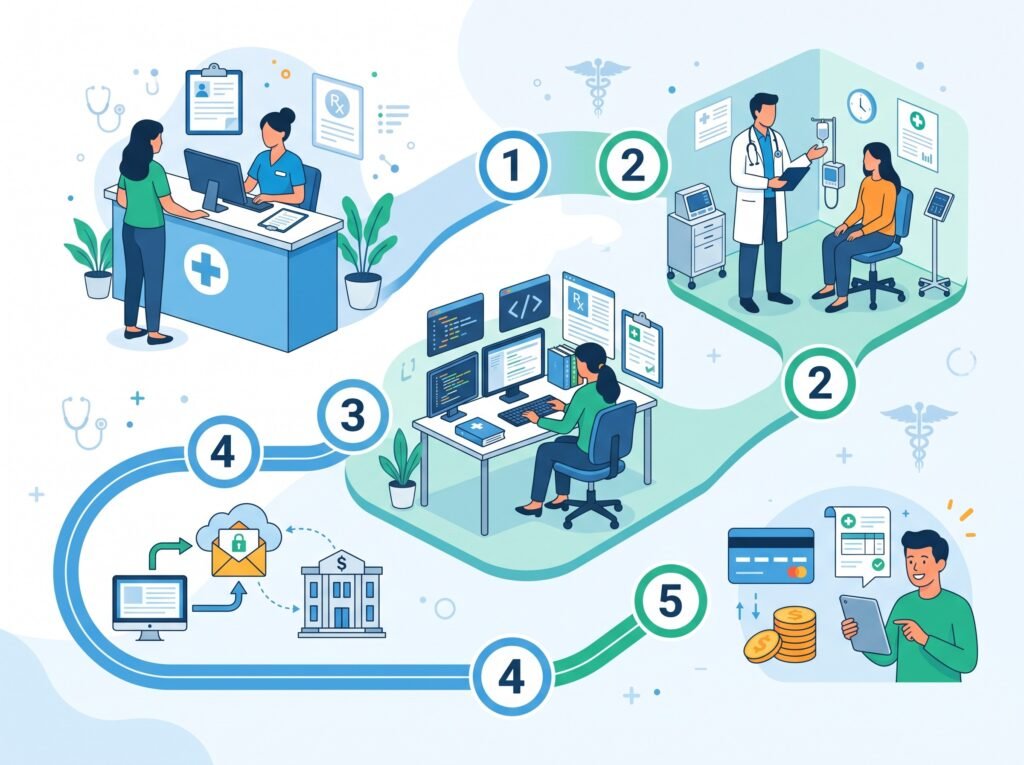
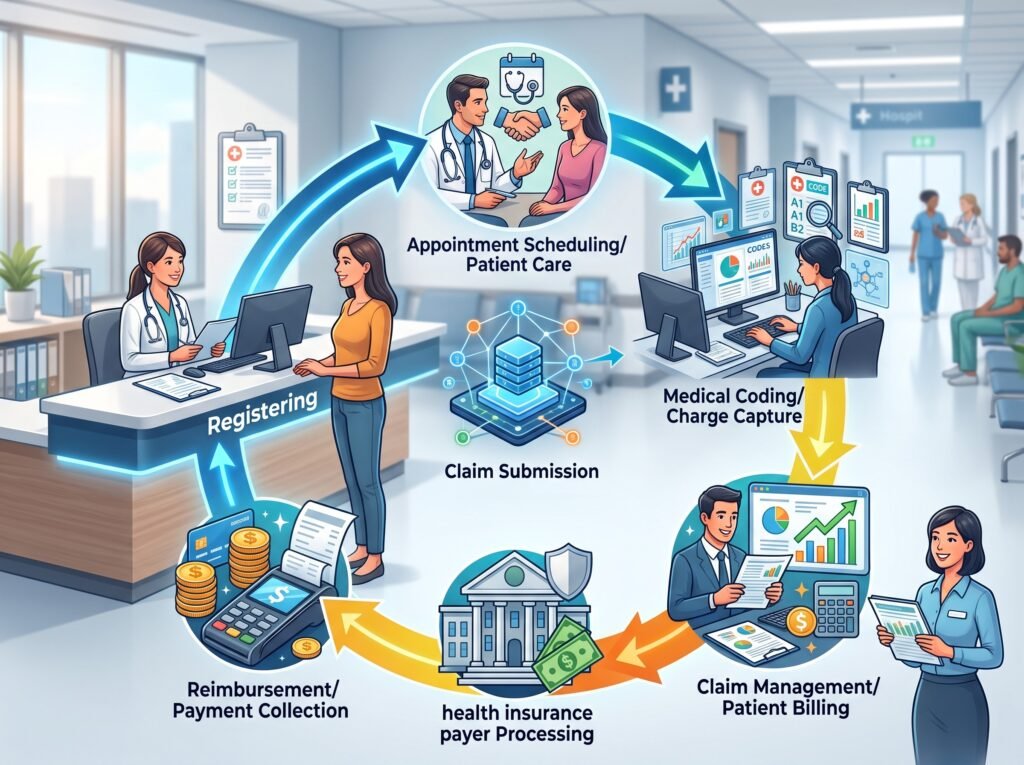
ICD-10-CM, CPT, and HCPCS support different but complementary functions within the healthcare revenue cycle.
Diagnosis codes communicate the patient’s documented condition. CPT codes describe many professional services and procedures. HCPCS Level II codes identify many supplies, equipment items, drugs, and other services.
When used correctly, these systems help providers and payers exchange standardized information, review claims, and apply relevant billing requirements.
Medical coding professionals should stay informed about official updates and payer guidance. When a code selection or documentation question is unclear, consult the relevant official coding resources or a qualified coding and compliance professional rather than guessing.
Frequently Asked Questions
1. What is the main difference between ICD-10 and CPT?
ICD-10-CM codes report diagnoses and health conditions, while CPT codes report many medical services and procedures performed by healthcare professionals.
2. Is HCPCS the same as CPT?
Not exactly. CPT makes up HCPCS Level I. HCPCS Level II is a separate part of the system used primarily to identify products, supplies, equipment, drugs, and other services not included in CPT.
3. Are ICD-10 codes diagnosis codes?
Yes. In U.S. medical billing, ICD-10-CM is used to classify diagnoses, diseases, symptoms, injuries, and other health conditions.
4. Are CPT and HCPCS procedure codes?
CPT codes report many medical procedures and services. HCPCS Level II reports many products, supplies, equipment, drugs, and other services. The exact code set depends on what is being reported.
5. Can one healthcare claim contain all three code types?
Yes, when applicable. A claim may include an ICD-10-CM diagnosis code, a CPT service code, and an HCPCS Level II code for a relevant supply or equipment item. Not every claim requires all three.
6. Who maintains ICD-10-CM, CPT, and HCPCS Level II?
The CDC’s National Center for Health Statistics is responsible for U.S. ICD-10-CM. The AMA maintains CPT. CMS maintains the national HCPCS Level II code set.
7. How can coders make sure they use the correct codes?
Coders should review documentation, consult current official code sets and guidelines, verify descriptors and modifiers, check payer requirements, and follow organizational compliance procedures when clarification is needed.
Conclusion
Understanding ICD-10 vs CPT vs HCPCS helps healthcare professionals distinguish diagnosis codes from procedure codes and supply-related codes. ICD-10-CM communicates the patient’s documented condition, CPT identifies many medical services and procedures, and HCPCS Level II reports many products, supplies, equipment, drugs, and other services.
These code sets serve different purposes but often work together during medical billing and claims processing. By reviewing documentation carefully, checking current coding guidance, and following payer requirements, coding teams can improve the accuracy of their submissions and support a more reliable revenue cycle.