



























































What Is Medical Eligibility Verification?


Medical Eligibility Verification is the process of checking a patient’s health insurance coverage before healthcare services are provided. It helps a medical practice confirm whether a patient is currently covered, what benefits may apply, and what portion of the healthcare cost may be the patient’s responsibility.
For medical practices, eligibility verification is an important part of the revenue cycle. A patient may have an insurance card, but that does not necessarily mean the policy is active on the date of service or that a particular procedure is covered. Verifying coverage in advance gives providers more accurate information for scheduling, authorization, billing, and patient communication.
In the United States, electronic eligibility and benefit inquiries commonly use the HIPAA-standard ASC X12N 270/271 transaction. A provider or authorized party sends a 270 inquiry to a health plan, and the plan returns a 271 response containing available eligibility and benefit information.
What Is Insurance Eligibility Verification?
Insurance eligibility verification is a pre-service administrative process used to confirm a patient’s insurance status and available benefits.
The process generally involves comparing the patient’s demographic and insurance information with information maintained by the health plan. Depending on the payer and the type of inquiry, the response may provide information about:
- Active or inactive coverage
- Effective and termination dates
- Member or subscriber information
- Plan type
- Deductible amounts
- Copayments
- Coinsurance
- In-network and out-of-network coverage
- Coverage for particular types of services
- Benefit limitations or restrictions
- Patient financial responsibility
- Other information relevant to the requested service
CMS explains that eligibility and benefit transactions can be used to obtain information about an enrollee’s eligibility and coverage under a health plan. Federal operating rules also support real-time responses containing financial information such as deductibles, copayments, coinsurance, and service-specific coverage.
Importantly, an eligibility response is not the same thing as a guarantee that a claim will be paid. Actual payment can depend on the patient’s plan, the provider’s network status, coding, medical-necessity requirements, authorization rules, claim information, and other payer policies.
Why Is Medical Eligibility Verification Important?
Accurate patient eligibility information can help a practice identify coverage problems before a claim is submitted.
Without a verification process, a practice may provide services based on outdated or incomplete insurance information. This can create administrative work later when staff must investigate rejected or denied claims, contact patients, correct insurance information, or determine responsibility for unpaid balances.
1. Confirms active coverage
Insurance coverage can change because of employment changes, plan enrollment changes, policy termination, or other circumstances. Checking eligibility close to the date of service helps staff identify whether coverage appears active.
2. Identifies patient financial responsibility
Eligibility responses may provide information about deductibles, copayments, and coinsurance. This can help a practice communicate potential financial responsibility to patients before or around the time of service.
3. Supports accurate claim submission
Correct payer and patient information can reduce avoidable administrative errors during the billing process.
4. Helps identify coverage requirements
Some plans may have specific requirements for certain services, such as referrals or prior authorization. Eligibility information can help staff identify areas requiring additional verification.
5. Supports revenue cycle management
Eligibility verification occurs near the front end of the healthcare revenue cycle. Addressing insurance issues before an encounter can help reduce downstream billing problems and unnecessary rework.
What Information Is Checked During Insurance Verification?
The exact information required varies by payer and transaction system, but a typical verification process may involve several categories of information.
| Information | Why It Matters |
| Patient name | Helps match the patient with the insurance record |
| Date of birth | Used to identify the correct member |
| Member ID | Identifies the insurance policy/member |
| Group number | Helps identify the applicable employer or plan group |
| Subscriber information | Confirms the person who holds the policy |
| Payer information | Identifies the responsible health plan |
| Coverage dates | Helps determine whether coverage is active |
| Provider information | Helps determine applicable network and provider details |
| Service information | May help determine whether benefits apply to a particular service |
| Financial information | May show deductibles, copays, or coinsurance |
Accurate data entry is important. Incorrect patient demographics or member information can result in an unsuccessful eligibility inquiry or an inaccurate response.
How Does the Eligibility Verification Process Work?
Although workflows vary among practices and payers, the basic process usually follows several steps.
Step 1: Collect patient and insurance information
During scheduling or registration, staff collect the patient’s demographic and insurance information.
This may include the patient’s name, date of birth, member ID, group number, subscriber information, and payer details.
Step 2: Review the information for accuracy
Staff should compare the information supplied by the patient with the information already stored in the practice management or electronic health record system.
Errors such as an incorrect member ID or spelling difference can interfere with verification.
Step 3: Submit an eligibility inquiry
The practice or its authorized billing partner submits an eligibility inquiry to the health plan.
For electronic transactions, the standard HIPAA eligibility process uses the 270 transaction for the inquiry and the 271 transaction for the response.
Step 4: Review the response
The returned information is reviewed to determine what the payer reports about eligibility and benefits.
Depending on the plan, staff may review:
- Coverage status
- Effective dates
- Plan information
- Copayment
- Deductible
- Coinsurance
- Service-specific benefits
- Network information
- Other available benefit details
Step 5: Identify additional requirements
Eligibility verification should not automatically be treated as complete authorization for every service.
If the information indicates that authorization, referral, or another payer-specific requirement may apply, staff may need to perform an additional verification step.
Step 6: Document the verification
The practice can record the verification date, payer response, relevant benefit information, and any follow-up actions according to its internal procedures.
Documentation can make it easier for staff to review what information was available when the verification was performed.
Insurance Verification vs. Benefits Verification
The terms insurance verification and benefits verification are sometimes used interchangeably, but they can refer to different levels of review.
Insurance verification generally focuses on confirming whether the patient’s insurance coverage is active and identifying the applicable plan.
Benefits verification goes further by reviewing available benefit information relevant to the planned service. This may include deductibles, copayments, coinsurance, service-specific coverage, and other plan information.
For example, confirming that a patient has active insurance is different from determining how that insurance applies to a specific procedure.
A practice may therefore perform both eligibility and benefits verification before an appointment, particularly when the planned service involves significant patient financial responsibility or payer-specific requirements.
When Should Patient Eligibility Be Verified?
The appropriate timing depends on the practice, payer, type of service, and operational workflow.
Many practices verify eligibility during scheduling or before an appointment and may recheck it closer to the date of service when appropriate.
Repeated verification can be useful because insurance coverage and benefit information can change. CAQH research notes that eligibility and benefit information may need to be checked repeatedly during an episode of care because benefit structures and coverage information can change.
Practices may consider verification:
- When a new patient schedules an appointment
- Before an initial visit
- Before scheduled procedures
- When insurance information changes
- When a patient reports a new insurance plan
- During recurring treatment
- When a payer requires updated eligibility information
- When previous eligibility information appears outdated
The exact workflow should be based on the practice’s payer contracts, specialty, services, and billing procedures.
Common Problems With Insurance Eligibility Verification
Even electronic verification does not eliminate every insurance-related problem.
Incorrect patient information
A misspelled name, incorrect date of birth, or wrong member ID can cause a failed or inaccurate inquiry.
Inactive coverage
A patient may believe that a policy is active even though coverage has ended or changed.
Multiple insurance plans
Patients may have primary and secondary coverage. Coordination of benefits can therefore require additional review.
Changing benefits
Coverage and benefit information can change over time, making older verification results less reliable for a later date of service.
Service-specific requirements
An eligibility response may provide coverage information without answering every question about authorization, medical necessity, referral requirements, or claim payment.
Payer system limitations
Not every payer returns identical information, and available data can vary by plan and transaction method.
How Technology Improves Eligibility Verification
Modern practice management systems, clearinghouses, and revenue cycle platforms can automate portions of the eligibility workflow.
Electronic transactions can reduce the need for manual phone calls and help staff access eligibility information more efficiently. CMS states that HIPAA eligibility operating rules support secure access and real-time responses to provider eligibility questions.
Technology can help practices:
- Submit eligibility inquiries electronically
- Check multiple patients efficiently
- Receive payer responses
- Identify incomplete information
- Document verification activity
- Integrate eligibility data with practice management systems
- Flag certain coverage discrepancies for staff review
Automation should still be monitored. A practice should have procedures for handling failed transactions, unclear responses, payer-specific requirements, and situations requiring manual confirmation.
Eligibility Verification and Medical Billing
Eligibility verification is closely connected to medical billing because insurance information collected at the beginning of the revenue cycle affects later claim processing.
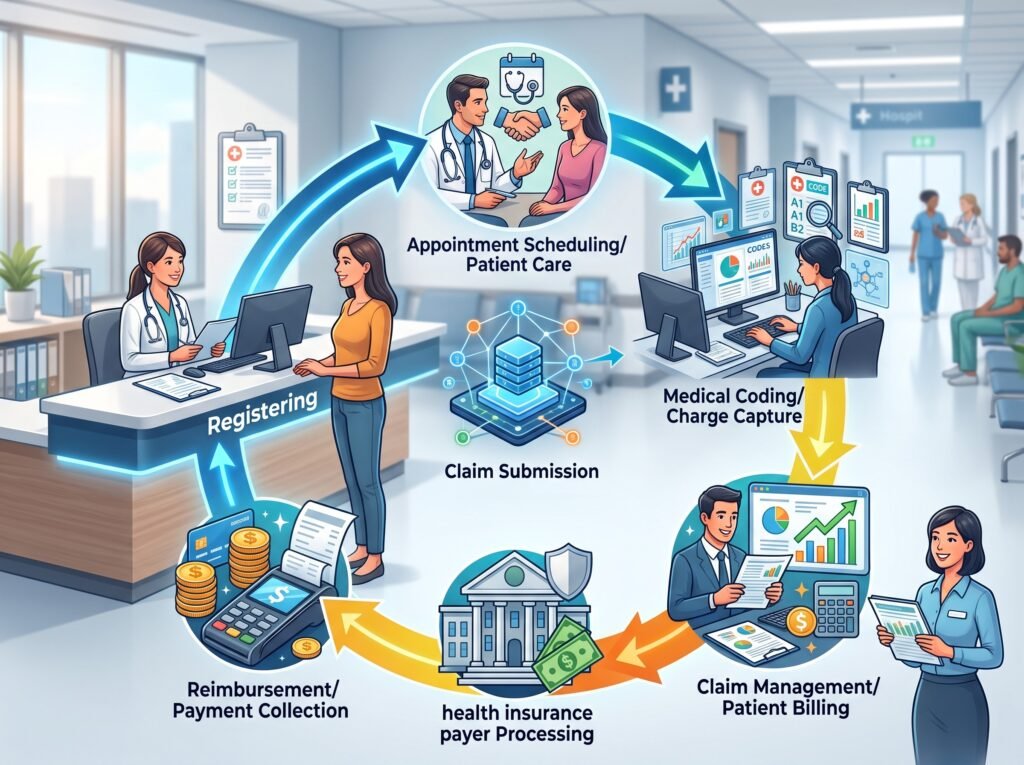
A simplified workflow looks like this:
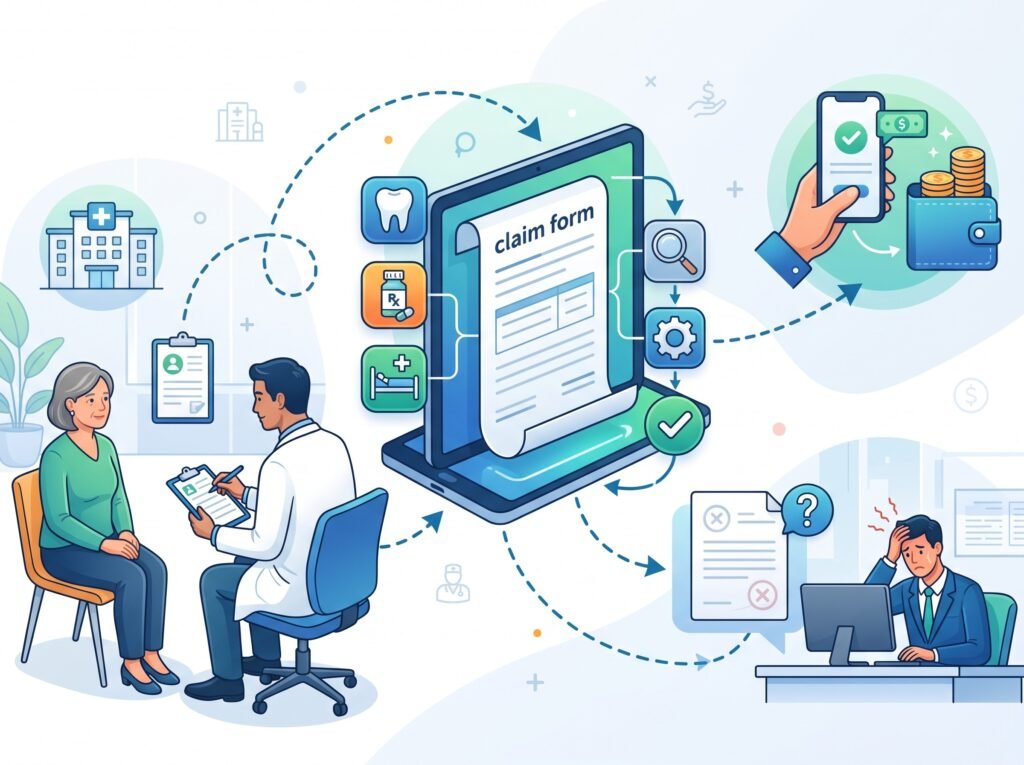
Patient Registration → Eligibility Verification → Appointment/Service → Documentation → Coding → Claim Submission → Payer Adjudication → Payment Posting → Denial/AR Management
When eligibility information is incorrect, the problem may not become apparent until after the claim is submitted.
For this reason, eligibility verification is more than an administrative formality. It is one component of a broader revenue cycle strategy designed to establish accurate patient and insurance information before billing occurs.
Best Practices for Accurate Insurance Eligibility Verification
Medical practices can strengthen their verification workflow by establishing consistent procedures.
Use standardized verification checklists
A checklist can help staff review the same core information for each patient.
Verify against the payer’s information
Do not rely only on the insurance card. Use available payer or electronic eligibility information to confirm current coverage.
Check service-specific benefits when necessary
General eligibility does not always answer whether a particular procedure or service is covered.
Document important findings
Record relevant verification information according to organizational policies and applicable privacy and security requirements.
Train staff regularly
Eligibility workflows, payer requirements, and software systems can change. Regular training can help staff recognize common verification problems.
Have a process for exceptions
Define what staff should do when an electronic response is unavailable, incomplete, inconsistent, or indicates that additional payer contact is necessary.
Is Eligibility Verification a Guarantee of Payment?
No.
An eligibility response indicates information reported by the health plan about coverage or benefits. It does not necessarily guarantee that a specific claim will be paid.
Claim payment may depend on additional factors, including:
- Correct coding
- Documentation
- Medical necessity
- Authorization requirements
- Referral requirements
- Provider network status
- Coverage limitations
- Deductible status
- Claim filing requirements
- Other payer policies
Healthcare organizations should therefore treat eligibility verification as an important verification step rather than a guarantee of reimbursement.
FAQs About Insurance Eligibility Verification
1. What is insurance eligibility verification?
Insurance eligibility verification is the process of checking a patient’s health insurance information to determine whether coverage is active and to review available eligibility and benefit information before healthcare services are provided.
2. What is the difference between eligibility and benefits verification?
Eligibility verification generally confirms coverage status and plan information. Benefits verification provides additional information about how the patient’s plan may apply to specific services, including available financial responsibility information such as copays, deductibles, and coinsurance.
3. What are 270 and 271 transactions?
The 270 is the standard electronic health plan eligibility and benefit inquiry, while the 271 is the corresponding response from the health plan. These transactions are part of HIPAA-adopted electronic healthcare transaction standards.
4. Does eligibility verification guarantee insurance payment?
No. Verification provides information about eligibility and benefits but does not guarantee claim payment. Other requirements, including authorization, medical necessity, coding, documentation, and network rules, may affect reimbursement.
5. When should a patient’s insurance eligibility be checked?
Timing varies by practice and payer. Eligibility may be checked during scheduling, before appointments or procedures, when insurance information changes, and again when updated verification is appropriate.
6. Why can an eligibility inquiry fail?
Common reasons include incorrect patient demographics, invalid member information, missing data, payer system problems, or other transaction errors. Staff may need to correct the information and resubmit the inquiry or contact the payer.
7. Why is eligibility verification important for medical billing?
Accurate eligibility information helps practices identify coverage and benefit issues before services are billed. It supports cleaner front-end workflows and can help reduce avoidable administrative problems later in the revenue cycle.
Conclusion
Insurance eligibility verification is a fundamental part of the healthcare revenue cycle. By confirming patient eligibility, reviewing available benefits, checking relevant financial responsibility information, and identifying additional payer requirements before services are provided, medical practices can establish a more reliable billing workflow.
Effective verification requires more than simply checking whether an insurance policy exists. Practices should verify current coverage, review benefits relevant to the planned service, document important findings, and recognize that eligibility information is not a guarantee of payment.
A consistent combination of accurate registration, electronic verification, staff review, and appropriate follow-up can make patient eligibility and benefits verification more organized and useful for both healthcare providers and their patients.