




























































Dry Eyes: Causes, Symptoms and Treatment Options


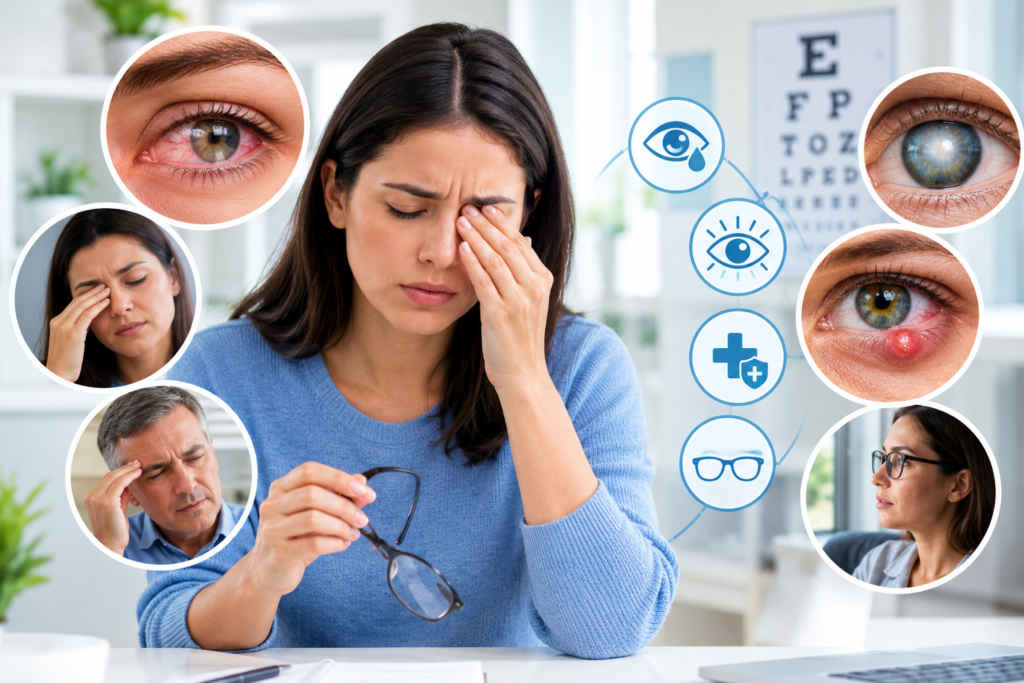
Dry eyes are a common eye condition that occurs when the eyes do not produce enough tears or when the tear film does not work properly. The result can be burning, stinging, redness, blurred vision, sensitivity to light, or a gritty feeling that seems like something is stuck in the eye.
Dry eye can be temporary, especially after prolonged screen use or exposure to wind and dry air. For some people, however, it can become persistent and interfere with reading, working, driving, wearing contact lenses, or other everyday activities.
Understanding dry eye symptoms, identifying possible dry eye causes, and knowing the available treatment options can help people decide when simple environmental changes may be enough and when an eye-care professional should evaluate the problem.
What Are Dry Eyes?
Your eyes depend on a thin layer of tears called the tear film to remain comfortable and maintain a smooth optical surface. Tears also help protect the eye from irritants and support clear vision.
The tear film contains three main components:
- An oily outer layer that slows evaporation
- A watery middle layer that keeps the eye moist
- A mucus-containing inner layer that helps tears spread across the eye surface
Every time you blink, this tear film spreads across the cornea, the clear front surface of the eye. If the eyes do not produce enough tears, tears evaporate too quickly, or the tear film is otherwise unstable, dry eye can develop.
Common Dry Eye Symptoms
Dry eye does not feel exactly the same for everyone. Symptoms can range from mild irritation to persistent discomfort.
Common dry eye symptoms include:
- Burning or stinging
- Scratchy or gritty sensation
- Feeling as though something is in the eye
- Redness
- Blurred or fluctuating vision
- Sensitivity to light
- Eye fatigue
- Excessive watering
- Difficulty wearing contact lenses
- Mucus or stringy discharge around the eyes
Interestingly, watery eyes can occur with dry eye. Irritation of the eye surface can trigger reflex tearing, but those tears may not provide the stable tear film needed to relieve the underlying dryness.
Why can dry eyes cause blurred vision?
A healthy tear film creates a smooth surface over the cornea. When the tear film becomes unstable, the optical surface can temporarily become irregular, leading to fluctuating or blurry vision.
If blurred vision persists or occurs with significant pain or other concerning symptoms, it should not automatically be attributed to dry eye.
What Causes Dry Eyes?
There is no single cause of dry eye. In many people, several factors contribute at the same time.
1. Reduced tear production
Some people do not produce enough of the watery component of tears to keep the eye surface adequately lubricated.
Tear production can decrease with age, and certain health conditions can affect the glands responsible for producing tears.
2. Tears evaporating too quickly
The oily outer layer of the tear film helps slow evaporation. Problems involving the oil-producing meibomian glands in the eyelids can make tears evaporate more quickly.
This type of tear-film instability is an important contributor to evaporative dry eye.
3. Prolonged screen use
Spending long periods looking at computers, tablets, or smartphones can contribute to dry eye because people often blink less frequently during concentrated screen use.
Long periods of reading or other visually demanding activities may have a similar effect when blinking is reduced.
4. Wind, smoke, and dry environments
Environmental conditions can cause tears to evaporate more quickly.
Potential triggers include:
- Strong wind
- Smoke
- Dry air
- Air conditioning
- Heating systems
- Very warm indoor environments
Reducing exposure to these conditions can help some people manage symptoms.
5. Contact lens use
Contact lenses can contribute to dry-eye symptoms in some people, particularly with prolonged wear.
People who regularly experience discomfort while wearing contact lenses should discuss it with an eye-care professional rather than simply tolerating persistent irritation.
6. Certain medications
Some medications can contribute to dry eye as a side effect. Examples may include certain medicines used for allergies and colds, depression, and high blood pressure.
If you suspect that a medication is contributing to your symptoms, do not stop a prescribed medicine on your own. Discuss the issue with the healthcare professional who prescribed it.
7. Health conditions
Dry eye can occur alongside certain medical conditions, including:
- Diabetes
- Thyroid disorders
- Sjögren syndrome
- Lupus
- Rheumatoid arthritis
- Other autoimmune disorders
Identifying an underlying health condition can sometimes be an important part of managing persistent dry eye.
8. Eye surgery
Some types of refractive or laser eye surgery can temporarily or persistently affect tear production and the eye surface.
Anyone experiencing ongoing dryness after eye surgery should discuss symptoms with their eye-care professional.
Who Is More Likely to Develop Dry Eyes?
Dry eye can affect anyone, but certain factors increase the likelihood.
Risk can be higher among people who:
| Risk factor | Why it may matter |
| Older age | Tear production and tear-film stability may change with age |
| Hormonal changes | Changes associated with pregnancy or menopause can affect dry-eye risk |
| Contact lens use | May contribute to ocular surface discomfort |
| Long screen sessions | Reduced blinking can increase evaporation |
| Dry or windy environments | Tears may evaporate more quickly |
| Certain medications | Some medicines can reduce tear production or alter the tear film |
| Autoimmune conditions | Conditions such as Sjögren syndrome can affect tear-producing glands |
| Eyelid disorders | Problems with the eyelids or oil glands can destabilize tears |
Dry eye is particularly common as people get older, and women may have increased risk, including around hormonal changes.
How Is Dry Eye Diagnosed?
An eye-care professional can evaluate dry eye during an eye examination and may use several tests to determine how well the tear film is functioning.
Tear-production testing
A Schirmer test can measure how much tear fluid the eyes produce over a specified period.
Tear break-up time
A tear break-up time test evaluates how long the tear film remains stable after blinking.
Eye and eyelid examination
An eye doctor may examine the surface of the eye, eyelids, and blinking pattern to identify signs of irritation or problems affecting the tear film.
A slit-lamp examination can also help the clinician assess the eye’s surface and tear film.
Diagnosis matters because treatment is more effective when the underlying contributors are identified rather than simply treating discomfort without understanding its cause.
Dry Eye Treatment Options
Treatment depends on the severity and cause of the condition. There is no single treatment that works for everyone.
Artificial tears
Over-the-counter artificial tears are commonly used for mild dry eye. They temporarily supplement the tear film and can reduce irritation and discomfort.
Some people may need preservative-free artificial tears, particularly when frequent use causes irritation or when recommended by an eye-care professional.
Prescription eye drops
For more persistent or inflammatory forms of dry eye, an ophthalmologist may prescribe medications designed to address inflammation or improve tear production.
Prescription options can include medications such as cyclosporine or lifitegrast. The appropriate treatment depends on the underlying cause and the individual’s eye health.
Warm compresses and eyelid care
When eyelid or meibomian-gland problems contribute to dry eye, an eye-care professional may recommend warm compresses and specific eyelid-care measures.
These approaches are generally aimed at improving the function of the eyelid glands and supporting a healthier tear film.
Punctal plugs
In some cases, an eye doctor may recommend punctal plugs. These tiny devices are placed in tear-drainage openings to help keep natural tears on the eye surface for longer.
They may be considered when excessive tear drainage contributes to dryness.
Treating an underlying condition
If dry eye is associated with another medical condition, medication, or eyelid disorder, addressing that contributing factor may be an important part of treatment.
Patients should discuss suspected medication-related symptoms with their healthcare professional rather than changing treatment independently.
Everyday Ways to Reduce Eye Irritation
Simple environmental and behavioral changes can help reduce eye irritation for some people.
Consider:
- Taking regular breaks during prolonged screen use
- Remembering to blink fully and regularly
- Limiting exposure to smoke
- Avoiding direct airflow from fans or air conditioners toward the eyes
- Using a humidifier when indoor air is very dry
- Wearing protective eyewear or wraparound sunglasses in windy conditions
- Following appropriate contact-lens hygiene and wearing schedules
- Getting adequate sleep
- Discussing persistent symptoms with an eye-care professional
For screen-related discomfort, reducing uninterrupted screen sessions and taking regular visual breaks can be particularly useful.
When Should You See an Eye Doctor?
Occasional mild dryness may improve after environmental changes or lubricating eye drops. However, persistent or worsening symptoms deserve professional evaluation.
Make an appointment with an eye-care professional if:
- Symptoms continue despite basic measures
- Dryness interferes with work or daily activities
- You regularly need lubricating drops
- Contact lenses become uncomfortable
- Your vision repeatedly becomes blurry
- Eye redness or irritation persists
- Symptoms are becoming more frequent or severe
An eye examination can help determine whether dry eye is actually responsible or whether another eye condition may be contributing.
Seek urgent care for significant eye symptoms
Severe eye pain, sudden vision loss or major vision changes, significant light sensitivity, or an eye injury should not simply be assumed to be dry eye. These symptoms can indicate other eye problems requiring prompt evaluation.
If something is embedded in the eye or there has been a significant eye injury, avoid rubbing or attempting to remove an embedded object yourself and seek professional care.
Frequently Asked Questions About Dry Eyes
1. What are the most common symptoms of dry eyes?
Common symptoms include burning, stinging, redness, a gritty sensation, sensitivity to light, blurred or fluctuating vision, and excessive watering. Symptoms can vary from person to person.
2. What is the most common cause of dry eyes?
There is no single cause. Dry eye can result from inadequate tear production, rapid tear evaporation, eyelid-gland problems, environmental exposure, medications, contact lenses, screen use, aging, and certain health conditions.
3. Can too much screen time cause dry eyes?
Prolonged screen use can contribute to dry-eye symptoms because people tend to blink less during concentrated screen activities. Taking regular breaks and consciously blinking can help reduce discomfort.
4. Can dry eyes cause watery eyes?
Yes. Irritation caused by dry eye can trigger reflex tearing. However, these extra tears may not have the same composition or stability as a healthy tear film, so the eyes can feel dry despite watering.
5. Are artificial tears safe for dry eyes?
Over-the-counter artificial tears are commonly used to relieve mild dry-eye symptoms. The appropriate product and frequency of use can depend on the individual’s condition. People who need frequent drops or continue to have symptoms should discuss their options with an eye-care professional.
6. Can dry eyes damage your vision?
Dry eye can cause temporary or fluctuating blurred vision. Severe, untreated dry eye can sometimes damage the cornea, so persistent or significant symptoms should be evaluated by an eye-care professional.
7. When should I see an eye doctor for dry eyes?
See an eye-care professional when symptoms persist, worsen, interfere with daily activities, or are accompanied by significant pain, persistent redness, or vision changes. Sudden major vision changes or severe eye pain require prompt medical evaluation.
Conclusion
Dry eyes can cause much more than occasional discomfort. Burning, stinging, redness, blurred vision, light sensitivity, and persistent eye irritation can interfere with everyday activities and may indicate an unstable or inadequate tear film.
Common dry eye causes include reduced tear production, rapid tear evaporation, prolonged screen use, environmental conditions, contact lenses, certain medications, aging, eyelid problems, and some medical conditions. Treatment ranges from lifestyle and environmental changes to artificial tears, prescription medications, eyelid care, and procedures such as punctal plugs.
Because dry eye symptoms can overlap with other eye conditions, persistent or worsening symptoms should be evaluated by a qualified eye-care professional. Identifying the underlying cause is an important step toward choosing appropriate treatment and protecting long-term eye health.


Red Eyes Causes: Common Causes & When to Seek Care
09th Oct 2026[…] Dry Eyes: Causes, Symptoms and Treatment Options […]