



















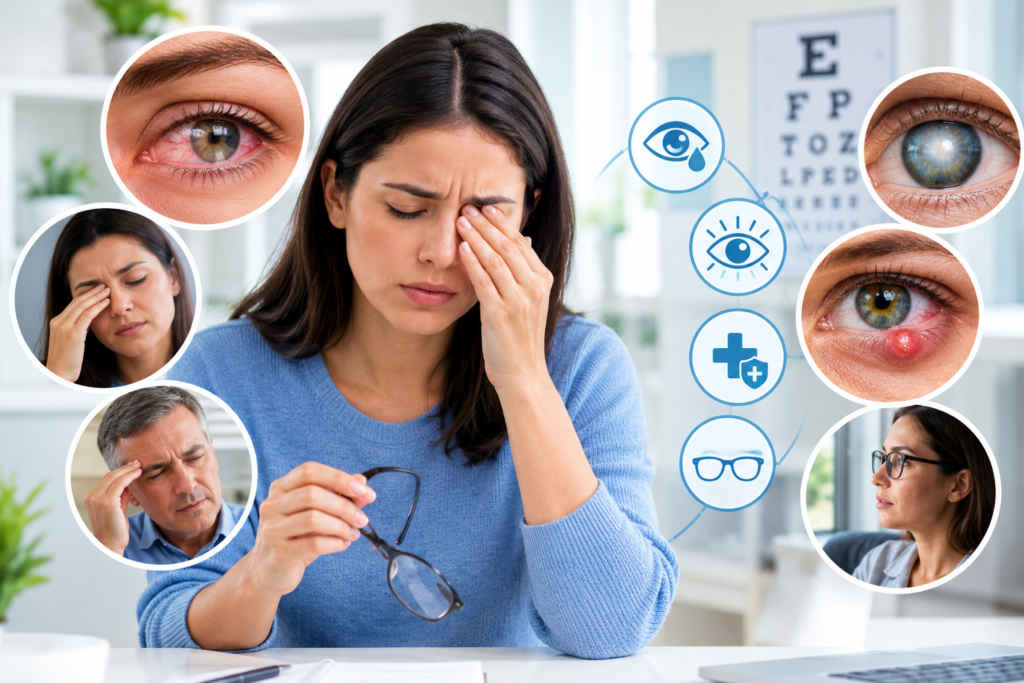









































Red Eyes Causes: Common Causes and When to Seek Care

Red eyes causes range from temporary irritation and dryness to infections and conditions that require prompt medical attention. Eye redness occurs when blood vessels on the surface of the eye become more visible or enlarged. Sometimes the cause is minor and improves on its own, while redness accompanied by pain, light sensitivity, vision changes, or injury can signal a more serious eye problem.
Common causes of eye redness include dry eyes, allergies, irritation from smoke or chemicals, lack of sleep, contact lens problems, broken blood vessels, and conjunctivitis (pink eye). The symptoms accompanying the redness often provide important clues about the possible cause.
Because several eye conditions can look similar, persistent or concerning redness should be evaluated by an eye-care professional rather than self-diagnosed.
What Causes Red Eyes?
There are many possible red eyes causes, and they can affect one or both eyes. Some involve the surface of the eye, while others involve the eyelids, cornea, or deeper structures.
Common causes include:
- Dry eyes
- Viral or bacterial conjunctivitis
- Allergic conjunctivitis
- Irritation from smoke, dust, or fumes
- Contact lens-related irritation or infection
- A small broken blood vessel
- Blepharitis, or inflammation of the eyelids
- A foreign object or minor surface injury
Less common but potentially serious causes include corneal infections, uveitis, glaucoma, and significant eye injuries.
Common Red Eyes Causes and Their Symptoms
1. Dry Eyes
Dry eye occurs when the eyes do not have adequate tears or when tears evaporate too quickly.
People with dry eyes may experience:
- Redness
- Burning or stinging
- A gritty sensation
- Watery eyes
- Blurred or fluctuating vision
- Sensitivity or discomfort
Extended screen use, environmental conditions, certain medications, contact lens use, and other factors can contribute to dry-eye symptoms.
If redness repeatedly occurs along with dryness or irritation, an eye-care professional can help determine the underlying cause.
2. Conjunctivitis or Pink Eye
Conjunctivitis is inflammation of the conjunctiva, the thin membrane covering the white part of the eye and lining the inside of the eyelids.
The three common forms are:
- Viral conjunctivitis
- Bacterial conjunctivitis
- Allergic conjunctivitis
Viral and bacterial conjunctivitis can spread easily from person to person, while allergic conjunctivitis is not contagious.
Viral conjunctivitis
Viral pink eye often causes:
- Redness
- Watery discharge
- Burning or irritation
- Swollen eyelids
- A gritty feeling
It may occur alongside a cold or another respiratory infection. Viral conjunctivitis can begin in one eye and later affect the other.
Bacterial conjunctivitis
Bacterial conjunctivitis can cause:
- Redness
- Eye irritation
- Swelling
- Sticky or thick discharge
- Eyelids that become stuck together, particularly after sleeping
Because symptoms can overlap between different forms of conjunctivitis, it is not always possible to determine the cause based on appearance alone.
Allergic conjunctivitis
Allergic conjunctivitis commonly causes:
- Intense itching
- Redness
- Watery eyes
- Puffy eyelids
It can occur after exposure to allergens such as pollen, dust mites, mold, or animal dander.
Unlike viral and bacterial conjunctivitis, allergic conjunctivitis is not contagious.
3. Allergies
Eye allergies can cause redness even without an infection.
Allergic eye symptoms often occur with other allergy symptoms, such as:
- Sneezing
- Runny or itchy nose
- Watery eyes
- Itchy eyes
- Eyelid swelling
One useful clue is itching. Significant itching is particularly common with allergic conjunctivitis.
Avoiding the suspected allergen and discussing appropriate treatment with a healthcare professional can help when symptoms are persistent or recurring.
4. Irritation From Smoke, Dust, or Chemicals
Environmental irritants are another common reason for red eyes.
Smoke, dust, air pollution, fumes, cosmetics, and other substances can irritate the surface of the eye.
The resulting redness may occur with:
- Watery eyes
- Burning
- Stinging
- A sensation that something is in the eye
Contact with a chemical is different from ordinary irritation and can constitute an eye emergency. A chemical exposure should be treated promptly according to appropriate first-aid guidance and professional medical advice.
5. Broken Blood Vessel in the Eye
Sometimes a small blood vessel on the surface of the eye breaks, producing a sharply defined bright-red patch on the white part of the eye.
This can look alarming but may occur without pain or changes in vision.
A broken blood vessel can happen after activities that temporarily increase pressure, such as coughing or straining, although it can also occur without an obvious trigger.
If redness is accompanied by pain, vision changes, injury, or other concerning symptoms, it should not simply be assumed to be a broken blood vessel.
6. Contact Lens-Related Problems
Contact lenses can sometimes contribute to eye irritation, redness, or infection.
Problems may occur when lenses are:
- Worn longer than recommended
- Not cleaned or stored correctly
- Used despite eye irritation
- Worn during situations where they should be removed
A red eye in a contact lens wearer deserves particular attention, especially when there is pain, discharge, blurred vision, or worsening symptoms, because certain infections involving the cornea can threaten vision.
Anyone with unexplained eye redness should avoid wearing contact lenses until an appropriate healthcare professional advises that it is safe to resume them.
7. Blepharitis
Blepharitis is inflammation affecting the eyelids.
It can cause:
- Red or swollen eyelid edges
- Crusting around the eyelashes
- Irritation
- Burning
- Watery eyes
- Eye redness
Because eyelid inflammation can have different underlying causes, persistent symptoms may require evaluation by an optometrist or ophthalmologist.
Red Eyes Causes That May Be More Serious
Not every red eye is caused by conjunctivitis or simple irritation.
Some potentially serious conditions can also produce redness.
Corneal infection or inflammation
The cornea is the clear front surface of the eye. Infection or inflammation involving the cornea may cause redness, pain, light sensitivity, discharge, and changes in vision.
Contact lens wear is an important risk factor for some corneal infections.
Uveitis
Uveitis involves inflammation inside the eye. It can cause:
- Eye redness
- Pain
- Light sensitivity
- Blurred vision
It requires professional assessment because untreated inflammation can affect vision.
Glaucoma
Certain forms of glaucoma can develop suddenly and cause severe eye pain, redness, blurred vision, headache, nausea, or vomiting. Sudden symptoms of this type require emergency medical assessment.
When Should You Seek Care for a Red Eye?
Knowing when redness needs medical attention is more important than trying to identify the exact cause at home.
Seek urgent medical attention if red eye is accompanied by:
- Moderate or severe eye pain
- Blurred or reduced vision
- Significant sensitivity to light
- Severe headache with nausea or vomiting
- Intense or worsening redness
- A very dark-red appearance
- A recent eye injury
- A foreign object that is stuck in the eye
- Chemical exposure
- Different-sized pupils
- Symptoms that are rapidly getting worse
These signs can occur with conditions that require prompt assessment.
Contact lens wearers should be especially cautious
A red eye in someone who wears contact lenses can be associated with an eye infection requiring urgent evaluation. Pain, vision changes, or worsening redness make prompt assessment particularly important.
When routine evaluation may be appropriate
Arrange an eye-care assessment when:
- Redness does not improve
- Symptoms repeatedly return
- There is persistent discharge
- Eyelid problems continue
- Vision becomes intermittently affected
- You are uncertain about the cause
The NHS advises medical or optician assessment for persistent red-eye symptoms and for red eyes with sticky discharge.
What Can You Do for Mild Eye Redness?
If there is no pain, vision loss, injury, or other warning sign, some mild causes of eye redness may improve with simple measures.
Depending on the cause, general precautions include:
- Avoid rubbing your eyes.
- Wash your hands frequently.
- Avoid wearing contact lenses while the eye is red or irritated.
- Avoid sharing towels, pillows, cosmetics, or eye products when infectious conjunctivitis is suspected.
- Reduce exposure to smoke, dust, and other irritants.
- Follow appropriate instructions for any eye drops recommended by a healthcare professional or pharmacist.
If infectious conjunctivitis is suspected, good hand hygiene is particularly important because viral and bacterial forms can spread through contact.
Avoid using someone else’s prescription eye drops or assuming that an antibiotic is appropriate. Antibiotics do not treat viral or allergic conjunctivitis, and the wrong treatment can delay appropriate care.
How Is the Cause of Eye Redness Diagnosed?
An eye-care professional may determine the likely cause by asking about:
- When the redness started
- Whether one or both eyes are affected
- Pain or itching
- Discharge
- Changes in vision
- Light sensitivity
- Recent illness
- Allergy exposure
- Contact lens use
- Recent injury or chemical exposure
- Previous eye problems
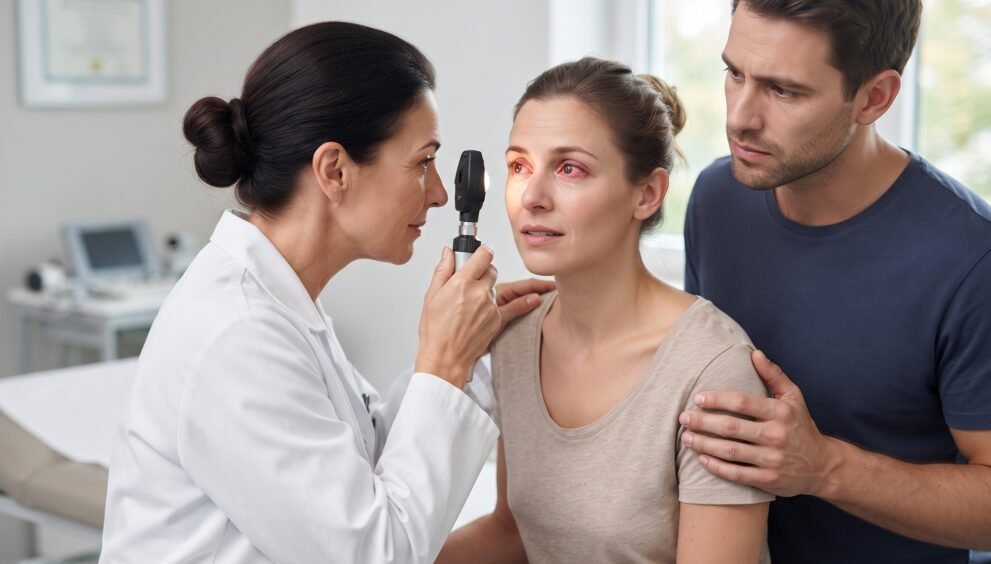
The eye may then be examined using specialized equipment. Depending on the findings, additional testing may be necessary.
The appearance of a red eye alone is not always enough to distinguish between conjunctivitis and more serious conditions.
Red Eye vs. Pink Eye: Are They the Same?
Not necessarily.
Red eye is a symptom or description. Pink eye, medically called conjunctivitis, is a specific condition involving inflammation of the conjunctiva.
Therefore, someone can have a red eye without having conjunctivitis.
For example, dry eye, a broken blood vessel, glaucoma, corneal problems, irritation, and other conditions can all produce eye redness.
This distinction is important because treatment depends on the underlying cause.
Frequently Asked Questions About Red Eyes
1. What are the most common red eyes causes?
Common causes include dry eyes, viral or bacterial conjunctivitis, allergies, irritation from smoke or dust, contact lens problems, blepharitis, and broken blood vessels.
2. Is a red eye always conjunctivitis?
No. Conjunctivitis is one cause of eye redness, but red eyes can also result from dry eye, allergies, irritation, contact lens complications, injuries, and other eye conditions.
3. Can allergies cause red eyes?
Yes. Allergic conjunctivitis commonly causes itchy, watery, swollen, and red eyes. It is not contagious.
4. When is a red eye an emergency?
Seek urgent medical care when redness occurs with severe pain, vision changes, significant light sensitivity, severe headache with nausea, serious injury, chemical exposure, or a foreign object in the eye.
5. Should I wear contact lenses when my eye is red?
It is generally safest to stop wearing contact lenses while an eye is red or irritated and obtain appropriate professional advice, particularly if there is pain, discharge, or vision changes. Contact lens-related red eye can sometimes represent an infection.
6. How long does conjunctivitis usually last?
The duration depends on the cause. Many cases of conjunctivitis improve without specific treatment, but persistent, worsening, painful, or vision-affecting symptoms should be assessed by an eye-care professional.
7. Can I diagnose the cause of red eyes myself?
It is not always possible to accurately identify the cause from appearance alone. Several eye conditions have overlapping symptoms. Persistent or concerning redness should be evaluated by a qualified healthcare professional.
Conclusion
Understanding the common red eyes causes can help people recognize when eye redness may be related to something relatively minor, such as dryness, allergies, irritation, or a broken blood vessel, and when it may require professional evaluation.
Conjunctivitis is a common cause of eye redness, but it is not the only one. Pain, light sensitivity, vision changes, significant discharge, contact lens use, injury, or rapidly worsening symptoms can indicate a condition that needs prompt attention.
When in doubt, it is safer to have persistent or concerning red eye symptoms assessed by an optometrist, ophthalmologist, or other qualified healthcare professional rather than attempting to diagnose the cause independently.