

























































HCPCS Codes Explained: What Healthcare Professionals Should Know

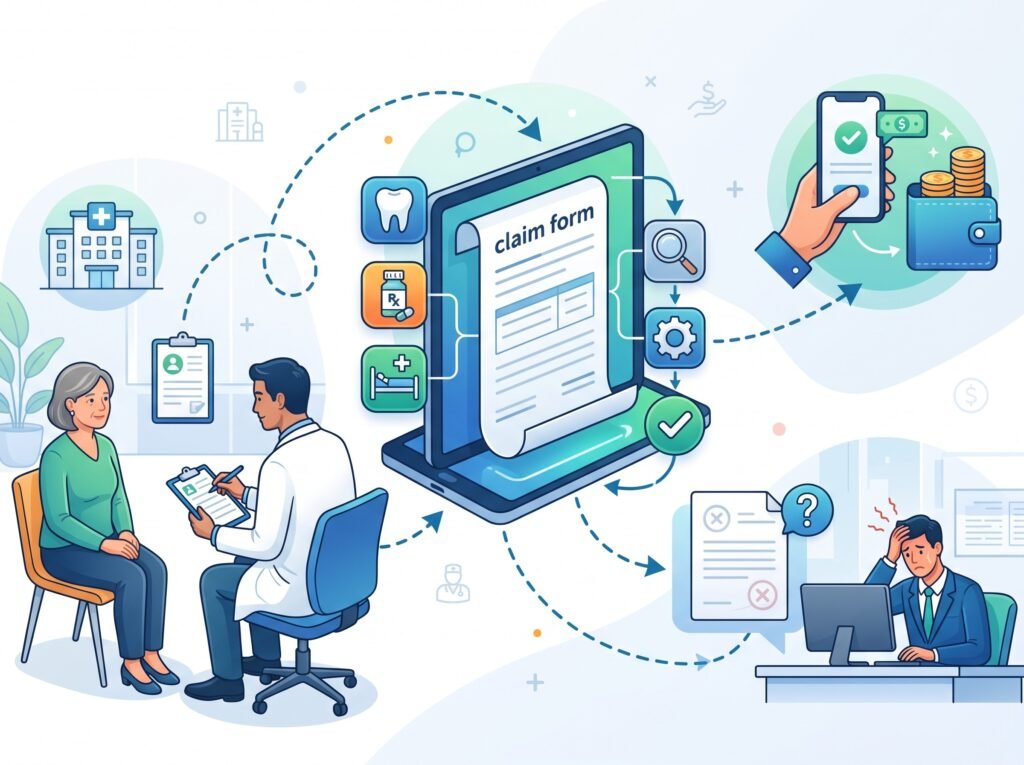
HCPCS codes are a fundamental part of healthcare billing and coding in the United States. They help healthcare providers, suppliers, insurers, and government programs identify medical services, products, supplies, equipment, and certain drugs on claims.
For healthcare professionals, understanding HCPCS codes is especially important when billing for items or services that are not fully represented by CPT codes. HCPCS includes two major levels: Level I, which consists of CPT codes, and Level II, which uses alphanumeric codes to describe many products, supplies, services, and other billable items.
For example, HCPCS Level II is commonly used for durable medical equipment (DME), prosthetics, orthotics, supplies, ambulance services, and certain drugs and biological products.
Understanding how these codes work can help coding and billing teams select appropriate codes, interpret claim information, and reduce avoidable billing problems.
What Are HCPCS Codes?
HCPCS stands for Healthcare Common Procedure Coding System. It is a standardized coding system used to identify healthcare services, procedures, products, supplies, and equipment for billing and administrative purposes.
The HCPCS system has two primary levels:
| HCPCS Level | Coding System | General Purpose |
| Level I | CPT | Identifies many physician and other healthcare professional services and procedures |
| Level II | Alphanumeric HCPCS | Identifies products, supplies, equipment, drugs, ambulance services, and other services not represented by CPT |
HCPCS Level I consists of CPT codes, which are five-digit numeric codes maintained by the American Medical Association.
HCPCS Level II codes are generally made up of one letter followed by four numbers, such as codes beginning with A, E, J, L, or other designated letters.
Although people often use the term “HCPCS codes” when referring specifically to Level II codes, technically the HCPCS system includes both Level I and Level II.
What Is HCPCS Level II?
HCPCS Level II is the portion of the HCPCS system most healthcare professionals associate with alphanumeric billing codes.
CMS maintains the national HCPCS Level II code set. These codes are particularly important for services and products that are not included in the CPT code set.
Examples include:
- Durable medical equipment
- Prosthetics
- Orthotics
- Medical supplies
- Ambulance services
- Certain drugs and biological products
- Certain laboratory tests and other specialized services
- Other products and services outside CPT’s coding jurisdiction
For example, a healthcare claim involving a wheelchair, oxygen equipment, certain injectable drugs, or medical supplies may require a Level II HCPCS code rather than—or in addition to—a CPT code.
Why HCPCS Level II Matters
HCPCS Level II gives providers and suppliers a standardized way to report items and services that might otherwise be difficult to identify consistently on an insurance claim.
This is particularly important in Medicare and other insurance billing environments where accurate identification of the product or service can affect claim processing, coverage review, and payment.
However, assigning a HCPCS code does not automatically mean that an insurer will cover the item or pay a particular amount. Coverage and payment depend on applicable policies, patient eligibility, medical necessity requirements, payer rules, and other factors.
How Are HCPCS Codes Structured?
One of the easiest ways to recognize a Level II HCPCS code is its format.
A typical Level II code contains:
One alphabetic character + four numbers
For example:
- A-codes are commonly associated with transportation, medical supplies, and related items.
- E-codes are commonly associated with durable medical equipment.
- J-codes are commonly used for certain drugs and administered medications.
- L-codes are commonly associated with orthotic procedures and devices.
The letter categories provide a general organizational framework, but coders should always verify the specific code descriptor and applicable coding guidance rather than relying only on the first letter.
HCPCS files can also contain modifiers and additional information used to report circumstances associated with a service or item.
HCPCS Codes vs. CPT Codes
HCPCS and CPT are closely related, but they are not interchangeable.
CPT is Level I of HCPCS and primarily identifies medical services and procedures performed by physicians and other qualified healthcare professionals.
HCPCS Level II identifies many products, supplies, equipment, drugs, and services that are not included in CPT.
| Feature | CPT | HCPCS Level II |
| HCPCS level | Level I | Level II |
| Format | Five numeric digits | One letter + four numbers |
| Maintained by | American Medical Association | CMS for the national Level II code set |
| Common use | Professional services and procedures | Supplies, equipment, drugs, ambulance services, DMEPOS, and other items |
| Example application | Office visit or surgical procedure | Wheelchair, medical supply, certain drug or DME item |
A claim can contain both CPT and HCPCS Level II codes when multiple services or items are being reported.
HCPCS Codes vs. ICD-10 Codes
Another common source of confusion is the difference between HCPCS and ICD-10.
HCPCS and CPT generally describe what was provided, while ICD-10-CM codes describe diagnoses and health conditions.
For example, a patient may receive a medical service because of diabetes, arthritis, kidney disease, or another condition. The diagnosis may be represented with an ICD-10-CM code, while the service, product, or supply may be represented by a CPT or HCPCS Level II code.
This distinction is important because medical claims often require both diagnosis information and service or item information.
In simple terms:
- ICD-10-CM: Why was the patient treated?
- CPT: What professional service or procedure was performed?
- HCPCS Level II: What product, supply, equipment, drug, or other applicable service was provided?
The exact coding requirements depend on the claim type, payer, setting, and applicable coding rules.
Common Uses of HCPCS Level II Codes
1. Medical Supplies
HCPCS Level II includes codes used to report many types of medical supplies.
Depending on the item and billing circumstances, this may include supplies used for wound care, diabetes management, ostomy care, respiratory care, and other healthcare needs.
2. Durable Medical Equipment
Durable medical equipment, commonly called DME, is another major area where HCPCS Level II coding is used.
Examples can include:
- Wheelchairs
- Walkers
- Oxygen equipment
- Hospital beds
- Certain mobility equipment
- Other qualifying medical equipment
Correct coding may require more than simply identifying the equipment. Documentation, medical necessity, coverage requirements, quantity, modifiers, and other payer-specific rules may also matter.
3. Drugs and Biological Products
Certain drugs and biological products may be reported using HCPCS Level II codes.
Drug coding can be particularly detail-sensitive because code descriptors may relate to the drug, formulation, dosage or billing unit.
Coders and billers should verify the current code descriptor and applicable billing instructions instead of relying on an outdated code list.
4. Ambulance Services
HCPCS Level II codes are also used to identify certain ambulance services.
The appropriate code can depend on the type of transportation and circumstances surrounding the service.
5. Prosthetics and Orthotics
Prosthetic and orthotic devices are another important category.
Accurate coding helps identify the specific type of device or service being billed and supports appropriate claim processing.
How Healthcare Professionals Use HCPCS Codes
HCPCS coding is not simply a matter of finding a code that appears to match an item.
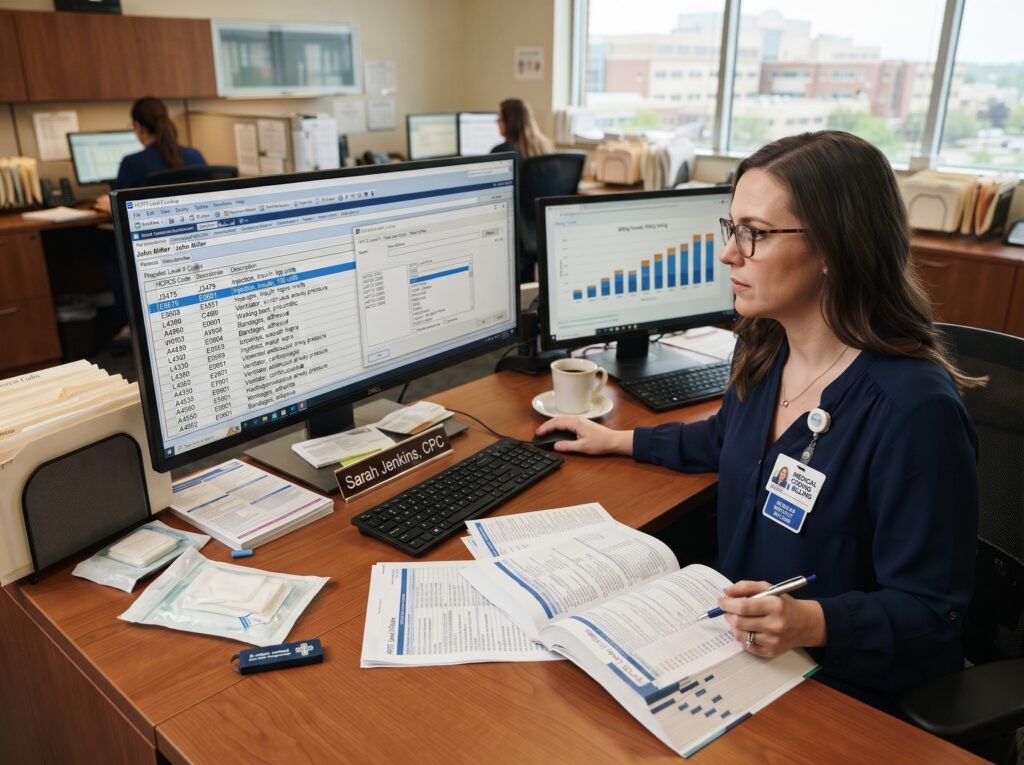
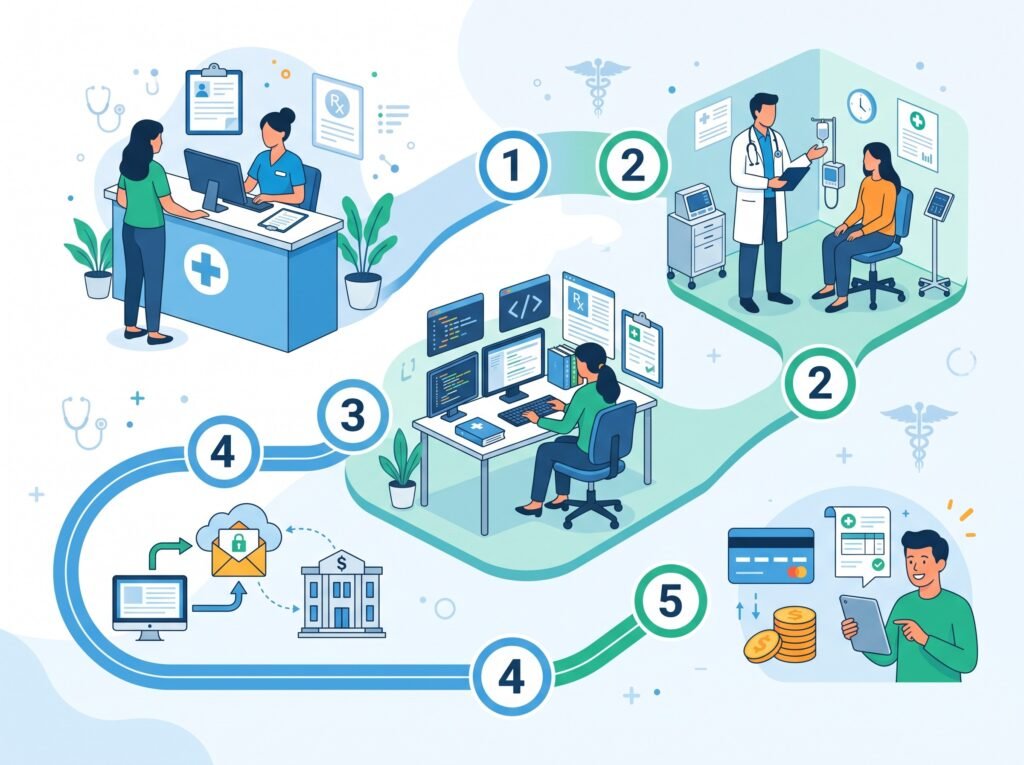
A typical coding workflow may include:
- Review the documentation.
Determine exactly what service, product, supply, equipment, or drug was provided. - Identify the applicable coding system.
Determine whether the item should be reported using CPT, HCPCS Level II, ICD-10-CM, or another applicable code set. - Search the current code set.
Use the current official HCPCS file and applicable coding guidance. - Review the complete descriptor.
Do not select a code based only on a keyword or code-family description. - Check applicable modifiers.
Some services or items may require modifiers to accurately communicate billing circumstances. - Review payer requirements.
Medicare, Medicaid, and commercial insurers can have different coverage and billing requirements. - Verify documentation and medical necessity requirements.
The medical record or supporting documentation should substantiate the reported service or item when required. - Submit the claim accurately.
The code should be reported with the necessary claim information and supporting documentation.
Common HCPCS Coding Mistakes
Even experienced billing teams can encounter HCPCS coding problems. Common issues include:
Using an outdated code
HCPCS Level II codes are updated regularly. CMS publishes quarterly HCPCS update files, making it important for coding teams to work from current information.
Selecting a code based only on a keyword
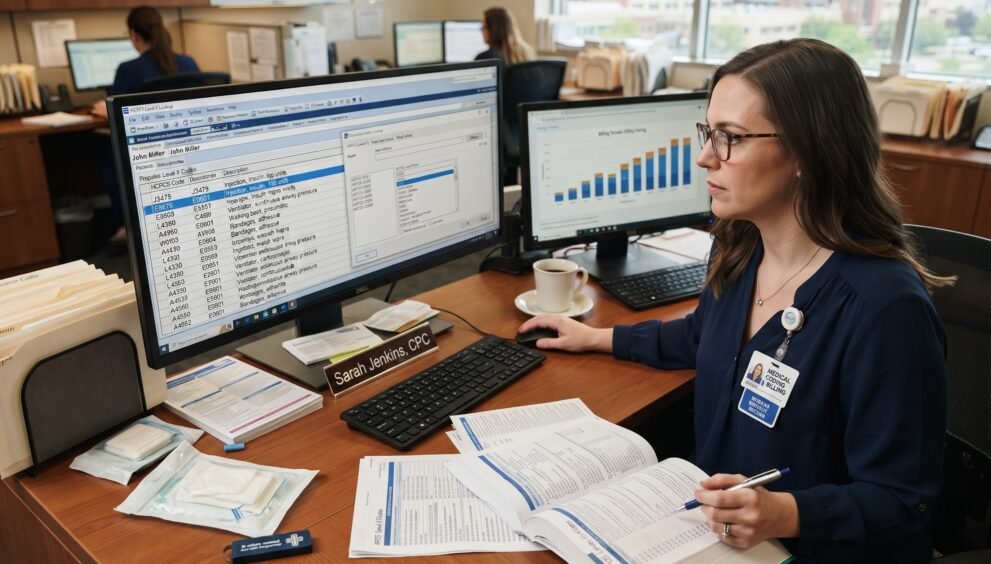
A search result may contain several similar codes. The complete descriptor, coding guidance, units, modifiers, and billing circumstances should be reviewed before finalizing the code.
Confusing HCPCS with CPT
Because CPT is technically HCPCS Level I, the terminology can be confusing. Healthcare professionals should understand whether they are working with a CPT code or a Level II alphanumeric code.
Ignoring payer-specific requirements
A valid HCPCS code does not guarantee coverage or payment. Payer policies can determine whether a particular item or service is covered and what documentation is required.
Reporting incorrect units
Some HCPCS codes are associated with specific billing units. Reporting the wrong quantity or unit can create claim discrepancies and potentially lead to denials or payment problems.
Insufficient documentation
The documentation should support the item or service reported on the claim. This is particularly important for DME, supplies, drugs, and other services subject to medical necessity or coverage requirements.
How HCPCS Updates Affect Medical Coding
Healthcare professionals should pay attention to HCPCS updates because codes can be added, revised, or deleted.
CMS publishes official HCPCS Level II updates throughout the year. The current CMS quarterly update page includes an October 2026 Alpha-Numeric HCPCS file, along with earlier 2026 releases.
This means organizations should avoid relying indefinitely on static spreadsheets, old code books, or previously saved code lists.
A strong coding process should include:
- Regular review of HCPCS updates
- Verification of effective dates
- Communication between coding and billing teams
- Updates to internal billing systems
- Review of payer-specific policies
- Staff education when important coding changes occur
Best Practices for Accurate HCPCS Coding
Healthcare organizations can improve coding accuracy by establishing a consistent verification process.
Use current official code information
Always verify the code against the applicable current code set and official guidance.
Read the entire descriptor
Do not choose a code solely because its title contains the correct keyword.
Match the code to the documentation
The documentation should support what was actually provided.
Check units and modifiers
Incorrect units or missing modifiers can affect claim processing.
Understand coverage separately from coding
A code identifies an item or service, but coverage and payment are separate considerations.
Train staff regularly
Because coding systems and payer requirements change, ongoing education can help coding and billing teams maintain accuracy.
Escalate uncertain cases
When documentation does not clearly support a code, coders should follow organizational compliance procedures and seek clarification from an appropriate qualified professional rather than guessing.
Why HCPCS Coding Accuracy Matters
Accurate HCPCS coding supports communication among healthcare providers, suppliers, payers, and government programs.
It can help organizations:
- Report services and products consistently
- Submit cleaner claims
- Support appropriate reimbursement processes
- Maintain accurate billing records
- Reduce avoidable coding discrepancies
- Support compliance with applicable billing requirements
- Improve communication between clinical, coding, and billing teams
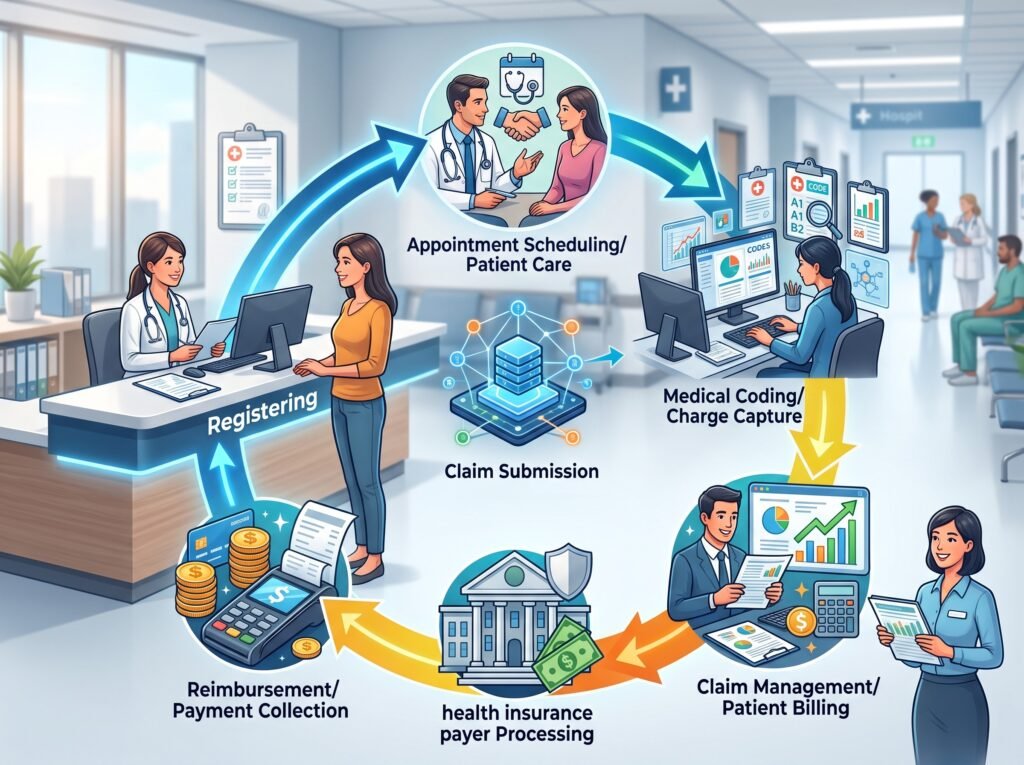
HCPCS coding is therefore more than a billing formality. It is part of the broader healthcare revenue cycle and administrative infrastructure.
Frequently Asked Questions About HCPCS Codes
1. What does HCPCS stand for?
HCPCS stands for Healthcare Common Procedure Coding System. It is a standardized healthcare coding system consisting of Level I CPT codes and Level II alphanumeric codes.
2. What are HCPCS Level II codes used for?
HCPCS Level II codes are primarily used to identify products, supplies, equipment, drugs, ambulance services, and other services that are not included in the CPT code set.
3. Are HCPCS and CPT codes the same?
Not exactly. CPT is HCPCS Level I, while HCPCS Level II consists primarily of alphanumeric codes maintained nationally by CMS.
4. What is the difference between HCPCS and ICD-10?
HCPCS and CPT generally identify services, procedures, products, or supplies, while ICD-10-CM is primarily used to report diagnoses and health conditions.
5. How often are HCPCS Level II codes updated?
CMS publishes HCPCS Level II updates on a quarterly basis. Healthcare organizations should check the current official files and effective dates before using codes for claims.
6. Does having a HCPCS code mean Medicare will pay for the service?
No. Having a HCPCS code does not by itself establish coverage or payment. Coverage, medical necessity, eligibility, documentation, and other Medicare or payer requirements may apply.
7. Who should healthcare professionals contact when they are unsure about a HCPCS code?
Coding questions should be handled according to the organization’s coding and compliance procedures. When a situation is unclear, an appropriately qualified medical coding professional or other responsible healthcare billing/compliance resource should review the documentation and applicable guidance.
Conclusion
Understanding HCPCS codes is essential for healthcare professionals involved in medical coding, billing, claims processing, and revenue cycle management. HCPCS Level II provides a standardized way to identify many products, supplies, equipment, drugs, ambulance services, and other items that fall outside the CPT code set.
Accurate coding requires more than finding a code that looks appropriate. Healthcare professionals should review documentation, verify current code descriptors, check units and modifiers, understand payer requirements, and stay informed about code-set updates.
For organizations handling complex claims or high-volume billing, maintaining a structured coding review process can help support accurate and compliant claim submission. When coding or documentation questions arise, consult qualified coding, billing, or compliance professionals and the applicable official guidance.