





























































Common Digestive Problems: Symptoms and Causes


Digestive problems are common and can affect almost anyone at some point. Bloating after a meal, occasional heartburn, constipation, diarrhea, gas, nausea, or stomach discomfort may be temporary. However, recurring or persistent digestive symptoms can sometimes be associated with an underlying digestive disorder that needs medical evaluation.
The digestive system includes the gastrointestinal tract as well as organs such as the liver, pancreas, and gallbladder. Together, these organs help break down food, absorb nutrients, and eliminate waste.
Some of the most common digestive problems include acid reflux, constipation, diarrhea, irritable bowel syndrome (IBS), indigestion, gas and bloating, food poisoning, celiac disease, and gallstones. Their symptoms can overlap, which is why persistent or unusual symptoms should not automatically be attributed to a particular condition.
Common Digestive Problems at a Glance
The following table provides a quick overview of several frequently encountered digestive conditions.
| Digestive Problem | Common Symptoms | Possible Causes or Triggers |
| Acid reflux/GERD | Heartburn, regurgitation, chest discomfort, swallowing problems | Reflux of stomach contents into the esophagus, certain medications, obesity, pregnancy, hiatal hernia |
| Constipation | Hard stools, fewer bowel movements, straining, incomplete evacuation | Low fiber, dehydration, inactivity, medications, changes in routine |
| Diarrhea | Loose or watery stools, urgency, cramps, nausea | Infections, food intolerance, medications, digestive disorders |
| IBS | Abdominal pain, diarrhea, constipation, bloating | Complex gut-brain interactions; exact cause is not fully understood |
| Indigestion | Upper abdominal discomfort, fullness, bloating, nausea | Eating patterns, certain foods, medications, or underlying digestive conditions |
| Gas and bloating | Abdominal fullness, belching, passing gas | Swallowed air, certain foods, constipation, food intolerances, digestive disorders |
| Celiac disease | Bloating, diarrhea, abdominal pain, constipation, nausea | Immune reaction to gluten that damages the small intestine |
| Gallstones | Upper-right abdominal pain, nausea, vomiting | Gallstones blocking bile ducts |
Not everyone with these symptoms has a digestive disease. Symptoms can have many possible causes, and diagnosis generally requires consideration of medical history, examination, and sometimes testing.
1. Acid Reflux and GERD
Occasional acid reflux is common. It happens when stomach contents flow backward into the esophagus.
When reflux becomes recurrent or causes complications, it may be diagnosed as gastroesophageal reflux disease (GERD).
Common symptoms
GERD may cause:
- Heartburn
- Regurgitation of stomach contents
- A sour or acidic taste
- Chest discomfort
- Difficulty or pain when swallowing
- Nausea
- Chronic cough or hoarseness in some people
Factors that can contribute to GERD include obesity, pregnancy, smoking, certain medications, and hiatal hernia.
Persistent reflux symptoms should be discussed with a healthcare professional, particularly when symptoms do not improve or when there are warning signs such as difficulty swallowing, persistent vomiting, unexplained weight loss, or signs of gastrointestinal bleeding.
2. Constipation
Constipation is another common digestive problem. It does not simply mean that someone has fewer bowel movements than another person.
Symptoms can include:
- Fewer than three bowel movements per week
- Hard, dry, or lumpy stools
- Difficulty passing stool
- Painful bowel movements
- A feeling that not all stool has passed
Possible contributors include inadequate dietary fiber, dehydration, low physical activity, changes in routine, ignoring the urge to have a bowel movement, and certain medications.
Constipation can also occur alongside medical conditions such as celiac disease, diabetes, hypothyroidism, and some disorders affecting the nervous system.
Persistent constipation should be evaluated when it does not improve with appropriate self-care. Seek prompt medical attention if constipation occurs with rectal bleeding, blood in the stool, constant abdominal pain, vomiting, fever, inability to pass gas, or unexplained weight loss.
3. Diarrhea
Diarrhea generally involves loose or watery stools occurring more frequently than usual.
Common digestive symptoms associated with diarrhea
- Loose or watery stools
- Urgent need to use the bathroom
- Abdominal cramps or pain
- Nausea
- Vomiting
- Fever in some infections
- Dehydration
- Weight loss when diarrhea becomes chronic
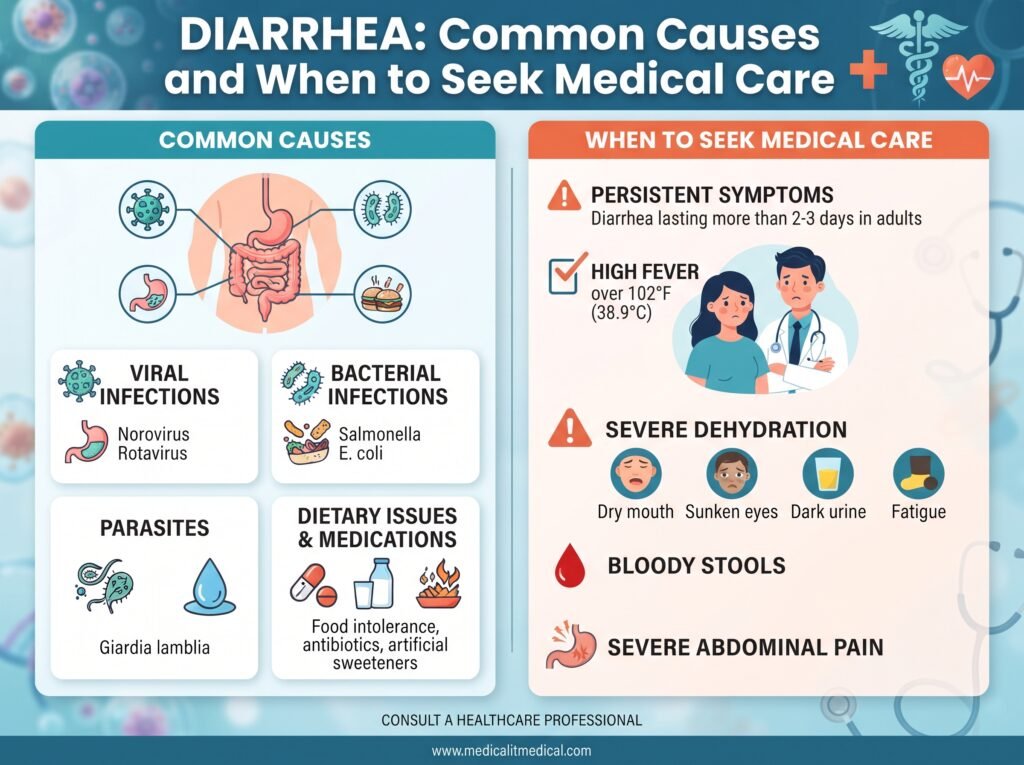
Short-term diarrhea is often caused by infections, including foodborne illnesses. Other possible causes include medications, food intolerances, and digestive disorders such as celiac disease, Crohn’s disease, and ulcerative colitis.
The CDC identifies diarrhea, stomach cramps, nausea, vomiting, and fever among the common symptoms of food poisoning.
Persistent or severe diarrhea deserves medical attention, particularly when there is blood in the stool, significant dehydration, high fever, frequent vomiting, or symptoms that continue beyond the expected duration of a short-term illness.
4. Irritable Bowel Syndrome (IBS)
Irritable bowel syndrome is a common digestive disorder characterized by recurring abdominal pain along with changes in bowel movements.
A person may experience:
- Constipation
- Diarrhea
- Alternating constipation and diarrhea
- Bloating
- Abdominal discomfort
- A feeling of incomplete bowel movements
- Mucus in the stool in some cases
IBS is considered a disorder of gut-brain interaction. Researchers do not have one single explanation for why IBS develops, and different factors may contribute to symptoms.
Importantly, IBS should not simply be assumed whenever someone has abdominal pain or irregular bowel movements. Other conditions can cause similar symptoms, so persistent symptoms should be assessed appropriately.
Dietary changes, stress management, physical activity, and medications may form part of an individualized management plan depending on the person’s symptoms and healthcare professional’s recommendations.
5. Indigestion
Indigestion, also called dyspepsia, describes discomfort or unpleasant symptoms in the upper abdomen.
Symptoms may include:
- Feeling uncomfortably full during or after a meal
- Upper abdominal discomfort or burning
- Bloating
- Belching
- Nausea
Indigestion can occur occasionally, but recurring symptoms may have several possible causes, including certain foods, medications, acid-related conditions, ulcers, or other digestive problems.
If indigestion is persistent or accompanied by symptoms such as unexplained weight loss, repeated vomiting, difficulty swallowing, or gastrointestinal bleeding, medical evaluation is important.
6. Gas and Bloating
Gas is a normal part of digestion. People produce intestinal gas when bacteria in the large intestine break down certain carbohydrates, and gas can also enter the digestive tract when people swallow air.
Bloating refers to a sensation of fullness or swelling in the abdomen.
Common contributors include:
- Eating quickly
- Swallowing excess air
- Carbonated drinks
- Certain carbohydrates or high-fiber foods
- Constipation
- Food intolerances
- IBS and other digestive disorders
Occasional gas or bloating is usually not a sign of a serious problem. However, frequent or severe bloating, particularly when accompanied by pain, vomiting, weight loss, blood in the stool, or major changes in bowel habits, should be evaluated.
7. Food Poisoning and Gastroenteritis
Food poisoning occurs after consuming food or drinks contaminated with harmful germs or their toxins.
Common symptoms include:
- Diarrhea
- Abdominal cramps
- Nausea
- Vomiting
- Fever
Symptoms can begin within hours or several days depending on the organism involved.
Most cases are temporary, but severe foodborne illness can cause significant dehydration and other complications.
The CDC recommends seeking medical care for severe symptoms such as bloody diarrhea, diarrhea lasting more than three days, high fever, repeated vomiting that prevents keeping liquids down, or signs of dehydration.
People who are pregnant, older adults, young children, and people with weakened immune systems can be at greater risk from certain foodborne infections.
8. Celiac Disease
Celiac disease is a chronic digestive and immune disorder triggered by eating gluten in susceptible individuals. Gluten is found in wheat, barley, and rye.
The immune response associated with celiac disease can damage the small intestine and interfere with nutrient absorption.
Digestive symptoms may include:
- Bloating
- Chronic diarrhea
- Constipation
- Gas
- Abdominal pain
- Nausea or vomiting
- Loose, greasy, bulky, or foul-smelling stools
Some people have symptoms outside the digestive system, while others may have few or no obvious symptoms.
Celiac disease cannot be diagnosed based on symptoms alone because its symptoms can resemble other digestive conditions. Healthcare professionals may use blood tests and, when appropriate, other diagnostic procedures.
If celiac disease is suspected, speak with a healthcare professional before making major dietary changes because testing can depend on gluten exposure.
9. Gallstones
Gallstones are hardened deposits that can form in the gallbladder. Many people have gallstones without symptoms.
Problems can occur when a gallstone blocks a bile duct.
A gallbladder attack commonly causes pain in the upper-right portion of the abdomen and may last for several hours. Attacks can occur after meals and may be accompanied by nausea or vomiting.
Seek prompt medical attention for abdominal pain lasting several hours, fever or chills, jaundice, dark urine, light-colored stools, or significant nausea and vomiting.
These symptoms can indicate a blocked bile duct or another condition requiring medical assessment.
Why Digestive Symptoms Can Be Difficult to Interpret
Many digestive disorders share similar symptoms.
For example, bloating may occur with IBS, constipation, celiac disease, food intolerances, or other conditions. Abdominal pain can also have causes outside the digestive system.
This means a symptom alone usually cannot identify the underlying condition.
A healthcare professional may consider:
- When symptoms began
- How often they occur
- What makes them better or worse
- Relationship to meals
- Changes in bowel movements
- Medication use
- Family medical history
- Recent travel or infections
- Weight changes
- Other medical conditions
Depending on the situation, evaluation may involve blood tests, stool tests, imaging, endoscopy, colonoscopy, or other investigations.
When Should You See a Doctor About Digestive Symptoms?
Occasional digestive discomfort may resolve on its own, but certain symptoms should not be ignored.
Contact a healthcare professional if you experience:
- Persistent or recurring abdominal pain
- Ongoing diarrhea or constipation
- Unexplained weight loss
- Repeated vomiting
- Difficulty swallowing
- Blood in the stool
- Black or tarry stools
- Vomiting blood
- Persistent changes in bowel habits
- Yellowing of the skin or eyes
- Signs of dehydration
- Symptoms that interfere with normal daily activities
Severe or sudden abdominal pain, significant bleeding, fainting, severe dehydration, or other acute symptoms may require urgent medical attention.
Supporting Better Digestive Health
Not every digestive problem can be prevented, but several everyday habits can support digestive health.
Consider:
- Eating a varied diet that includes appropriate sources of dietary fiber
- Drinking enough fluids
- Being physically active
- Eating meals at a comfortable pace
- Practicing good food-safety habits
- Avoiding foods that repeatedly trigger symptoms
- Following prescribed treatment for diagnosed digestive conditions
- Keeping track of recurring symptoms and possible triggers
Dietary changes should be individualized. For people with conditions such as IBS or celiac disease, unnecessarily eliminating large groups of foods can make it harder to maintain adequate nutrition.
Frequently Asked Questions
1. What are the most common digestive problems?
Common digestive problems include acid reflux or GERD, constipation, diarrhea, IBS, indigestion, gas and bloating, food poisoning, celiac disease, and gallstones. Symptoms can overlap, so persistent symptoms may require medical evaluation.
2. What are common digestive symptoms?
Common digestive symptoms include abdominal pain, bloating, gas, heartburn, nausea, vomiting, diarrhea, constipation, changes in bowel movements, and difficulty swallowing.
3. What causes stomach problems?
“Stomach problems” can have many causes, including infections, dietary factors, medications, acid reflux, constipation, food intolerances, IBS, ulcers, and other digestive or non-digestive conditions. The cause cannot always be determined from symptoms alone.
4. When should digestive symptoms be taken seriously?
Seek medical advice for persistent or recurring symptoms, unexplained weight loss, blood in the stool, black stools, repeated vomiting, difficulty swallowing, jaundice, or significant changes in bowel habits. Severe or sudden symptoms may require urgent care.
5. Is bloating always a sign of a digestive disorder?
No. Occasional bloating is common and can be related to swallowed air, certain foods, constipation, or normal digestive processes. Frequent or severe bloating, especially with other concerning symptoms, should be evaluated.
6. Can stress cause digestive symptoms?
Stress and the brain-gut connection can influence digestive symptoms, particularly in disorders such as IBS. However, recurring digestive symptoms should not automatically be attributed to stress without considering other possible causes.
7. Should I change my diet when I have digestive problems?
It depends on the cause. Some conditions benefit from specific dietary approaches, but unnecessary food restriction can create nutritional problems. If symptoms are persistent, discuss dietary changes with a qualified healthcare professional or registered dietitian.
Conclusion
Common digestive problems range from temporary issues such as food poisoning and occasional indigestion to chronic conditions such as IBS and celiac disease. Symptoms including bloating, abdominal pain, constipation, diarrhea, heartburn, nausea, and gas can have many different causes.
Understanding common digestive disorders can help you recognize patterns, but symptoms alone are not enough to diagnose a condition. Persistent, severe, or unusual digestive symptoms deserve appropriate medical evaluation. Pay attention to changes in your digestion, maintain healthy everyday habits, and seek professional care when warning signs appear. Early evaluation can help identify the underlying cause and guide appropriate management.