



























































Common Eye Problems: Symptoms, Causes and Treatment

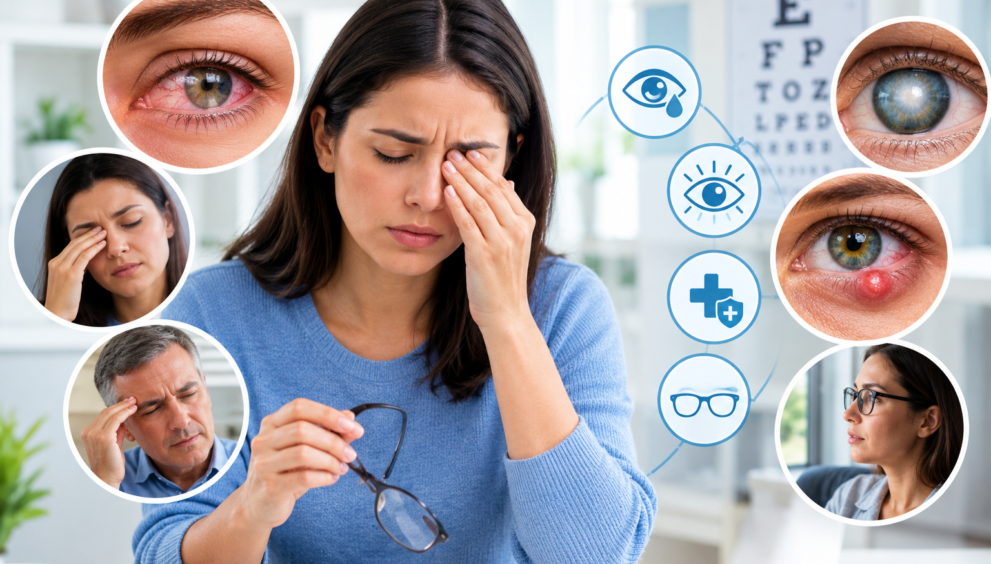
Common eye problems can range from temporary irritation and dry eyes to conditions that may gradually affect vision. Some, such as refractive errors, can often be corrected with glasses or contact lenses. Others, including glaucoma, diabetic retinopathy, cataracts, and age-related macular degeneration, may require ongoing monitoring or treatment to protect vision.
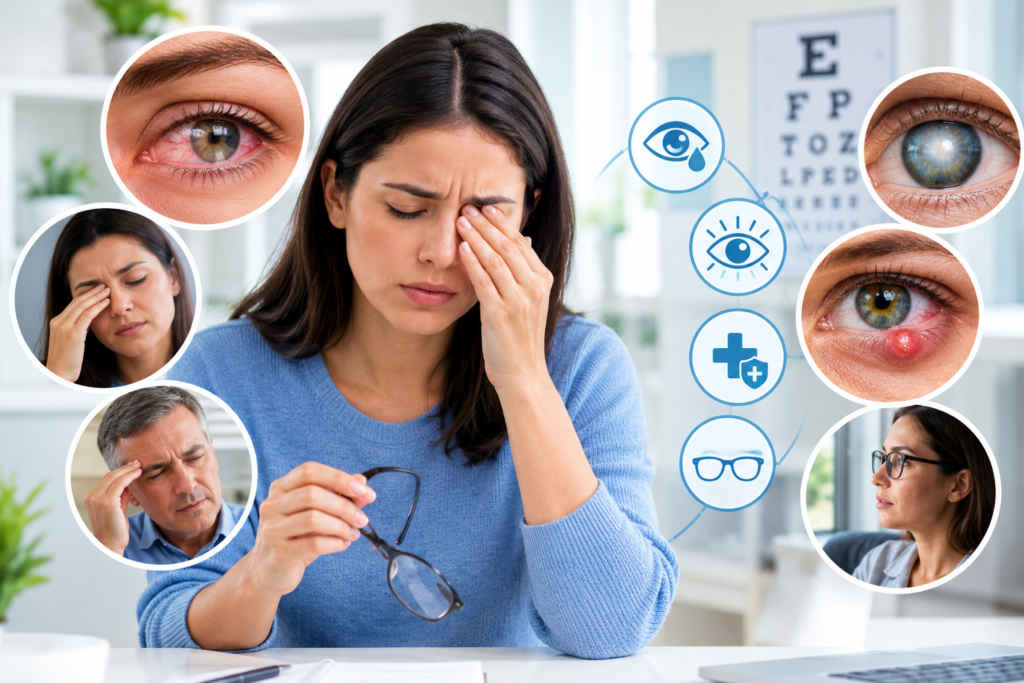
Eye symptoms can sometimes overlap. Blurry vision, redness, pain, watering, itching, flashes, or floaters may have several possible causes. This is why persistent or unexplained changes in vision should not be self-diagnosed.
Some eye diseases cause few or no noticeable symptoms in their early stages. Regular comprehensive eye examinations can help identify problems before significant vision loss occurs.
What Are Common Eye Problems?
Common eye problems include conditions affecting the eye’s surface, lens, optic nerve, retina, or the way light is focused.
Some of the frequently encountered conditions include:
- Refractive errors
- Dry eye
- Cataracts
- Glaucoma
- Conjunctivitis, commonly called pink eye
- Age-related macular degeneration (AMD)
- Diabetic retinopathy
- Blepharitis
- Floaters and other changes in the eye’s vitreous
- Corneal problems
The CDC identifies refractive errors as among the most frequent eye problems, while cataracts, glaucoma, diabetic retinopathy, and AMD are important causes of vision impairment and vision loss.
Common Eye Problems: Symptoms, Causes and Treatment
Different eye conditions produce different symptoms. The table below provides a general overview.
| Eye condition | Common symptoms | Common causes or risk factors | Typical treatment approach |
| Refractive errors | Blurry vision, difficulty focusing | Eye shape and changes in focusing ability | Glasses, contact lenses, or selected procedures |
| Dry eye | Burning, grittiness, redness, watery eyes, fluctuating vision | Reduced or unstable tears, environmental factors, some medications and health conditions | Lubricating drops and treatment of contributing factors |
| Cataracts | Cloudy or blurry vision, faded colors, glare | Usually age-related lens changes; other risks include diabetes, smoking, injury, and steroid use | Monitoring or cataract surgery when appropriate |
| Glaucoma | Often no early symptoms; later loss of peripheral vision | Optic nerve damage; risk varies by type and individual | Eye drops, laser treatment, or surgery |
| Pink eye | Redness, discharge, irritation, itching | Viral, bacterial, or allergic causes | Depends on the cause |
| Diabetic retinopathy | May have no early symptoms; later vision changes | Diabetes-related retinal blood-vessel damage | Diabetes management, monitoring, injections, laser or other treatment when indicated |
| AMD | Central vision changes, distortion, difficulty seeing details | Age and other genetic/environmental risk factors | Monitoring or condition-specific treatment |
| Blepharitis | Red or itchy eyelids, burning, crusting | Inflammation involving the eyelids and their oil glands | Eyelid hygiene and treatment prescribed when needed |
Not every person with a particular condition will experience the same symptoms, and several conditions can produce similar complaints.
1. Refractive Errors
Refractive errors occur when the eye does not bend light correctly onto the retina, resulting in difficulty seeing clearly.
Common types include:
- Myopia: Nearsightedness; distant objects may appear blurry.
- Hyperopia: Farsightedness; nearby objects may be harder to see clearly.
- Astigmatism: Irregular focusing can cause blurred or distorted vision.
- Presbyopia: An age-related reduction in the ability to focus on nearby objects.
Symptoms can include blurred vision, squinting, headaches associated with visual tasks, and difficulty focusing.
Treatment commonly involves prescription eyeglasses or contact lenses. Some people may be candidates for refractive surgery after appropriate evaluation.
2. Dry Eye
Dry eye occurs when the eyes do not produce enough tears or when tears do not remain on the eye’s surface properly.
Symptoms may include:
- Burning or stinging
- Scratchy or gritty sensation
- Redness
- Watery eyes
- Light sensitivity
- Blurred or fluctuating vision
- Feeling as though something is in the eye
Environmental conditions, prolonged visual tasks, aging, certain medications, and some health conditions can contribute to dry eye.
Treatment depends on the cause and severity. Eye-care professionals may recommend artificial tears, changes to environmental or visual habits, or treatment of an underlying eyelid or ocular-surface problem.
Persistent symptoms deserve an eye examination rather than relying indefinitely on over-the-counter products.
3. Cataracts
A cataract develops when the normally clear lens of the eye becomes cloudy.
Common symptoms include:
- Blurry or hazy vision
- Increased sensitivity to glare
- Difficulty seeing at night
- Faded or less vivid colors
- Frequent changes in glasses prescriptions
Age is the most common risk factor, but diabetes, smoking, significant eye injury, certain medications such as corticosteroids, previous eye surgery, radiation exposure, and prolonged sunlight exposure can also increase risk.
When cataracts begin interfering significantly with everyday activities, an eye doctor may discuss cataract surgery. Surgery removes the cloudy lens and replaces it with an artificial lens.
4. Glaucoma
Glaucoma is a group of diseases that can damage the optic nerve and cause permanent vision loss.
One important feature of glaucoma is that it may develop without obvious symptoms. In some forms, peripheral vision gradually becomes affected before a person notices a significant problem.
Because early glaucoma may not cause noticeable symptoms, comprehensive eye examinations are important for people at risk.
Treatment may include:
- Prescription eye drops
- Laser treatment
- Surgery
Treatment cannot restore vision already lost from glaucoma, but appropriate treatment can help slow or prevent further damage.
A sudden combination of intense eye pain, redness, nausea, and blurred vision can occur with acute angle-closure glaucoma and requires immediate medical attention.
5. Pink Eye (Conjunctivitis)
Pink eye is inflammation of the conjunctiva, the thin tissue covering the white part of the eye and the inside of the eyelids.
Depending on the cause, symptoms may include:
- Redness
- Watery eyes
- Itching
- Irritation
- Discharge
- Swollen eyelids
Pink eye can have viral, bacterial, or allergic causes. Treatment depends on what is causing the inflammation, so redness alone does not establish which type a person has.
People who wear contact lenses should take eye redness or pain particularly seriously because some contact-lens-related infections can threaten vision.
6. Diabetic Retinopathy
Diabetic retinopathy occurs when diabetes damages blood vessels in the retina.
It may not cause noticeable symptoms during its early stages. As the condition progresses, vision changes can develop.
Possible symptoms include:
- Blurred vision
- Increasing difficulty seeing
- Dark spots or floaters
- Vision loss
Managing diabetes and attending recommended eye examinations are important parts of protecting vision. Eye professionals may use dilated examinations and other tests to monitor retinal changes.
Treatment varies according to the stage and may include injections, laser treatment, or surgery when appropriate.
7. Age-Related Macular Degeneration
Age-related macular degeneration, or AMD, affects the macula, a part of the retina responsible for detailed central vision.
Symptoms may include:
- Difficulty reading
- Trouble recognizing faces
- Blurred central vision
- Straight lines appearing distorted
- A blank or blurry area in central vision
AMD does not affect everyone in the same way. Some forms can be monitored, while certain types can be treated with medications or other interventions.
Regular eye examinations are particularly important as people age because some eye diseases may develop before noticeable symptoms appear.
8. Blepharitis
Blepharitis is inflammation affecting the eyelids. It may cause:
- Red or swollen eyelids
- Itching
- Burning or stinging
- Crusting around the eyelashes
- A sensation that something is in the eye
Treatment often focuses on keeping the eyelids clean and removing crusts. Depending on the cause and severity, an eye-care professional may recommend additional treatments.
Because eyelid irritation can have several causes, persistent symptoms should be evaluated rather than repeatedly treated without identifying the underlying problem.
What Causes Eye Problems?
There is no single cause of eye disease. Risk can be influenced by age, genetics, general health, medications, injuries, infections, lifestyle factors, and environmental exposure.
Some important factors include:
Age
The risk of several eye conditions increases with age, including cataracts, glaucoma, and AMD.
Family History
Some eye diseases can run in families. Tell your eye-care professional if close relatives have had conditions such as glaucoma or AMD.
Diabetes and High Blood Pressure
Health conditions such as diabetes and high blood pressure can affect the eyes. Diabetes, in particular, increases the risk of diabetic retinopathy.
Smoking
Smoking increases the risk of several eye conditions, including cataracts and AMD.
Eye Injuries
Trauma, chemical exposure, foreign objects, or inadequate protective eyewear can damage the eye.
Contact Lens Problems
Poor contact lens hygiene or inappropriate use can increase the risk of eye infections. CDC recommends proper handwashing and contact-lens care to reduce infection risk.
When Should You See an Eye Doctor?
Some eye symptoms can be temporary, but new, persistent, or unexplained symptoms should be evaluated.
Contact an eye-care professional if you experience:
- Persistent blurry or decreased vision
- Eye pain
- Significant redness or swelling
- Double vision
- Persistent discharge
- New or increasing floaters
- Flashes of light
- Halos around lights
- Difficulty seeing clearly with current glasses or contacts
The CDC specifically recommends professional evaluation for symptoms including decreased vision, eye pain, redness or drainage, double vision, floaters, halos, and flashes.
Seek Urgent Care for Sudden Vision Changes
Some symptoms require prompt or emergency evaluation.
Seek urgent medical attention for sudden vision loss, severe eye pain, sudden major changes in vision, or symptoms following a significant eye injury.
A sudden onset of flashes and many new floaters, especially with a shadow or curtain-like area across vision, can indicate a retinal problem and requires urgent assessment.
An eye injury involving a penetrating object or a chemical exposure also warrants immediate professional attention. For a foreign object that is stuck in the eye, do not attempt to remove it yourself.
How Are Eye Problems Diagnosed?
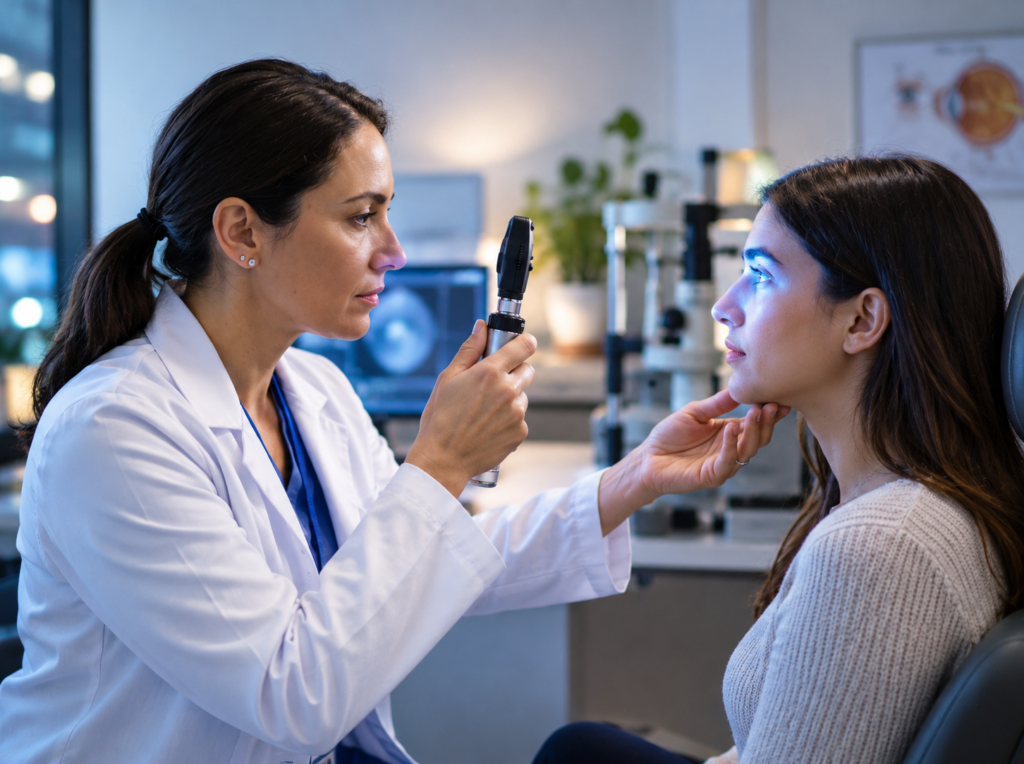
An eye-care professional may perform several examinations depending on the symptoms and suspected condition.
A comprehensive eye examination can include:
- Visual acuity testing
- Refraction testing
- Eye pressure measurement
- Examination of the front of the eye
- Dilated examination of the retina and optic nerve
- Visual field testing
- Additional imaging or specialized tests when needed
A dilated eye examination is particularly important because some eye diseases have few or no early warning signs.
Can Common Eye Problems Be Prevented?
Not every eye condition can be prevented, but several habits can support eye health.
Consider:
- Getting eye examinations at intervals recommended for your age and risk level
- Managing diabetes and blood pressure
- Wearing sunglasses that block UVA and UVB radiation
- Using protective eyewear during sports and home or workplace activities
- Practicing proper contact-lens hygiene
- Avoiding smoking
- Eating a balanced diet
- Staying physically active
- Knowing your family’s eye-health history
NEI and CDC both emphasize comprehensive eye examinations, protective eyewear, UV protection, healthy habits, and appropriate contact-lens care as important parts of maintaining eye health.
Frequently Asked Questions
1. What are the most common eye problems?
Common conditions include refractive errors, dry eye, cataracts, glaucoma, conjunctivitis, diabetic retinopathy, AMD, and eyelid conditions such as blepharitis. The specific prevalence of each condition varies by age and population.
2. What are common symptoms of eye problems?
Eye symptoms can include blurry vision, redness, itching, burning, watering, pain, light sensitivity, discharge, floaters, flashes, double vision, or difficulty seeing at night. Some important diseases may cause no symptoms initially.
3. Can blurry vision be caused by something other than needing glasses?
Yes. Blurry vision can occur with dry eye, cataracts, diabetes-related eye disease, glaucoma, retinal conditions, infections, and other problems. An eye examination can help determine the cause.
4. Which eye problems are more common with aging?
The risk of several conditions increases with age, including cataracts, glaucoma, and age-related macular degeneration. Aging itself does not mean that significant vision loss is inevitable.
5. When is an eye problem an emergency?
Sudden vision loss, severe eye pain, major sudden changes in vision, certain combinations of pain and redness with blurred vision, or serious eye injuries require urgent medical evaluation.
6. Can regular eye exams detect problems before symptoms appear?
Yes. Many eye diseases may have few or no early symptoms. Comprehensive dilated eye examinations can help detect certain diseases before noticeable vision loss develops.
7. Can common eye problems be treated?
Many can be managed or treated, but treatment depends on the specific condition. Options may include corrective lenses, medications, lifestyle measures, laser procedures, injections, or surgery. A qualified eye-care professional should determine the appropriate approach.
Conclusion
Common eye problems range from correctable refractive errors and dry eye to conditions that can threaten vision, including glaucoma, cataracts, diabetic retinopathy, and retinal diseases. Symptoms such as blurry vision, redness, irritation, pain, floaters, or flashes can have different causes, so persistent or unexplained eye symptoms should not be ignored.
Regular eye examinations, healthy lifestyle habits, appropriate UV and injury protection, and good management of conditions such as diabetes can support long-term eye health. Because some serious eye conditions may cause few symptoms early on, professional examinations remain an important part of protecting vision.
If you notice a sudden change in vision, severe eye pain, or a serious eye injury, seek prompt medical attention rather than waiting for symptoms to resolve on their own.
Medical Disclaimer
This article is for general educational purposes only and is not a substitute for professional medical or eye-care advice. Eye symptoms can have multiple causes, and treatment should be based on an appropriate evaluation by a qualified healthcare professional.