
























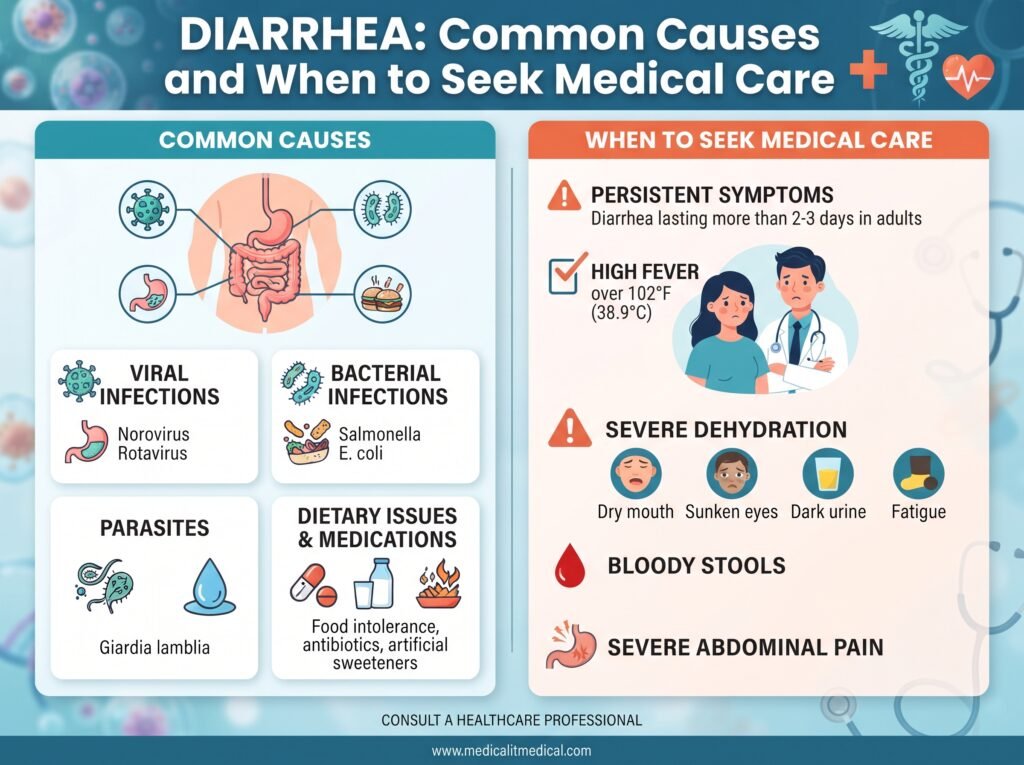





































Diarrhea: Common Causes and When to Seek Medical Care

Diarrhea is a common digestive problem that causes loose or watery stools, often with a more frequent or urgent need to use the bathroom. It can develop suddenly after an infection or food-related illness, occur as a side effect of medication, or continue because of an underlying digestive condition. Understanding diarrhea causes can help you recognize when symptoms are likely to be temporary and when medical evaluation may be necessary. Most short-term cases improve on their own, but diarrhea can also lead to dehydration, which can become serious if significant fluid and electrolytes are lost.
This guide explains common causes, diarrhea symptoms, different types of diarrhea, dehydration warning signs, treatment considerations, and when to seek medical care.
What Causes Diarrhea?
The most common diarrhea causes include infections, contaminated food or water, medication side effects, food intolerances, and digestive disorders. The likely cause often depends on how long the diarrhea lasts and whether other symptoms occur.
Common causes include:
- Viral gastroenteritis
- Food poisoning
- Certain bacterial or parasitic infections
- Traveler’s diarrhea
- Medication side effects
- Food allergies or intolerances
- Irritable bowel syndrome (IBS)
- Celiac disease
- Crohn’s disease
- Ulcerative colitis
- Problems affecting digestion or nutrient absorption
NIDDK notes that acute diarrhea is commonly associated with viral gastroenteritis, food poisoning, and medication side effects, while persistent or chronic diarrhea can have a broader range of causes.
What Is Diarrhea?
Diarrhea generally means passing loose, watery stools three or more times a day, or more frequently than is normal for an individual.
It can be classified according to how long it lasts:
| Type | General description | Common examples |
| Acute diarrhea | Short-term diarrhea | Infection, food poisoning, medication effects |
| Persistent diarrhea | Diarrhea lasting longer than acute illness | Some infections, food intolerances |
| Chronic diarrhea | Diarrhea lasting several weeks or longer | IBS, celiac disease, inflammatory bowel disease |
Definitions can vary slightly between medical references, but duration is an important factor when healthcare professionals evaluate diarrhea.
Common Causes of Acute Diarrhea
Viral Gastroenteritis
Viral gastroenteritis is a common cause of acute diarrhea. Viruses such as norovirus and rotavirus can infect the digestive tract and cause watery diarrhea, abdominal cramps, nausea, vomiting, and sometimes fever.
Because many viral gastrointestinal infections are contagious, good hand hygiene and appropriate food-safety practices are important for reducing transmission.
Food Poisoning
Food poisoning can occur after consuming food or beverages contaminated with viruses, bacteria, parasites, or other harmful substances.
Possible symptoms include:
- Diarrhea
- Abdominal cramps
- Nausea
- Vomiting
- Fever
- Sometimes blood or mucus in the stool
Undercooked foods, contaminated produce, unpasteurized products, and improperly handled foods can contribute to some foodborne infections.
Traveler’s Diarrhea
Changes in food, water, sanitation, and exposure to unfamiliar microorganisms can lead to travel-related diarrhea.
It is more common when people consume contaminated food or water in areas where sanitation and access to safe drinking water differ from what they are accustomed to.
Medication Side Effects
Some medicines can cause diarrhea.
Examples include certain:
- Antibiotics
- Magnesium-containing antacids
- Cancer treatments
- Other prescription or over-the-counter medicines
Antibiotics can also alter normal intestinal bacteria and increase the risk of Clostridioides difficile infection in some people.
If diarrhea begins after starting a medication, do not automatically stop a prescribed medicine. Discuss the symptom with the prescribing healthcare professional or pharmacist.
Causes of Persistent or Chronic Diarrhea
When diarrhea continues beyond a short illness, the range of possible causes becomes broader.
Food Intolerances and Allergies
Some people develop diarrhea after consuming particular foods or ingredients.
Examples include:
- Lactose intolerance
- Fructose intolerance
- Certain food allergies
- Problems digesting some carbohydrates
- Sensitivity to sugar alcohols such as sorbitol or mannitol
Keeping track of foods and symptoms may help a healthcare professional identify patterns, but eliminating major food groups without appropriate guidance is not always necessary or advisable.
Irritable Bowel Syndrome
IBS is a disorder of gut-brain interaction that can involve repeated abdominal pain along with changes in bowel habits.
Some people experience diarrhea-predominant symptoms, while others experience constipation or alternating bowel patterns.
Recurring diarrhea should not automatically be attributed to IBS without appropriate evaluation, particularly when warning signs are present.
Celiac Disease
Celiac disease is an immune-mediated condition triggered by gluten in genetically susceptible people. It can interfere with nutrient absorption and may cause diarrhea, bloating, abdominal discomfort, and weight changes.
Persistent symptoms require professional evaluation rather than self-diagnosis.
Inflammatory Bowel Disease
Conditions such as Crohn’s disease and ulcerative colitis can cause ongoing diarrhea.
Depending on the condition and severity, symptoms may also include abdominal pain, fatigue, weight loss, or blood in the stool.
People with persistent or recurrent symptoms should discuss them with a qualified healthcare professional.
Common Diarrhea Symptoms
The main symptom is loose or watery stool, but diarrhea may occur with several other symptoms.
Common diarrhea symptoms include:
- Urgent need to have a bowel movement
- Abdominal cramps
- Abdominal pain
- Bloating
- Nausea
- Vomiting
- Fever
- Increased frequency of bowel movements
- Blood or mucus in some cases
NIDDK notes that chronic diarrhea may also be associated with weight loss or signs of malabsorption.
The combination of symptoms, their severity, and how long they continue can help healthcare professionals determine whether further evaluation is needed.
Dehydration: The Main Complication to Watch For
One of the biggest concerns with diarrhea is dehydration.
Loose stools can cause the body to lose significant amounts of water and electrolytes. The risk can increase when diarrhea is severe or accompanied by repeated vomiting.
Signs of Dehydration in Adults
Watch for:
- Excessive thirst
- Dry mouth
- Dark-colored urine
- Urinating less frequently
- Fatigue
- Dizziness or lightheadedness
- Weakness
- Confusion in more severe cases
Infants, young children, older adults, and people with certain health conditions can be particularly vulnerable to complications from dehydration.
Replacing Lost Fluids
For many cases of acute diarrhea, maintaining hydration and replacing lost electrolytes are important parts of home care. NIDDK notes that water, fluids containing electrolytes, broths, and oral rehydration solutions can be used to replace fluid losses.
People with certain medical conditions may need individualized advice about fluid and electrolyte replacement, so those with significant health conditions should discuss appropriate options with a healthcare professional.
When Should You Seek Medical Care for Diarrhea?
Most short-term diarrhea improves without medical treatment, but certain symptoms warrant prompt medical attention.
Adults should seek medical advice when they have:
- Diarrhea lasting more than two days without improvement
- Six or more loose stools in one day
- High fever
- Frequent vomiting
- Severe abdominal or rectal pain
- Blood, pus, or black, tarry stools
- Signs of dehydration
- Difficulty drinking enough fluids
- Significant weakness, dizziness, or changes in mental state
NIDDK recommends prompt medical attention for these types of symptoms because they can indicate severe dehydration or another condition requiring evaluation.
People who are pregnant, older than 65, taking antibiotics, or living with a weakened immune system may have a higher risk of complications and should maintain closer contact with their healthcare professional when diarrhea occurs.
Children Need Special Attention
Diarrhea can cause dehydration more quickly in infants and young children.
Parents and caregivers should contact a healthcare professional promptly if a child has significant diarrhea, especially when there is:
- Dehydration
- Blood or black stool
- High fever
- Frequent vomiting
- Reduced urination or fewer wet diapers
- Unusual sleepiness or lack of energy
- Difficulty drinking enough fluids
Very young infants and children with underlying health conditions may require earlier evaluation.
How Is the Cause of Diarrhea Diagnosed?
A healthcare professional does not always need to identify the exact cause of a short episode of diarrhea.
When evaluation is necessary, the process may include:
Medical History
A clinician may ask:
- When did the diarrhea begin?
- How frequently are bowel movements occurring?
- What does the stool look like?
- Have you recently traveled?
- What foods or drinks have you consumed?
- Are you taking any medications?
- Has anyone around you been sick?
- Do you have digestive or other health conditions?
Physical Examination
A healthcare professional may check for signs of dehydration, abdominal tenderness, fever, or other findings.
Diagnostic Tests
Depending on the symptoms and duration, tests may include:
- Stool testing
- Blood tests
- Other investigations for suspected digestive disorders
NIDDK notes that stool tests can look for blood, bacteria, parasites, or signs of certain diseases, while blood tests may help identify causes or complications such as dehydration.
How Is Diarrhea Treated?
Treatment depends on the underlying cause and severity.
For many cases of acute diarrhea, the main goal is preventing dehydration while the illness resolves. Some infections or underlying digestive disorders may require specific medical treatment.
Depending on the situation, healthcare professionals may recommend:
- Fluid and electrolyte replacement
- Dietary adjustments
- Medication for selected causes or symptoms
- Treatment of an underlying digestive disorder
- Prescription therapy for certain infections or chronic conditions
Antibiotics are not appropriate for every episode of diarrhea because many cases are caused by viruses or other conditions that do not benefit from antibiotics.
For children, particularly infants and young children, medications intended to stop diarrhea should not be given without appropriate medical advice.
Practical Ways to Reduce the Risk of Infectious Diarrhea
Some causes of diarrhea can be reduced through everyday hygiene and food-safety practices.
Helpful habits include:
- Wash hands thoroughly with soap and water.
- Wash hands before preparing or eating food.
- Handle raw meat and seafood carefully.
- Cook foods to appropriate temperatures.
- Refrigerate perishable foods appropriately.
- Avoid unsafe or untreated drinking water.
- Follow food-safety practices while traveling.
- Clean surfaces that may be contaminated.
These steps are particularly important when infectious diarrhea is circulating within a household or community.
Diarrhea Causes: When Symptoms Should Not Be Ignored
Occasional acute diarrhea is common, but recurring or prolonged symptoms deserve attention.
You should consider medical evaluation when diarrhea:
- Keeps returning
- Continues for several weeks
- Causes unexplained weight loss
- Occurs with blood or black stools
- Is accompanied by significant pain
- Causes signs of dehydration
- Interferes substantially with normal daily activities
Persistent diarrhea can have many causes, including food intolerances, infections, IBS, celiac disease, inflammatory bowel disease, medication effects, and other digestive problems. Finding the underlying cause may require a medical history, examination, and sometimes diagnostic testing.
FAQs About Diarrhea
1. What are the most common diarrhea causes?
Common causes include viral gastroenteritis, food poisoning, contaminated food or water, medication side effects, food intolerances, and digestive conditions such as IBS. Persistent diarrhea can have additional causes, including celiac disease and inflammatory bowel disease.
2. How long does acute diarrhea usually last?
Acute diarrhea is short-term and often improves within several days. If diarrhea continues beyond two days in an adult without improvement, or is accompanied by severe symptoms, medical advice is recommended.
3. What are common diarrhea symptoms?
Loose or watery stools are the main symptom. Other symptoms can include urgency, abdominal cramps, nausea, vomiting, bloating, and fever. Blood or black stools can indicate a more serious problem and warrant medical attention.
4. How can diarrhea cause dehydration?
Diarrhea causes the body to lose water and electrolytes through loose stools. If these losses are not adequately replaced, dehydration can develop. Warning signs include excessive thirst, dry mouth, dark urine, reduced urination, weakness, and dizziness.
5. When should an adult see a doctor for diarrhea?
Adults should seek medical advice for diarrhea lasting more than two days without improvement, severe pain, high fever, frequent vomiting, blood or black stools, signs of dehydration, or six or more loose stools in a day.
6. Can antibiotics cause diarrhea?
Yes. Antibiotics can cause diarrhea in some people and can also increase the risk of C. difficile infection. Anyone who develops significant or persistent diarrhea after taking antibiotics should discuss it with a healthcare professional.
7. Is diarrhea always caused by an infection?
No. Infections are common causes of acute diarrhea, but diarrhea can also result from medications, food intolerances, IBS, celiac disease, inflammatory bowel disease, and other digestive conditions.
Conclusion
Understanding diarrhea causes can help distinguish a short-lived digestive problem from symptoms that may need medical evaluation. Acute diarrhea is commonly linked to infections, food poisoning, or medication effects, while persistent or chronic diarrhea can have a wider range of causes. Pay attention to diarrhea symptoms and especially signs of dehydration, such as reduced urination, dark urine, dizziness, severe thirst, or weakness. Blood or black stools, severe pain, high fever, frequent vomiting, or prolonged symptoms are also reasons to seek medical advice.
When diarrhea keeps returning or lasts longer than expected, a qualified healthcare professional can help determine the underlying cause and appropriate treatment.