

























































How to Improve Digestive Health: 10 Everyday Habits


If you want to improve digestive health, start with the habits you practice every day. What you eat, how active you are, how much fluid you drink, and how you respond to digestive symptoms can all affect the way your gastrointestinal (GI) system functions.
Your digestive system breaks food into nutrients that your body can absorb and use for energy, growth, and repair. It includes the GI tract as well as organs such as the liver, pancreas, and gallbladder. The gut microbiome—the microorganisms living in the digestive tract—also interacts with food and plays a role in digestion and overall health.
The good news is that supporting healthy digestion does not usually require complicated routines. Eating more fiber-rich foods, staying adequately hydrated, being physically active, eating a varied diet, and paying attention to persistent symptoms are practical places to start.
Here are 10 everyday digestive habits that can support digestive health.
1. Eat More Fiber-Rich Foods
Fiber is one of the most important dietary components for maintaining regular bowel movements and supporting gut health.
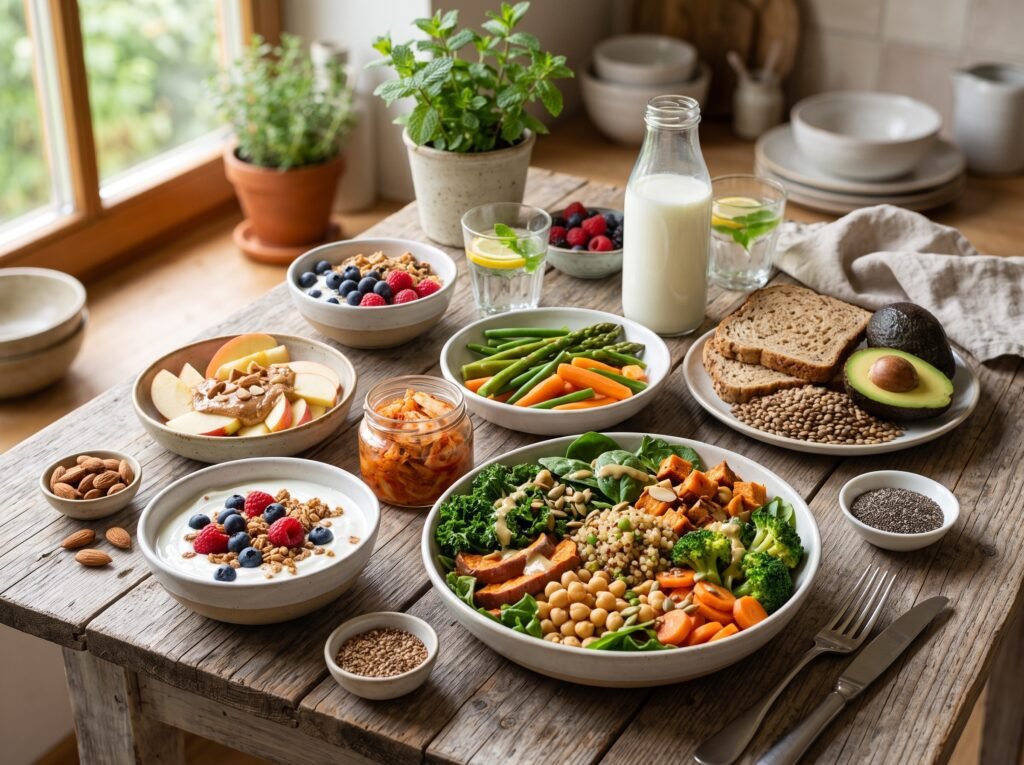
Good sources include:
- Vegetables such as broccoli, carrots, peas, and leafy greens
- Fruits such as apples, pears, berries, and oranges
- Beans, lentils, chickpeas, and other legumes
- Whole grains such as oats, brown rice, and whole-wheat products
- Nuts and seeds
For adults, the National Institute of Diabetes and Digestive and Kidney Diseases (NIDDK) notes that recommended fiber intake is generally around 22 to 34 grams per day, depending on age and sex.
Fiber can help add bulk to stool and support easier passage through the digestive tract. Certain types of fiber are also used by gut microorganisms.
However, increasing fiber too quickly can cause gas, bloating, or abdominal discomfort. Increase high-fiber foods gradually and drink enough fluids to help your body adjust.
2. Drink Enough Fluids
Adequate hydration is another simple habit that can support healthy digestion.
Fluids help keep stool softer, which can make bowel movements easier. This is particularly relevant when increasing fiber intake. NIDDK recommends drinking plenty of liquids when increasing dietary fiber and notes that individual fluid needs can vary based on factors such as body size, activity, health, and environment.
Water is an easy everyday choice. Other fluids can contribute to overall hydration as well.
Rather than focusing on one universal amount of water for everyone, consider your individual needs and follow advice from your healthcare professional if you have a condition that requires fluid restriction.
3. Make Whole and Minimally Processed Foods Part of Your Diet
A varied diet containing fruits, vegetables, whole grains, legumes, nuts, and other minimally processed foods can provide fiber and other nutrients important for overall health.
Research supported by the NIH has also examined how diets rich in fiber and minimally processed foods can influence the composition and function of the gut microbiome.
This does not mean you need to eliminate every processed food. Instead, aim to make nutrient-rich whole or minimally processed foods a regular part of your meals.
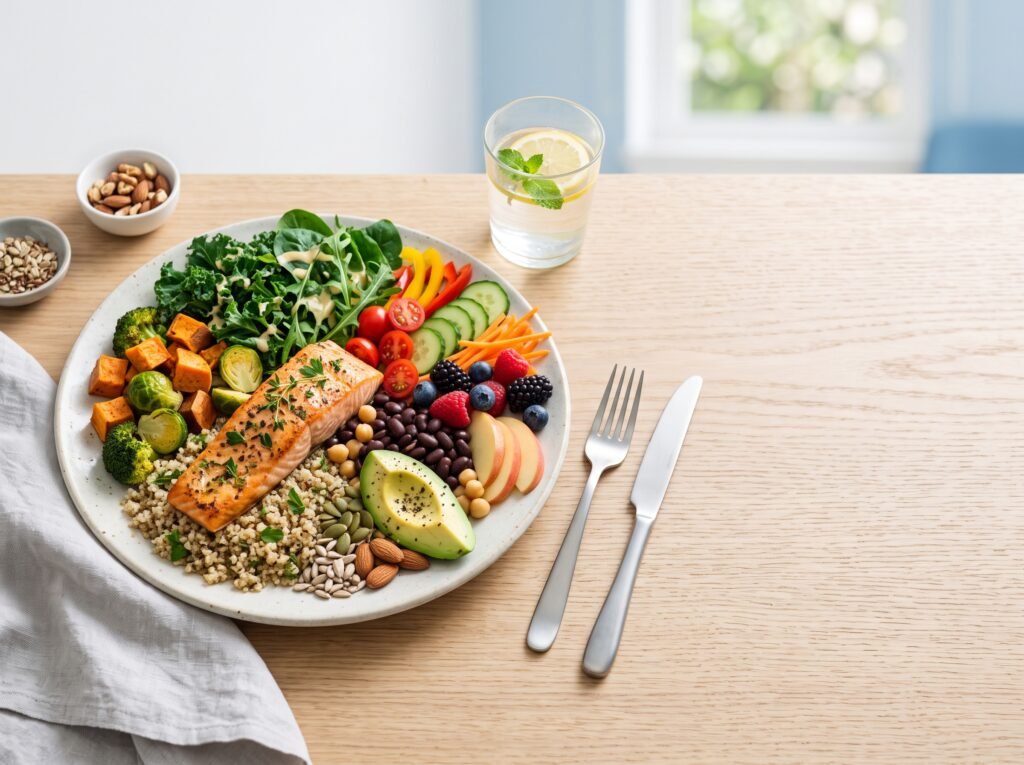
A simple plate might include:
| Food group | Examples |
| Vegetables | Broccoli, carrots, spinach, peppers |
| Fruits | Apples, berries, oranges, pears |
| Whole grains | Oats, brown rice, whole-wheat bread |
| Protein foods | Beans, lentils, fish, eggs, poultry |
| Healthy fats | Nuts, seeds, avocado, olive oil |
Your nutritional needs can vary, particularly if you have a digestive disorder or food intolerance.
4. Eat a Variety of Foods to Support Gut Health
The digestive tract contains trillions of microorganisms, collectively known as the gut microbiome. Diet is one factor that can influence these microorganisms.
There is no single food that can create a universally “perfect” microbiome. Instead, eating a diverse range of plant foods provides different types of dietary fiber and other compounds that interact with gut microbes.
Research has found that different types of fiber can have different effects on the gut microbiome and other aspects of health.
For variety, rotate foods throughout the week rather than eating the same small selection every day.
For example, you might include:
- Oats or whole-grain cereal
- Beans or lentils
- Several different vegetables
- Fresh fruits
- Nuts and seeds
- Whole grains
- Other nutrient-dense plant foods
If particular foods consistently cause digestive symptoms, discuss the pattern with a healthcare professional rather than unnecessarily eliminating large numbers of foods.
5. Stay Physically Active
Regular physical activity supports overall health and can also be helpful for bowel regularity.
NIDDK includes regular physical activity among lifestyle measures that can help prevent or relieve constipation.
For general health, current CDC guidance recommends that adults aim for at least 150 minutes of moderate-intensity aerobic activity each week, along with muscle-strengthening activities on at least two days per week. Activity can be divided into smaller periods throughout the week.
You do not necessarily need an intensive workout routine. Depending on your health and abilities, options can include:
- Brisk walking
- Cycling
- Swimming
- Dancing
- Recreational sports
- Strength training
If you have a medical condition or have been inactive for a long period, ask a healthcare professional about appropriate activity levels.
6. Do Not Ignore the Urge to Have a Bowel Movement
Your body provides signals when it is time to use the bathroom. Frequently ignoring the urge to have a bowel movement can contribute to constipation for some people.
NIDDK identifies ignoring the urge to have a bowel movement as one factor that can contribute to constipation.
Try to give yourself enough time and privacy rather than repeatedly postponing bathroom visits.
Some people also find that establishing a consistent bathroom routine helps them maintain regularity. NIDDK notes that healthcare professionals may recommend bowel training, including trying to have a bowel movement at the same time each day.
7. Eat Mindfully and Pay Attention to Your Body
Eating quickly can make it harder to notice when you are comfortably full. Taking time to eat and chew thoroughly is a simple habit that can make meals more comfortable.
Digestion begins in the mouth, where chewing mechanically breaks food into smaller pieces and saliva begins the digestive process. The rest of the digestive tract then continues breaking down and absorbing nutrients.
Mindful eating can include:
- Eating without rushing
- Chewing food thoroughly
- Paying attention to hunger and fullness
- Limiting distractions during meals
- Noticing which foods seem to trigger symptoms
There is no requirement to follow a particular eating speed. The goal is simply to make meals more deliberate and comfortable.
8. Be Careful With Foods That Trigger Your Symptoms
Digestive symptoms can vary significantly from person to person.
A food that causes bloating in one person may be completely comfortable for another. Similarly, someone with a diagnosed digestive disorder may have specific dietary triggers that require professional guidance.
Instead of automatically removing entire food groups, consider keeping a simple food-and-symptom diary. Record what you ate, when you ate it, and any symptoms that followed.
This information can be useful when discussing recurring symptoms with a doctor or registered dietitian.
People with conditions such as irritable bowel syndrome (IBS) may sometimes be advised to make specific dietary changes. NIDDK notes that different dietary approaches can help different people with IBS and that a healthcare professional or dietitian can help guide dietary changes.
9. Be Thoughtful About Probiotics and Supplements
Probiotics are live microorganisms that may provide health benefits when consumed in sufficient amounts. They are found in some fermented foods and are also available as dietary supplements.
However, probiotics are not all the same. Different strains can have different effects, and evidence for a particular digestive problem may not apply to every probiotic product.
This is why simply choosing a supplement labeled “probiotic” does not guarantee that it will improve your symptoms.
Similarly, taking large amounts of fiber supplements or other digestive supplements without guidance is not necessarily better. NIH-supported research has found that different fiber types can produce different effects, highlighting the importance of considering the type and amount of fiber rather than treating all fiber as identical.
If you are considering supplements for a persistent digestive problem, discuss them with a healthcare professional.
10. Pay Attention to Persistent Digestive Symptoms
Healthy digestion is not about never experiencing gas, bloating, constipation, or occasional digestive discomfort. Occasional symptoms can happen for many reasons.
Persistent, severe, or unexplained symptoms deserve more attention.
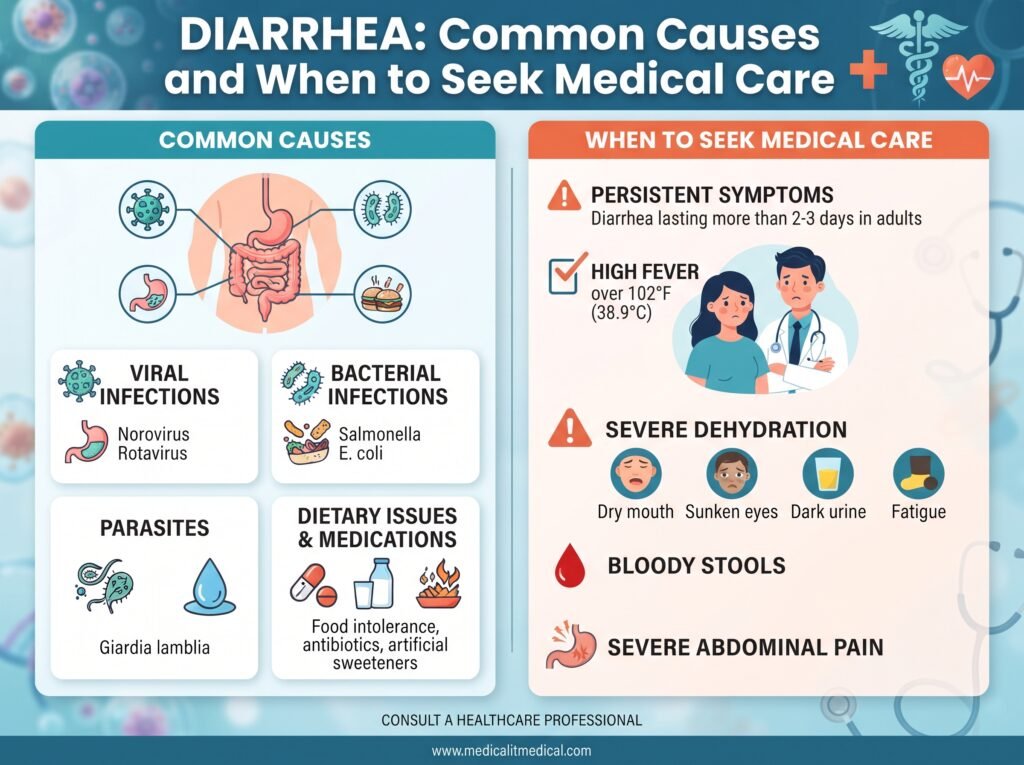
Speak with a healthcare professional if you experience symptoms such as:
- Persistent abdominal pain
- Ongoing constipation or diarrhea
- Blood in the stool
- Unexplained weight loss
- Repeated vomiting
- Difficulty swallowing
- Persistent changes in bowel habits
- Symptoms that interfere with daily activities
For example, NIDDK recommends medical evaluation for constipation accompanied by rectal bleeding, blood in the stool, continual abdominal pain, or other signs of a medical problem.
Do not rely on dietary changes alone when symptoms are persistent or concerning. Digestive symptoms can have many causes, and a healthcare professional can determine whether further evaluation is needed.
A Simple Daily Routine for Better Digestive Health
You do not have to change everything at once. A simple routine can make healthy habits easier to maintain.
| Part of the day | Digestive-friendly habit |
| Breakfast | Include a fiber-rich food such as oats or fruit |
| Morning | Drink fluids according to your individual needs |
| Lunch | Include vegetables and a whole-grain or legume-based food |
| Afternoon | Take a walk or add another form of physical activity |
| Dinner | Choose a varied, nutrient-rich meal |
| Throughout the day | Respond to your body’s urge to use the bathroom |
| Weekly | Aim for regular aerobic and muscle-strengthening activity |
Small, sustainable changes are often easier to maintain than making many restrictive changes at once.
Common Digestive Health Mistakes to Avoid
When trying to improve digestive health, it is easy to focus on quick fixes. Some common mistakes include:
Increasing fiber too quickly
A sudden increase can lead to gas and bloating. Increase fiber gradually and maintain adequate fluid intake.
Assuming every digestive symptom is caused by diet
Digestive symptoms can result from many different conditions, medications, infections, and other factors. Persistent symptoms should be evaluated.
Taking supplements without understanding them
Probiotics and fiber supplements vary considerably. More is not automatically better.
Following highly restrictive diets without guidance
Eliminating numerous foods can make it difficult to obtain adequate nutrition. If you suspect a food intolerance or digestive disorder, professional dietary guidance can be helpful.
Expecting immediate results
Digestive habits often work best when they become part of a consistent lifestyle. Changes in bowel habits may take time, particularly after increasing fiber.
Frequently Asked Questions About Digestive Health
1. How can I improve digestive health naturally?
Start with practical habits such as eating enough fiber, drinking adequate fluids, eating a varied diet, staying physically active, responding to the urge to have a bowel movement, and paying attention to persistent symptoms.
2. How much fiber should I eat for healthy digestion?
NIDDK states that adults generally need about 22 to 34 grams of fiber per day, depending on age and sex. Individual needs can vary. Increase fiber gradually to reduce the likelihood of digestive discomfort.
3. Does drinking water help digestion?
Adequate fluid intake can help prevent dehydration and can help fiber work effectively, contributing to softer and easier-to-pass stools. Individual fluid requirements vary.
4. Is exercise good for gut health?
Regular physical activity supports overall health and may help with constipation. CDC guidelines recommend that adults get at least 150 minutes of moderate-intensity aerobic activity each week, plus muscle-strengthening activities on at least two days.
5. Are probiotics necessary for a healthy gut?
Not necessarily. Probiotics are live microorganisms that may provide health benefits in specific circumstances, but effects vary by strain and health condition. A probiotic supplement is not automatically necessary for everyone.
6. What foods are good for gut health?
Fiber-rich foods such as vegetables, fruits, legumes, whole grains, nuts, and seeds can be part of a diet that supports digestive and gut health. Eating a variety of minimally processed plant foods also provides different types of fiber.
7. When should I see a doctor about digestive problems?
Seek medical advice for persistent or severe symptoms, including ongoing abdominal pain, blood in the stool, rectal bleeding, unexplained weight loss, persistent changes in bowel habits, or other concerning symptoms.
Conclusion
To improve digestive health, focus on consistent habits rather than quick fixes. Eating enough fiber, staying hydrated, choosing a varied diet, maintaining regular physical activity, listening to your body’s bathroom signals, and paying attention to persistent symptoms can all contribute to healthy digestion. There is no single diet or supplement that works for everyone. Your digestive health is influenced by your diet, activity, medications, health conditions, and other individual factors. If digestive symptoms persist or become concerning, consult a qualified healthcare professional for appropriate evaluation. Small, sustainable digestive habits can become part of a healthier routine—and they can support your digestive system for the long term.