




























































How to Care for Someone With Alzheimer’s: Beginner’s Guide


Caring for a person with Alzheimer’s disease can be challenging, especially when you are new to caregiving. Alzheimer’s caregiving involves much more than helping with memory problems. Over time, a caregiver may assist with communication, daily activities, medications, appointments, safety, emotional support, and changes in behavior.
The good news is that you do not have to know everything at once. Learning what to expect, establishing routines, communicating patiently, making the home safer, and accepting help can make Alzheimer’s care more manageable. This beginner’s guide explains practical ways to support someone with Alzheimer’s while also protecting the caregiver’s own health and well-being.
What Does Alzheimer’s Caregiving Involve?
Alzheimer’s is a progressive disease that can affect memory, thinking, communication, behavior, and the ability to manage everyday activities. The amount of help a person needs varies depending on the stage of the disease and their individual circumstances.
Caregiving may include:
- Helping with bathing, dressing, grooming, and eating
- Organizing appointments and health information
- Supporting medication routines as directed by healthcare professionals
- Preparing meals and encouraging appropriate hydration
- Providing transportation or arranging transportation
- Monitoring changes in behavior or physical health
- Making the home safer
- Offering companionship and emotional reassurance
- Helping with financial, legal, and future-care planning
- Coordinating family members, professional caregivers, or other services
The goal is not to take over every task. Whenever it is safe and practical, encourage the person to remain involved in activities they can still perform. Maintaining independence and familiar routines can support dignity and a sense of control.
1. Learn About the Person, Not Just the Disease
One of the most useful principles in dementia caregiving is to remember that the person is more than their diagnosis.
Learn about their:
- Daily routines
- Favorite foods
- Hobbies and interests
- Important relationships
- Work and life history
- Cultural or religious preferences
- Favorite music, photographs, or activities
- Things that make them comfortable or uncomfortable
This information can help you create familiar experiences and communicate more effectively. As Alzheimer’s progresses, familiar objects, music, photographs, and routines may sometimes help create a sense of comfort.
2. Create a Simple, Predictable Routine
A consistent routine can make everyday life easier for someone with Alzheimer’s. Try to keep important activities around similar times each day, including meals, bathing, medications, activities, and bedtime.
A simple daily schedule might look like:
| Part of Day | Possible Activity |
| Morning | Breakfast, personal care, medication as prescribed |
| Late morning | Walk, hobby, music, or another familiar activity |
| Afternoon | Lunch, rest, simple household activity |
| Late afternoon | Social activity, reading, photographs, or light exercise |
| Evening | Dinner, relaxing activity, personal care, bedtime routine |
The schedule does not need to be rigid. The purpose is to reduce unnecessary confusion and provide familiar structure.
If a routine suddenly becomes difficult, consider whether something has changed, such as illness, pain, constipation, hunger, thirst, medication changes, or an overstimulating environment.
3. Communicate Clearly and Patiently
Communication can become more difficult as Alzheimer’s progresses. A person may struggle to find words, follow complicated conversations, remember information, or express what they need.
Good communication starts with patience.
Helpful communication strategies
- Speak slowly and clearly.
- Use short, simple sentences.
- Ask one question at a time.
- Give the person enough time to answer.
- Maintain eye contact when appropriate.
- Address the person directly rather than speaking about them as if they are not present.
- Offer simple choices instead of too many options.
- Reduce background noise and distractions.
- Use gestures, photographs, or demonstrations when helpful.
- Listen for the emotion behind the person’s words.
For example, instead of asking, “What would you like to drink?” you might ask, “Would you like tea or water?” Avoid repeatedly testing memory with questions such as “Do you remember?” or arguing over facts that the person may no longer understand.
The aim is meaningful communication, not winning an argument.
4. Support Independence With Everyday Activities
Alzheimer’s care should encourage participation whenever possible.
Instead of doing everything for the person, break tasks into smaller steps. For example, if they are getting dressed, place the clothing in the order it should be worn and give one instruction at a time.
Other activities may include:
- Folding towels
- Setting the table
- Watering plants
- Sorting household objects
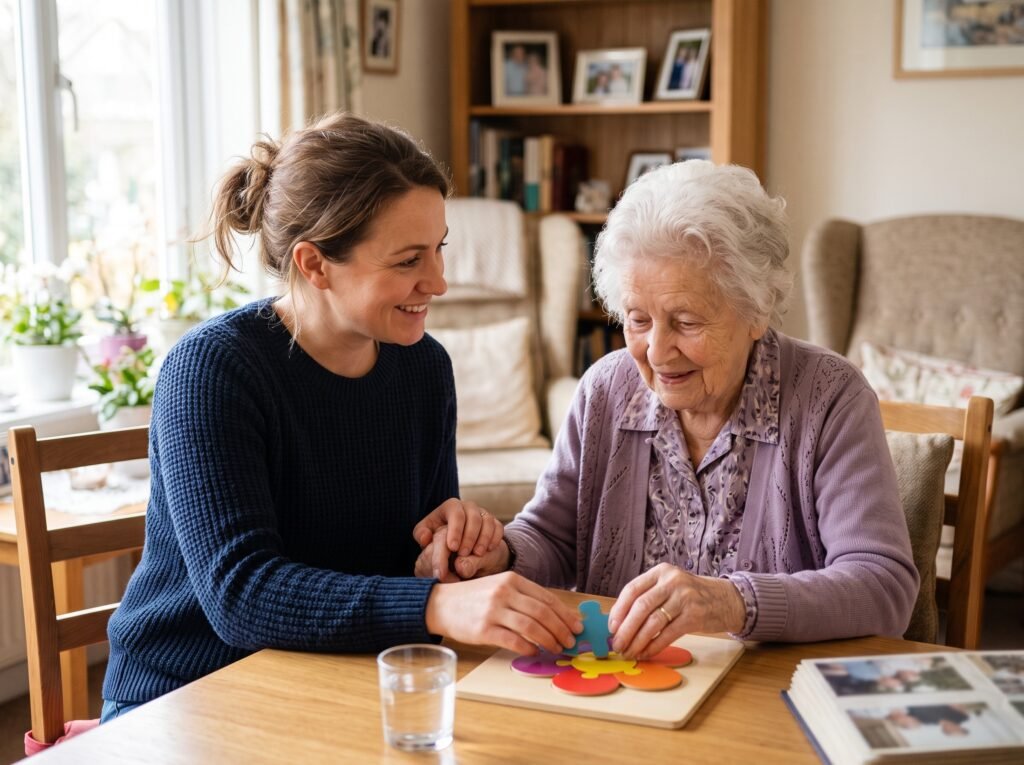
- Looking through photographs
- Listening to familiar music
- Preparing simple foods with appropriate supervision
- Taking a walk
- Participating in familiar hobbies
Activities should be appropriate for the person’s abilities and safety. If a task causes frustration, simplify it or try something different.
5. Make Safety a Priority
As Alzheimer’s progresses, safety concerns can change. A home that was previously safe may contain new risks for someone experiencing memory or judgment difficulties.
Depending on the person’s needs, caregivers may need to consider:
- Securing medications and potentially dangerous household products
- Reducing clutter and trip hazards
- Improving lighting
- Using appropriate bathroom safety equipment
- Monitoring access to stairs or unsafe areas
- Keeping emergency contact information accessible
- Considering risks associated with driving
- Developing a plan for wandering or getting lost
Wandering can be particularly concerning. If it becomes an issue, discuss appropriate safety strategies with healthcare professionals and dementia-care organizations. Do not assume that every safety measure is appropriate for every person. The person’s abilities, home environment, preferences, and stage of disease should be considered.
6. Pay Attention to Changes in Behavior
Behavior changes can be difficult for families. A person with Alzheimer’s may become anxious, agitated, suspicious, withdrawn, restless, or upset. Rather than immediately assuming that the behavior is simply part of Alzheimer’s, look for possible triggers.
Ask:
- Is the person hungry or thirsty?
- Could they be experiencing pain?
- Are they constipated?
- Is the environment noisy or overwhelming?
- Did their medication recently change?
- Could they be ill?
- Is the person tired or experiencing a disrupted sleep pattern?
- Did something unfamiliar happen?
Keeping a simple record of behavioral changes can help identify patterns and give healthcare professionals useful information.
Sudden or rapidly changing behavior should be discussed promptly with a healthcare professional, particularly when it occurs alongside signs of illness or follows a medication change.
7. Respond to Difficult Moments Without Arguing
Alzheimer’s can sometimes cause situations in which reasoning or correcting the person does not resolve the problem.
If the person becomes upset:
- Stay calm.
- Use a reassuring tone.
- Avoid arguing.
- Try to understand the emotion behind the behavior.
- Reduce noise or other stimulation.
- Redirect attention to a familiar activity.
- Give the person time to settle down.
For example, if someone becomes upset because they believe they need to “go home,” repeatedly explaining that they are already home may increase frustration. A calmer response might acknowledge their feelings and gently redirect the conversation.
The best response can vary from person to person.
8. Keep Track of Health Information
Caregivers often coordinate information between family members, doctors, pharmacies, and other healthcare professionals.
Keeping an organized record can help.
Consider maintaining a folder or secure digital record containing:
- Current medications and doses
- Allergies
- Healthcare provider contact information
- Appointment dates
- Important medical history
- Emergency contacts
- Changes in symptoms or behavior
- Questions for the next medical appointment
- Relevant legal or care-planning information
When working with professional caregivers or care facilities, communicate changes in the person’s condition and keep the care plan updated.
9. Plan for Changing Care Needs
Alzheimer’s is progressive, so caregiving needs may change over time.
A person who needs only occasional reminders today may eventually need substantial assistance with personal care and daily activities. It can be helpful to discuss future plans before a crisis occurs.
Depending on the situation, families may consider:
- Family caregiving schedules
- Respite care
- In-home professional care
- Adult day programs
- Transportation services
- Community support groups
- Long-term care options
- Financial planning
- Legal planning and advance directives
A healthcare professional, social worker, or qualified care coordinator can help families understand available options.
10. Take Care of Yourself, Too
One of the most important parts of a caregiver guide is caregiver health.
Caregiving can be physically and emotionally demanding. CDC notes that caregivers of people with Alzheimer’s disease and related dementias can experience substantial demands and may face increased risks to their own well-being.
Self-care is not selfish. It is part of sustainable caregiving.
Try to:
- Get adequate sleep whenever possible.
- Keep your own medical appointments.
- Stay physically active.
- Eat regular, nutritious meals.
- Maintain contact with supportive friends or family.
- Accept practical help.
- Take breaks when another trusted person can provide care.
- Consider caregiver support groups or counseling when needed.
You do not have to handle every responsibility alone.
When Should a Caregiver Ask for Professional Help?
Contact a qualified healthcare professional when you notice significant or sudden changes in the person’s condition.
Examples include:
- Sudden confusion or major behavioral changes
- New or worsening aggression
- Signs of infection or illness
- Falls or injuries
- Significant changes in eating or drinking
- New problems with walking or balance
- Medication concerns or side effects
- Repeated wandering or safety problems
- Symptoms that cause concern for the person’s immediate well-being
Caregivers should also seek help when caregiving responsibilities become overwhelming or interfere with their own health and ability to function.
A Simple Beginner’s Checklist for Alzheimer’s Caregiving
If you are just starting, focus on a few fundamentals rather than trying to solve everything at once.
Start with these priorities:
- Learn about the person’s diagnosis and current abilities.
- Establish a predictable daily routine.
- Communicate slowly and respectfully.
- Encourage safe independence.
- Make the home environment safer.
- Track important health and behavior changes.
- Maintain communication with healthcare professionals.
- Build a support network.
- Plan for future changes in care.
- Protect your own physical and emotional health.
Small, consistent adjustments can make everyday caregiving more manageable.
Frequently Asked Questions
1. What is the most important thing in Alzheimer’s caregiving?
There is no single task that applies to every family. In general, prioritize safety, dignity, communication, appropriate medical care, predictable routines, and the person’s remaining abilities and preferences.
2. How should I communicate with someone who has Alzheimer’s?
Speak calmly and clearly, use short sentences, ask one question at a time, and allow extra time for a response. Avoid arguing or repeatedly testing the person’s memory.
3. Should I correct someone with Alzheimer’s when they are confused?
Not every mistaken statement needs to be corrected. If correcting the person is likely to cause distress and there is no safety issue, acknowledging their feelings and gently redirecting the conversation may be more helpful.
4. What should I do if an Alzheimer’s patient becomes aggressive?
Remain calm, create space, reduce noise or other triggers, and consider whether pain, illness, medication changes, hunger, thirst, or another problem could be contributing. Discuss significant or sudden aggression with a healthcare professional.
5. How can caregivers prevent burnout?
Share responsibilities when possible, take regular breaks, maintain your own healthcare, stay connected with supportive people, and consider respite services, caregiver groups, or professional counseling.
6. When should a caregiver consider professional care?
Professional assistance may become appropriate when the person’s daily needs exceed what family caregivers can safely manage, when supervision is required for much of the day, or when caregiving is seriously affecting the caregiver’s health. Discuss available options with healthcare professionals and local care services.
7. Can a person with Alzheimer’s still participate in everyday activities?
Yes. Many people can continue participating in meaningful activities, although the level and type of assistance may change as the disease progresses. Choose familiar, manageable activities and adapt them to the person’s abilities and safety needs.
Conclusion
Alzheimer’s caregiving is a gradual learning process. The needs of a person with Alzheimer’s can change over time, so effective care often means adapting routines, communication, safety measures, and support as the disease progresses.
Focus on what the person can still do, communicate with patience, watch for meaningful changes in health or behavior, and involve qualified healthcare professionals when concerns arise. Just as importantly, make room for your own health and support needs. Good Alzheimer’s care is not about doing everything perfectly. It is about providing safe, respectful, compassionate support while building a caregiving system that can adapt as needs change.


10 Practical Tips for Alzheimer’s Caregivers | Dmed Blogs
18th Sep 2026[…] How to Care for Someone With Alzheimer’s: Beginner’s […]