




































How to Protect Your Eyes: 10 Everyday Eye Health Tips

Your eyes work continuously throughout the day, helping you read, work, drive, recognize people, and navigate your surroundings. Good eye health depends on more than simply having clear vision. Protecting your eyes also means reducing the risk of injury, managing health conditions that can affect vision, getting appropriate eye examinations, and developing healthy daily habits.
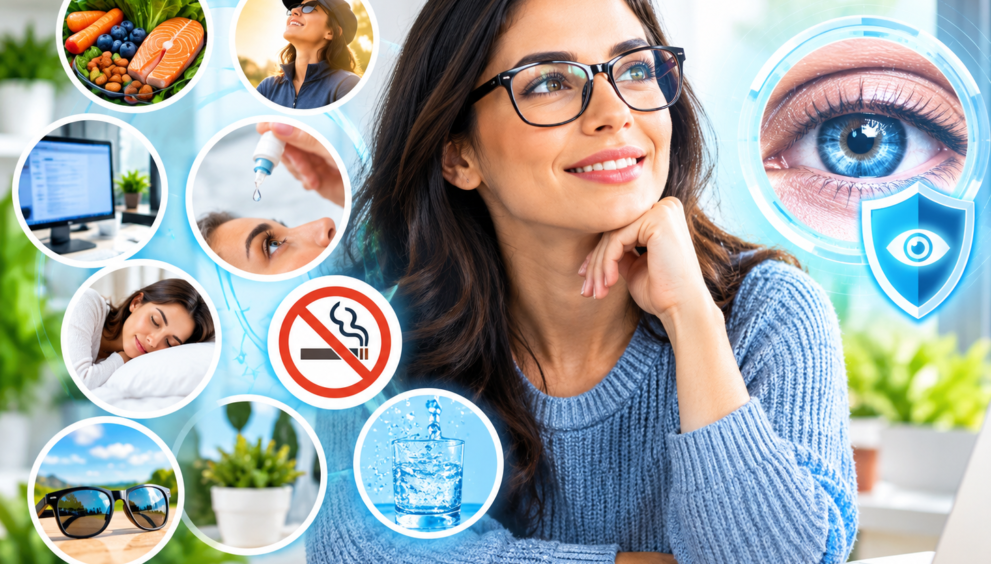
The good news is that there are several practical eye health tips you can incorporate into everyday life. Wearing appropriate sunglasses, using protective eyewear, eating a balanced diet, staying physically active, avoiding tobacco, giving your eyes regular breaks during prolonged screen use, and maintaining regular eye examinations can all support healthy vision. The National Eye Institute emphasizes that many eye diseases may have few or no early symptoms, making professional eye examinations an important part of eye care.
10 Eye Health Tips to Protect Your Vision
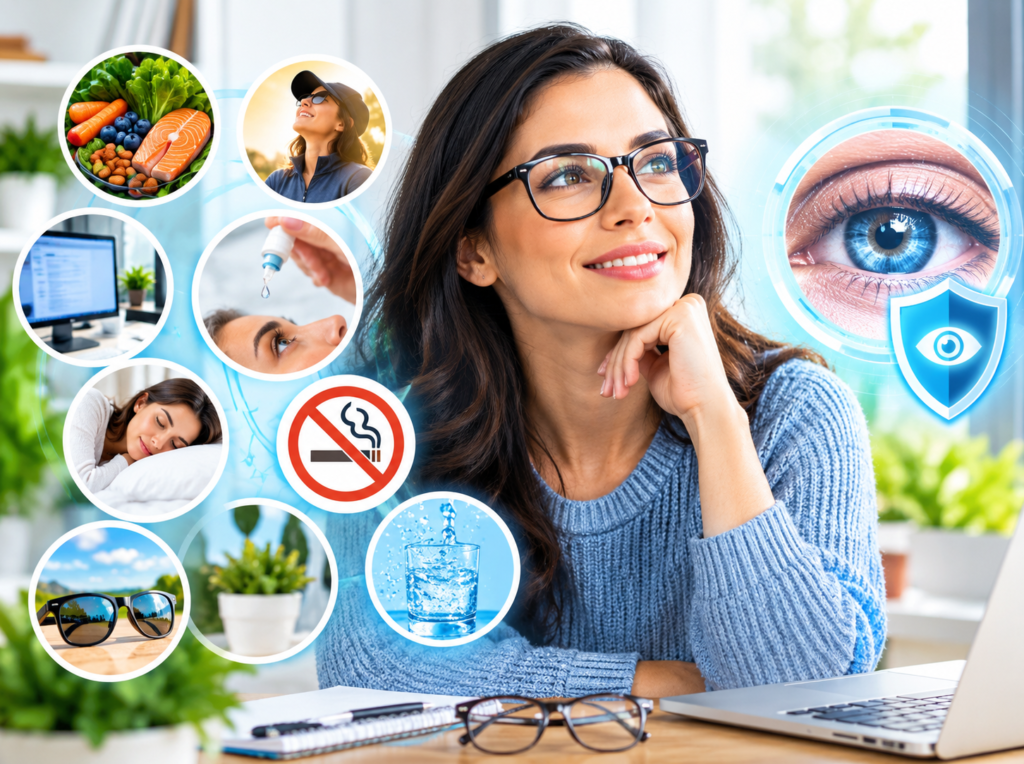
Here are 10 practical habits that can help you protect your eyes and support long-term vision.
- Get regular comprehensive eye examinations.
- Wear sunglasses that provide adequate UV protection.
- Use protective eyewear during risky activities.
- Give your eyes regular breaks during prolonged screen use.
- Eat a balanced, nutrient-rich diet.
- Stay physically active and maintain a healthy weight.
- Avoid smoking and secondhand smoke.
- Manage health conditions that can affect your eyes.
- Practice safe contact lens habits.
- Know your family eye-health history and recognize warning signs.
Let’s look at each habit in more detail.
1. Get Regular Comprehensive Eye Examinations
One of the most important eye health tips is to have appropriate eye examinations even when your vision seems normal.
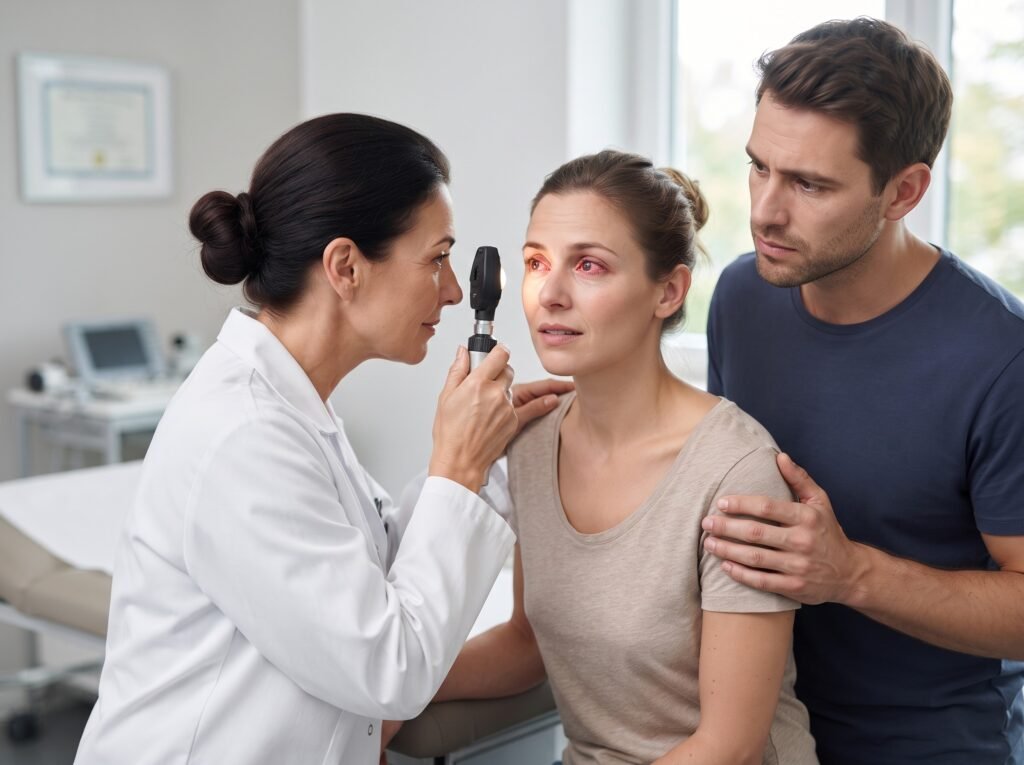
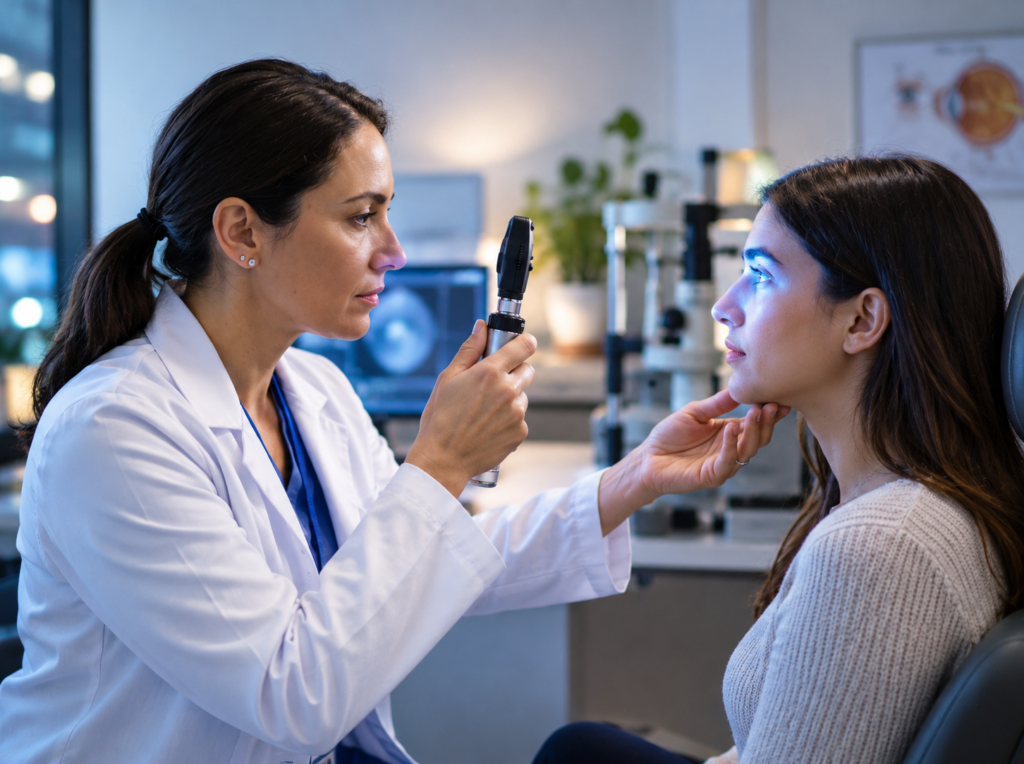
Some eye diseases do not cause noticeable symptoms during their early stages. A comprehensive dilated eye examination allows an eye-care professional to examine structures inside the eye and look for signs of conditions that may eventually affect vision.
The National Eye Institute describes a comprehensive dilated eye exam as one of the best ways to detect eye diseases early. The appropriate frequency depends on factors such as age, medical history, family history, and individual risk.
During an eye examination, your provider may evaluate:
- Visual acuity
- Eye pressure
- Peripheral vision
- Pupil responses
- Eye movements
- The retina and optic nerve
- Signs of eye disease
Do not wait until your vision becomes noticeably worse to ask about an eye examination.
2. Wear Sunglasses With UV Protection
Ultraviolet (UV) radiation from sunlight can affect your eyes. Wearing sunglasses outdoors can help reduce exposure.
When choosing sunglasses, look for lenses that block 99% to 100% of UVA and UVB radiation. The CDC and National Eye Institute both recommend adequate UV protection as part of healthy vision care.
For additional protection, consider:
- Wearing a wide-brimmed hat outdoors
- Choosing sunglasses that fit comfortably
- Wearing sunglasses even when conditions are partly cloudy
- Avoiding direct viewing of the sun
Sunglasses are not just a fashion accessory. They are part of practical everyday eye care.
3. Use Protective Eyewear
Many eye injuries happen during activities that might not initially seem dangerous.
Home repairs, yard work, construction, laboratory work, and certain sports can expose the eyes to flying particles, chemicals, dust, or other hazards.
Protective eyewear can include:
- Safety glasses
- Protective goggles
- Face shields
- Sport-specific eye guards
The type of protection should match the activity. Ordinary prescription glasses or sunglasses may not provide sufficient protection for certain hazards.
If your work involves potential eye injuries, follow workplace safety requirements and use the protective equipment recommended for the task. The CDC specifically recommends protective eyewear for activities such as sports, home repairs, yard work, and workplace hazards.
4. Give Your Eyes Breaks During Screen Use
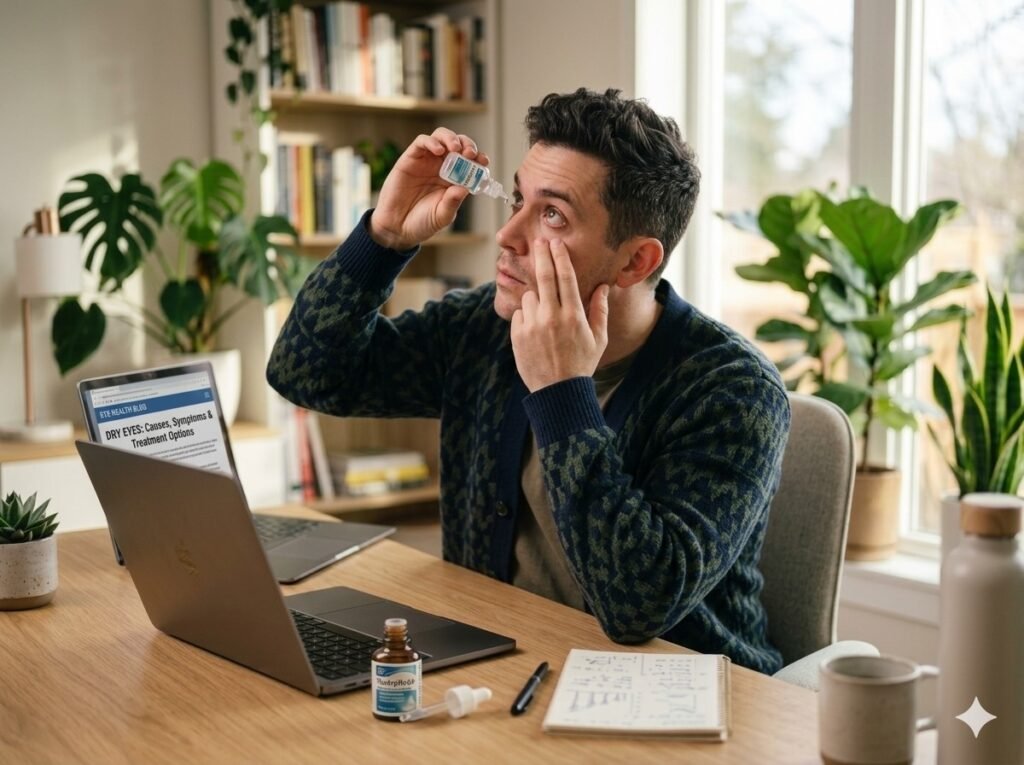
Computers, smartphones, tablets, and other digital devices are part of everyday life. Extended periods of focusing on a screen can contribute to eye fatigue, dryness, or discomfort.
One simple approach is the 20-20-20 rule:
Every 20 minutes, look at something about 20 feet away for at least 20 seconds.
The CDC and American Academy of Ophthalmology both discuss regular breaks as a way to reduce digital eye strain.
You can also make screen use more comfortable by:
- Adjusting screen brightness to a comfortable level
- Keeping the screen at a suitable viewing distance
- Reducing glare where possible
- Remembering to blink regularly
- Taking longer breaks after extended periods of close-up work
Digital eye strain can be uncomfortable, but routine screen use itself should not be confused with serious eye disease.
Do Blue-Light Glasses Protect Your Eyes?
Special blue-light-blocking glasses are widely marketed for computer use, but the American Academy of Ophthalmology does not recommend special blue-light eyewear for preventing digital eye strain because evidence has not established that these glasses provide this benefit. Regular breaks and comfortable screen habits are more useful approaches.
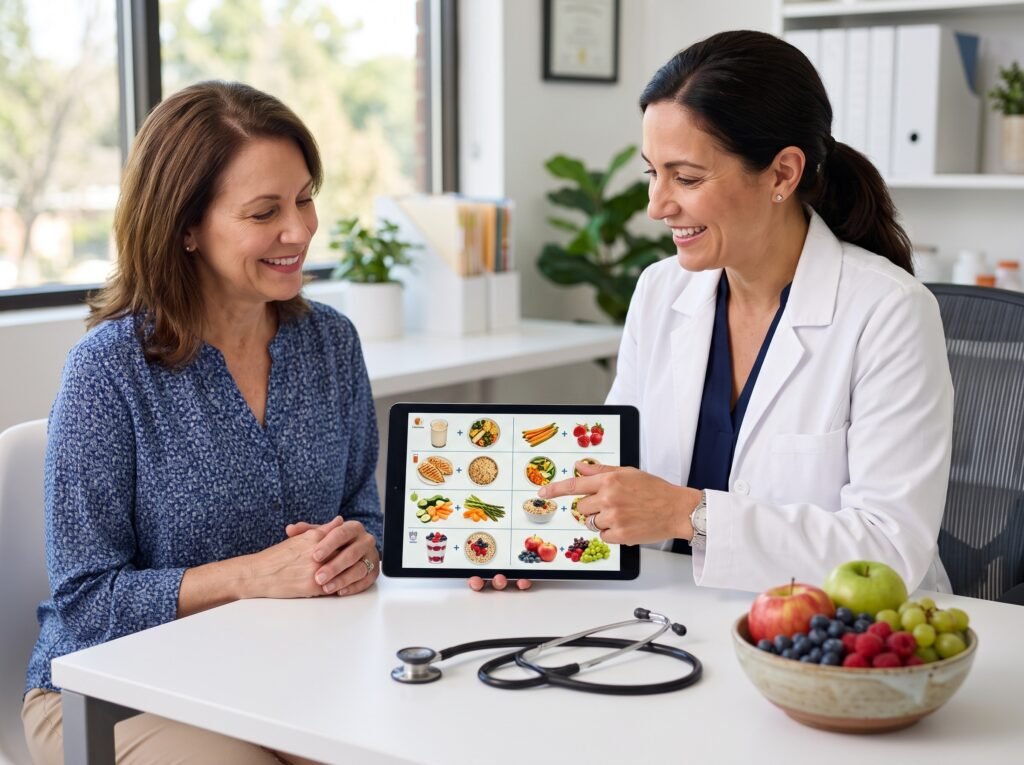
5. Eat a Balanced Diet for Healthy Eyes
Nutrition supports overall health, and a balanced diet can contribute to healthy eyes.
The National Eye Institute recommends a diet that includes foods such as dark leafy greens and fish containing omega-3 fatty acids. Examples include:
- Spinach
- Kale
- Collard greens
- Salmon
- Tuna
- Other nutrient-rich vegetables and fruits
- Whole grains
- Legumes
- Nuts and seeds
A healthy eating pattern also supports cardiovascular and metabolic health, which can influence eye health.
This does not mean that one particular food can prevent eye disease. Instead, think about overall dietary patterns and variety.
6. Stay Active and Maintain a Healthy Weight
Physical activity benefits more than your heart and muscles. It can also support eye health by helping reduce the risk of conditions such as type 2 diabetes and high blood pressure that can affect vision.
The National Eye Institute recommends regular physical activity as part of maintaining healthy vision.
Activities can include:
- Walking
- Cycling
- Swimming
- Dancing
- Strength exercises
- Recreational sports
- Other activities you enjoy
You do not need an extreme exercise routine. Consistency is more practical than trying to make occasional major changes.
Maintaining a healthy weight can also support overall health and reduce the likelihood of developing certain chronic conditions associated with eye problems.
7. Avoid Smoking
Smoking affects many organs, including the eyes.
The CDC and National Eye Institute associate smoking with an increased risk of eye conditions such as cataracts, age-related macular degeneration, and optic nerve damage.
If you smoke, quitting can be an important step toward better overall and eye health.
Avoiding tobacco is preferable to starting, but people who currently smoke can still benefit from making a quit plan and seeking professional support.
Secondhand smoke is also harmful to overall health, so avoiding tobacco smoke when possible is another sensible part of healthy living.
8. Manage Health Conditions That Can Affect Vision
Certain medical conditions can affect the eyes.
For example, diabetes can damage blood vessels in the retina and lead to diabetic eye disease. High blood pressure can also contribute to eye and vascular problems.
Managing conditions such as diabetes and high blood pressure according to your healthcare professional’s recommendations can therefore be an important part of protecting your vision.
If you have a chronic health condition, ask your healthcare team whether you need specific eye examinations or monitoring.
Do not change prescribed medications or treatment plans without discussing them with the appropriate healthcare professional.
9. Practice Safe Contact Lens Habits
Contact lenses can provide convenient vision correction, but poor hygiene can increase the risk of eye infections.
If you wear contact lenses:
- Wash and dry your hands before handling them.
- Follow the cleaning instructions provided for your lenses.
- Use the recommended contact-lens solution.
- Replace lenses according to the prescribed schedule.
- Follow instructions for replacing the lens case.
- Avoid using contact lenses longer than recommended.
- Follow your eye-care professional’s instructions.
The CDC and National Eye Institute recommend proper hand hygiene and appropriate contact-lens cleaning and replacement practices to reduce infection risk.
If contact lenses cause significant pain, redness, discharge, or changes in vision, remove them as appropriate and seek prompt professional eye care.
10. Know Your Family Eye-Health History
Some eye diseases can run in families.
Knowing whether close relatives have had conditions such as glaucoma, age-related macular degeneration, or other eye diseases can give your eye-care professional useful information when assessing your risk.
The National Eye Institute recommends knowing your family’s eye-health history because some eye conditions have hereditary components.
Ask family members about significant eye conditions and share relevant information during eye appointments.
Family history does not mean that you will definitely develop an eye disease. It simply helps healthcare professionals understand potential risk and determine appropriate monitoring.
Eye Care and Overall Health
Your eyes do not exist separately from the rest of your body.
Conditions such as diabetes, high blood pressure, and other chronic diseases can affect eye health. Healthy habits such as nutritious eating, physical activity, avoiding tobacco, and maintaining a healthy weight can therefore support both general health and vision.
The National Eye Institute notes that managing overall health can help protect vision, particularly because conditions such as diabetes and high blood pressure can increase the risk of certain eye diseases.
| Healthy Habit | Potential Eye-Health Benefit |
| Regular eye exams | Helps detect some eye diseases early |
| UV-protective sunglasses | Reduces UV exposure |
| Protective eyewear | Helps prevent eye injuries |
| Screen breaks | Helps reduce eye strain and fatigue |
| Balanced diet | Supports overall and eye health |
| Physical activity | Supports cardiovascular and metabolic health |
| Avoiding smoking | Reduces risk associated with several eye diseases |
| Good contact-lens hygiene | Helps reduce infection risk |
| Chronic disease management | Helps reduce complications affecting the eyes |
| Knowing family history | Helps identify potential inherited risk |
Warning Signs That Should Not Be Ignored
Routine eye care is important, but certain symptoms deserve prompt professional attention.
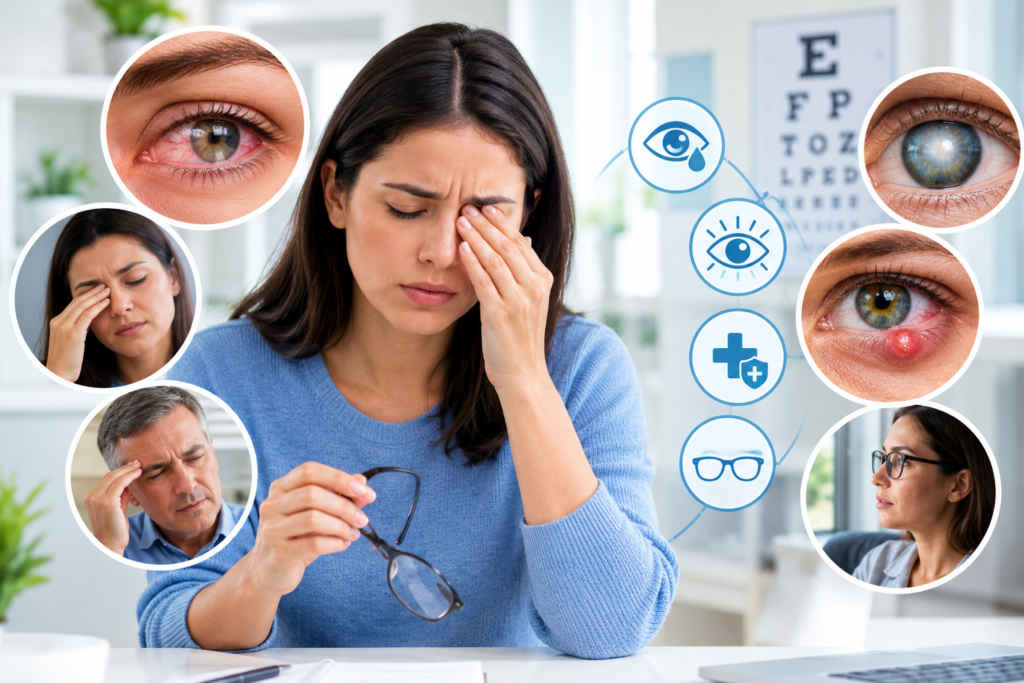
Contact an eye-care professional if you experience:
- A sudden decrease or loss of vision
- New or sudden double vision
- Significant eye pain
- Persistent redness or drainage
- New flashes of light
- A sudden increase in floaters
- Halos around lights
- A noticeable change in vision
The CDC specifically recommends seeing an eye-care professional for symptoms such as decreased vision, eye pain, redness or drainage, double vision, new floaters, halos, or flashes of light.
Sudden vision loss or severe eye symptoms can sometimes represent an emergency. In such situations, seek urgent medical evaluation rather than waiting for a routine appointment.
A Simple Daily Eye-Care Routine
Good eye care does not need to be complicated.
During the day
- Wear UV-protective sunglasses outdoors.
- Take regular breaks from prolonged screen work.
- Blink regularly during concentrated close-up tasks.
- Eat a varied, nutritious diet.
- Stay physically active.
- Avoid smoking.
During potentially hazardous activities
- Wear appropriate protective eyewear.
- Follow workplace or sports safety recommendations.
- Keep chemicals and sharp objects away from the eyes.
For contact-lens users
- Wash your hands before handling lenses.
- Follow the prescribed cleaning and replacement schedule.
- Never ignore persistent discomfort or changes in vision.
Over the long term
- Keep recommended eye examinations.
- Manage chronic health conditions.
- Know your family eye-health history.
- Seek professional advice when new vision symptoms appear.
FAQs About Eye Health Tips
1. What are the most important eye health tips?
Some of the most important eye health tips include getting appropriate eye examinations, wearing UV-protective sunglasses, using protective eyewear during risky activities, taking regular screen breaks, eating a balanced diet, staying active, avoiding smoking, and practicing proper contact-lens hygiene.
2. How can I protect my eyes from computer screens?
Take regular breaks during prolonged screen use. The 20-20-20 rule is a practical approach: every 20 minutes, look at something about 20 feet away for at least 20 seconds. Adjusting screen position, reducing glare, and remembering to blink can also improve comfort.
3. Are sunglasses really important for eye health?
Yes. Sunglasses that block 99% to 100% of UVA and UVB radiation can help reduce your eyes’ exposure to ultraviolet radiation. Wearing a hat can provide additional protection.
4. Can diet improve eye health?
A balanced diet supports overall health and can contribute to healthy vision. Dark leafy greens and fish rich in omega-3 fatty acids are among the foods recommended by the National Eye Institute as part of an eye-healthy diet.
5. How often should I get an eye exam?
There is no single schedule that applies to everyone. The appropriate frequency depends on factors such as age, medical history, family history, and risk of eye disease. Ask an eye-care professional how often you should be examined.
6. Does smoking affect your eyes?
Yes. Smoking is associated with an increased risk of several eye conditions, including cataracts, age-related macular degeneration, and optic nerve damage. Avoiding smoking or quitting can benefit both eye health and overall health.
7. When should I see an eye doctor?
See an eye-care professional if you experience changes such as decreased vision, persistent eye pain or redness, double vision, new flashes or floaters, halos around lights, or other concerning changes. Sudden vision loss or severe symptoms require urgent medical attention.
Conclusion
Following practical eye health tips can help you protect your eyes and support healthy vision throughout life. Regular eye examinations, UV protection, protective eyewear, screen breaks, good nutrition, physical activity, smoking avoidance, chronic disease management, and safe contact-lens practices all have a place in everyday eye care.
Healthy habits cannot prevent every eye condition, and having clear vision does not always mean that your eyes are completely healthy. Regular professional examinations are important because some eye diseases can develop without obvious early symptoms.
If you notice a sudden or significant change in vision, eye pain, flashes, new floaters, double vision, or another concerning symptom, seek appropriate professional eye care rather than relying on home remedies or waiting for the problem to resolve.
Common Eye Problems: Symptoms, Causes & Treatment
02nd Oct 2026[…] How to Protect Your Eyes: 10 Everyday Eye […]